New York — December 11, 2025
Big Tech and AI leaders took a hit on Thursday as a surprise plunge in Oracle shares reignited worries about an “AI bubble,” pulling the Nasdaq and S&P 500 lower even as the Dow Jones Industrial Average closed at a fresh record high.Investopedia+1
Below is a deep dive into how the major U.S. tech giants — Apple, Microsoft, Alphabet, Amazon, Meta, Nvidia and Tesla — traded today, and what the latest forecasts and analysis are saying about their 2026-and-beyond prospects.
1. Market recap: rotation away from Big Tech as AI jitters return
By the closing bell on Thursday:
- Dow Jones Industrial Average: up around 1%, hitting a new all‑time high as investors piled into non‑tech blue chips like Visa, Home Depot and UnitedHealth.Investopedia
- S&P 500: down about 0.3%.
- Nasdaq Composite: lower by roughly 1%, dragged down by AI‑linked tech and semiconductor names.Investopedia+1
The culprit: Oracle’s earnings.
The cloud and database giant reported revenue that came in below Wall Street expectations while dramatically boosting its fiscal 2026 capital‑expenditure guidance by about $15 billion, to roughly $50 billion, largely to fuel AI infrastructure.StockStory+2Seeking Alpha+2
Instead of cheering the spending, markets flinched:
- Oracle shares sank around 13–14%, erasing over $100 billion in market value.Investopedia+1
- The sell‑off spilled into AI hardware and chip leaders like Nvidia, and more broadly into the tech and AI complex.StockStory+1
Investopedia’s morning and mid‑session updates framed the move as a classic “good news, bad news” moment: the Federal Reserve has now cut rates three meetings in a row, but traders are suddenly questioning whether AI capital spending is racing ahead of visible profits.Investopedia+2Investopedia+2
Against that backdrop, here’s how the “Magnificent Seven”‑style Big Tech names actually closed.
2. Big Tech scoreboard for December 11, 2025
As of the close of U.S. trading (approx. 5 p.m. UTC):
- Apple (AAPL): $276.75, –0.73%
- Microsoft (MSFT): $479.57, +0.21%
- Alphabet (GOOGL): $314.12, –1.90%
- Amazon (AMZN): $229.18, –1.12%
- Meta Platforms (META): $646.46, –0.56%
- Nvidia (NVDA): $177.72, –3.30%
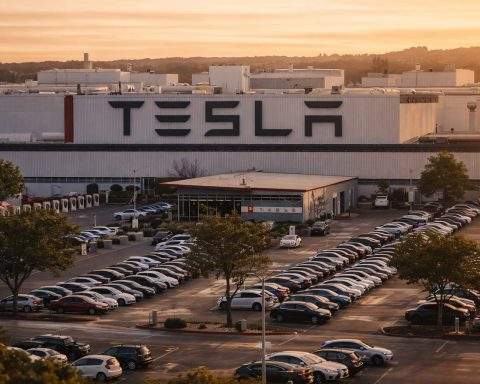
- Tesla (TSLA): $443.27, –1.81%
The pattern is clear: AI‑heavy and semiconductor names were hit hardest, while the broader megacap complex saw mostly modest declines and, in Microsoft’s case, a small gain.
3. Apple: modest pullback amid AI and iPhone 16 super‑cycle hype
Despite today’s 0.7% dip, Apple remains near record territory and sits on a market cap of roughly $3.0 trillion.
Fresh commentary today continues to frame 2025 as a potential “super‑cycle” year for Apple stock:
- A December 11 feature from ZoomBangla’s Tech Desk argues that Apple is “poised for a historic market rally” driven by two engines: a massive AI push across its devices and the iPhone 16 launch.Bangla news
- The piece highlights Apple’s plan to deeply embed generative AI into iOS — including a more conversational Siri and on‑device media tools — with an emphasis on privacy and seamless user experience.Bangla news
- Supply‑chain chatter in the same article points to above‑normal component orders for iPhone 16, consistent with expectations for a sizable upgrade cycle.Bangla news
On the forecast side:
- A quantitative forecast from CoinCodex today projects Apple trading in a December 2025 channel roughly between $264 and $279, with an average around $273, and describes near‑term sentiment as “neutral,” with a mixed set of bullish and bearish technical indicators.CoinCodex
- Separate technical work from StockInvest notes Apple has been a “buy or hold” candidate since early August, with around 30% gains since that call, but warns that recent gains on lower volume might signal a potential pause.StockInvest
Longer‑dated fundamental projections from 24/7 Wall St. see incremental upside through 2030, driven by Apple’s ecosystem lock‑in and recurring services revenue, though they stress that valuation is already rich after a multi‑year run.24/7 Wall St.
Takeaway for today: Apple’s share price slipped with the broader tech sector, but the narrative around AI‑infused devices and an iPhone 16 super‑cycle remains firmly bullish in most analyst and media commentary.Bangla news+1
4. Microsoft: AI mega‑spend, tiny gain
Microsoft was one of the few Big Tech names to finish in the green, up about 0.2% to $479.57, with a market cap approaching $3.9 trillion.
The stock is trading against a backdrop of huge AI infrastructure bets:
- In recent days, Microsoft has announced roughly $17.5 billion of new AI infrastructure investments in India and more than CAD 7.5 billion in Canada, according to analysis from Simply Wall St.Simply Wall St+1
- These commitments build on the Ignite 2025 theme that Microsoft is moving from passive AI “copilots” toward agentic AI — autonomous digital co‑workers embedded across Windows, Microsoft 365 and Azure.partner.microsoft.com+1
On the forecast side:
- A December 11 piece from 24/7 Wall St. looks at one‑year price scenarios for MSFT and concludes that continued Azure and productivity‑suite growth could support further upside, but cautions that the stock already trades at a premium multiple.24/7 Wall St.
- CoinCodex’s automated models see Microsoft in 2025 trading roughly in the mid‑$400s, with late‑decade scenarios stretching into the $700s under bullish assumptions.CoinCodex
Given Oracle’s AI‑capex shock, it’s notable that Microsoft was relatively resilient today, suggesting investors may view the company’s AI investments as more strategically grounded than Oracle’s sudden spending surge.StockStory+1
5. Alphabet (Google): under pressure as AI CapEx narrative evolves
Alphabet’s Class A shares slid about 1.9% to $314.12, knocking its market cap to roughly $2.94 trillion.
Yet away from the day’s price action, today’s commentary shows Alphabet leaning aggressively into AI infrastructure:
- A detailed research piece from PredictStreet describes Alphabet’s AI push as “deeply rooted” in R&D, with AI‑related spending rising 16% in 2024 and projected to climb another ~12% in 2025, and CapEx of $91–93 billion focused heavily on data centers and custom chips.FinancialContent
- The same piece outlines a pipeline that includes successive Gemini 2.x and 3.x models, extensive AI integration into Search, Workspace, and Home, and a growing portfolio of AI accelerators (TPUs) and quantum‑computing projects.FinancialContent
On the chip front, a brand‑new article at The Motley Fool titled “Did Alphabet Just Say ‘Checkmate’ to Nvidia?” argues that Google’s in‑house AI silicon and its $90 billion‑plus infrastructure build could eventually reduce dependence on external GPU vendors like Nvidia, even if that transition will be slow.The Motley Fool+1
Analysts are not uniformly euphoric:
- Cantor Fitzgerald reiterated a Neutral rating on Alphabet, noting strong growth for its Gemini AI assistant but pointing out that the stock has already rallied sharply in 2025, leaving valuation less obviously cheap.Investing.com
All of this sits within a broader context in which Nvidia, Apple, Alphabet and Microsoft now dominate the global market‑cap rankings; a recent AlphaSense update places Nvidia at about $4.46 trillion, with Apple, Alphabet and Microsoft all north of $3.5 trillion and Amazon not far behind.AlphaSense
For today’s tape, though, Alphabet traded more like the rest of AI‑exposed tech: weaker on Oracle’s AI‑spending shock and growing unease about how quickly these capital outlays translate into margins.MarketScreener+1
6. Amazon: still lagging the Magnificent Seven, but 2026 set‑up draws interest
Amazon shares slipped about 1.1% today to $229.18, continuing a pattern of underperformance versus the S&P 500 and other Magnificent Seven names in 2025.Nasdaq
A widely read December 7 article syndicated by Nasdaq and written by Motley Fool analyst Keithen Drury asks bluntly: “Should You Buy Amazon Stock Before 2025 Is Over?” Key points:Nasdaq
- Amazon is up only about 7% year‑to‑date, versus roughly 16% for the S&P 500, making it one of the weaker Magnificent Seven performers alongside Tesla.
- The e‑commerce segment delivered about 10% year‑over‑year growth in Q3, with third‑party seller services up 12%, but investors have worried about valuation.
- The heavy profit engines are AWS and advertising: AWS revenue grew around 20% in Q3 and generated roughly two‑thirds of operating income, while advertising revenue is growing in the mid‑20% range.
Drury’s conclusion: despite a still‑hefty multiple (around 30x forward earnings), the combination of faster‑growing, high‑margin AWS and ads leaves Amazon well‑positioned for a stronger 2026, particularly if AI workloads keep flowing into AWS.Nasdaq
Oracle’s miss today is a reminder that cloud and AI demand can be volatile quarter to quarter, but there’s no sign yet that hyperscale customers are walking away from Amazon’s platform — the worry is more about the timing of payoffsfrom massive AI spending.FinancialContent+1
7. Meta Platforms: trimming metaverse dreams, doubling down on AI
Meta finished down about 0.6% at $646.46, after recent strong gains that have put the stock back into market‑darling territory.
Today’s big Meta story is strategic, not price‑based:
- A new Benzinga report details how Meta is turning to Alibaba’s open‑source Qwen model, alongside systems from Google and OpenAI, to train a new internal AI model code‑named “Avocado”, targeted for release in spring 2026 and accessed via API.Benzinga
- The work is being led by a newly formed TBD Lab and a chief AI officer hired via a reported $14.3 billion acquisition, underscoring Meta’s willingness to spend big to catch up in AI.Benzinga
At the same time, Meta is showing unusual discipline on its much‑criticized metaverse spending:
- Benzinga and other outlets report plans to cut Reality Labs’ 2026 budget by up to 30%, raising device prices, delaying some hardware launches, and reallocating capital to higher‑return AI and data‑center projects.Benzinga+2Barchart.com+2
- Wall Street analysts at JPMorgan and Bank of America see these cuts as potentially unlocking billions of dollars of savings, supporting earnings‑per‑share growth even as AI capex remains elevated.Benzinga+1
A separate 24/7 Wall St. forecast piece released today flags that Meta’s free cash flow could dip sharply in 2026, as FactSet consensus points to a roughly 53% decline to about $18.5 billion, thanks to AI and infrastructure spending — but notes that if Meta can show real returns from AI‑driven engagement and ad quality, the stock may still justify its premium.Investors+1
ETF.com’s discussion of “Narrative Volatility” singles out Meta as an example of where AI is already visibly working: company commentary suggests AI‑driven recommendations have boosted time spent on Facebook and ad quality, effectively turning AI investment into margin expansion rather than just capex.etf.com
8. Nvidia: Oracle’s warning shot hits the AI poster child
No Big Tech name was more directly in the crosshairs today than Nvidia.
The stock fell about 3.3% to $177.72, extending a recent pullback and leaving it roughly 14% below its 52‑week high, even though it’s still up more than 28% year‑to‑date.StockStory
A detailed breakdown from StockStory/Finviz explains the move:Finviz+1
- Oracle, a meaningful buyer of Nvidia’s data‑center chips, missed revenue expectations while sharply increasing its AI capex plan.
- That combination — slower near‑term sales + even bigger spending — sparked worries that hyperscalers and big cloud buyers may be front‑loading AI infrastructure faster than they can monetize it, stoking fears of an “AI bubble.”
- The negative sentiment spilled over into other AI chipmakers as investors reassessed the near‑term risk/rewardfor the entire sector.
At the same time, the long‑term narrative around Nvidia remains extremely bullish in much of the commentary:
- AlphaSense’s latest market‑cap roundup places Nvidia as the largest public company in the world, at about $4.46 trillion, ahead of Apple and Microsoft.AlphaSense
- Recent Motley Fool analysis goes so far as to call Nvidia a likely candidate to become Wall Street’s first $5 trillion stock, citing management’s expectation that the AI build‑out could continue through 2030.The Motley Fool+1
Today’s sell‑off therefore looks like a classic “AI fatigue” day — sharp, narrative‑driven, and heavily linked to Oracle — rather than a company‑specific Nvidia disaster. Whether it marks the start of a deeper de‑rating or just another dip in a volatile uptrend is now one of the central questions for Big Tech investors heading into 2026.FinancialContent+2StockStory+2
9. Tesla: rally cools as $500 debate heats up
Tesla shares fell about 1.8% today to $443.27, trimming what has been a powerful multi‑week rebound.
A fresh MarketBeat feature titled “Tesla Bulls See $500 Ahead — But Bears Warn of a Painful Reversal” lays out the split view:MarketBeat+1
- Bulls point to a roughly 15% gain over the last three weeks, improving technical momentum and ongoing enthusiasm around AI‑driven autonomy and potential catalysts like a future SpaceX IPO.MarketBeat+1
- Bears warn that Tesla’s price‑to‑earnings ratio remains extremely elevated, that EV competition is intensifying, and that macro risks (rates, tariffs, consumer demand) could easily knock the stock back from any run toward $500.MarketBeat+1
For now, consensus ratings cluster around “Hold”, with a blended analyst price target below today’s price — another sign of how polarized this name remains heading into 2026.MarketBeat
10. The bigger picture: from “AI bubble?” to “chips to margins”
Today’s Oracle‑driven shakeout came just as strategists were starting to reframe the AI trade for 2026.
In a widely discussed piece on ETF.com, WisdomTree macro strategist Sam Rines argues that the next phase of AI investing will be less about who builds the most data centers and more about who turns AI into margin expansion — a shift he dubs the “chips to margins” transition.etf.com
Key ideas from that discussion:etf.com+1
- AI capex from hyperscalers like Alphabet, Meta and Microsoft is not going away — guidance still points to huge multi‑year spending.
- However, the market narrative is likely to reward companies that can show AI directly boosting profitability (for example, Meta’s commentary that AI recommendations are driving more time spent and better ad pricing).
- In that framework, there may be a growing distinction between AI infrastructure sellers (chipmakers, certain cloud vendors) and AI beneficiaries (platforms and enterprises using AI to widen margins).
Adding to the cautionary tone, Bill Gates told CNBC this week that not all AI valuations will survive the hype cycle, warning that a “reasonable percentage” of today’s high‑flyers won’t end up being worth very much in the long run.Investopedia+1
When you overlay that with today’s price action — Nvidia and Oracle hit hardest, while diversified platforms like Microsoft, Apple and Meta hold up relatively better — you can see the early outlines of that “NarrVol” (narrative volatility) environment Rines describes for 2026.etf.com+1
11. What today means for Big Tech investors
From a news and analysis standpoint, December 11, 2025, underscores a few key themes for Big Tech watchers:
- AI spending is enormous — and increasingly controversial.
Oracle’s shock capex hike and subsequent collapse show how quickly investors can go from celebrating AI growth to questioning its financial payoff. Nvidia’s drop illustrates how exposed AI suppliers are to that sentiment swing.StockStory+2Seeking Alpha+2 - Not all Big Tech is trading the same way.
- Apple and Microsoft remain perceived as defensive AI plays thanks to diversified revenue and strong balance sheets.Bangla news+1
- Alphabet and Amazon sit in the middle, balancing heavy AI and cloud spend with still‑expanding ad and retail platforms.FinancialContent+1
- Meta is increasingly seen as a margin‑recovery story, with AI helping to monetize engagement while metaverse spending gets trimmed.Benzinga+2Barchart.com+2
- Tesla and Nvidia remain high‑beta sentiment barometers for EV and AI, respectively.StockStory+1
- 2026 narratives will likely focus on margins, not just revenue growth.
Strategists are already talking about companies that can grow margins via AI — not just sell more chips or compute. That may favor platforms like Meta and Alphabet if they can convert AI into better ad economics, as well as any enterprise that can clearly show AI‑driven efficiency gains.etf.com+1
Final note
All of the forecasts mentioned above — from CoinCodex models to Wall Street price‑target pieces — are projections, not guarantees. They rely on assumptions that can change quickly with new economic data, regulation, competition or technological shifts.
This article is a news and analysis summary, not individualized investment advice. Anyone considering trading Big Tech or AI‑linked stocks should assess their own risk tolerance and, where appropriate, consult a qualified financial professional.