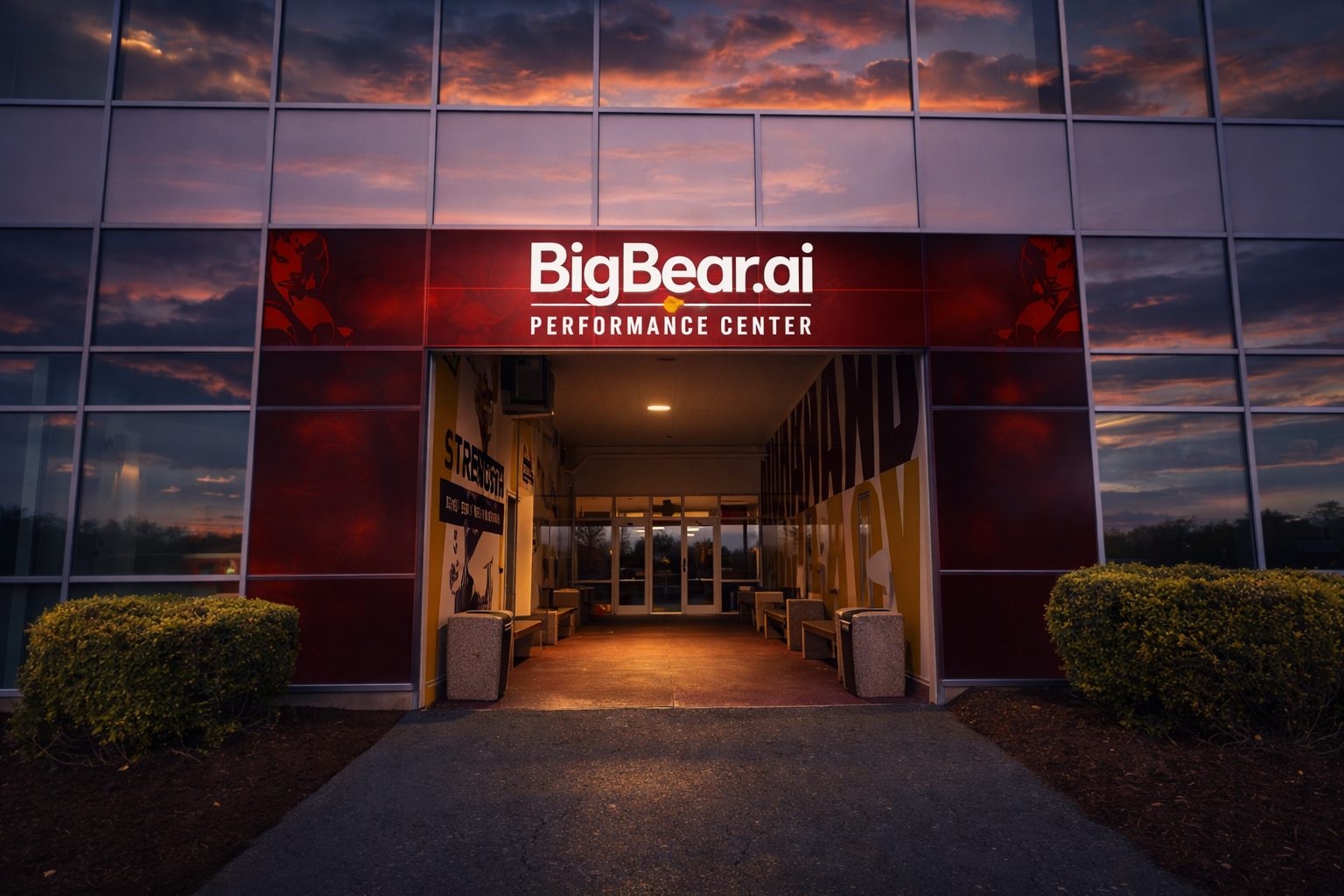

BigBear.ai Holdings, Inc. NYSE:BBAI is heading into the weekend spotlight after a sharp Friday rally, driven by fresh defense-tech headlines and renewed debate over the company’s capital-flexibility plans. Shares last traded at $6.26, after closing up 11.19% in the latest session, with trading volume that stayed extremely elevated by the stock’s recent standards.
For investors tracking “AI defense” names, BigBear.ai’s story right now is a mash-up of three moving parts:
- a newly announced AI-enabled radar partnership (a clear headline catalyst),
- a still-active share authorization vote (a potential dilution overhang, depending on how it’s used), and
- an acquisition-led push toward more recurring, software-style revenue (the longer-term thesis many bulls are buying into, and many bears are questioning).
What moved BBAI this week: the defense partnership that sparked the surge
The most immediate catalyst behind the late-week move was BigBear.ai’s announcement of a strategic partnership with C Speed focused on border security and defense applications.
In its release, BigBear.ai said the collaboration will integrate its ConductorOS AI orchestration platform with C Speed’s software-defined LightWave Radar (LWR) to support “intelligent, autonomous, and real-time threat detection and decision support” for defense and homeland security partners. BigBear.ai Holdings, Inc.
The company also emphasized operational specifics—like using AI at the sensor, fusing data across sensors, and enabling real-time mode changes for radar coverage (airborne, ground, maritime threats).
Market commentary quickly framed the partnership as the “why now” behind the stock spike—but also highlighted an important caveat: the announcement did not include financial terms, making it difficult for investors to immediately model revenue impact or timing. The Motley Fool
Why the partnership matters to the BigBear.ai narrative
BigBear.ai’s positioning has increasingly leaned into “mission-ready AI” deployed in sensitive, regulated environments (defense, intelligence, border protection). The C Speed partnership fits that framing because it ties ConductorOS to a real-world sensor system in an area where buyers often pay for performance, speed, and reliability—not just flashy demos. BigBear.ai Holdings, Inc.
BigBear.ai also linked the partnership to its international footprint, explicitly pointing to its new Abu Dhabi presence as part of the broader geographic push.
Another headline investors are weighing: the authorized share increase and dilution debate
Running alongside the partnership narrative is a corporate governance/capital structure story that matters a lot for a volatile small/mid-cap name: BigBear.ai is seeking shareholder approval to increase authorized common shares from 500 million to 1 billion.
What the company is asking for—and how it’s explaining it
On its proxy-vote page, BigBear.ai says the special meeting has been adjourned to December 30, 2025, with the internet voting deadline also set for 11:59 p.m. ET on December 30.
In a CEO letter posted on the company’s site, BigBear.ai argues that additional authorized shares provide flexibility for acquisitions, financing, and investment—while explicitly stating the vote is not a proposal to immediately issue and sell an additional 500 million shares, but rather to authorize them for potential future use.
What the SEC filing shows about the vote process
In an SEC Form 8-K tied to the company’s special meeting, BigBear.ai reported that stockholders were present representing 54.9% of voting power (quorum). It also disclosed vote totals associated with the proposal to increase authorized shares and described an adjournment of the special meeting to solicit additional proxies.
This is the heart of the investor tension: capital flexibility can enable growth, but share authorization increases can amplify dilution fears—especially for a stock that already trades with “momentum bursts” and high retail attention.
The “big bet” behind the scenes: Ask Sage acquisition and the SaaS-style pivot
The other major pillar of the current BBAI conversation is the company’s acquisition strategy—most prominently its definitive agreement to acquire Ask Sage.
In BigBear.ai’s Q3 2025 release, the company said it signed a definitive agreement to buy Ask Sage for $250 million (subject to customary adjustments). BigBear.ai described Ask Sage as a generative AI platform built for defense, national security agencies, and other regulated sectors, and said Ask Sage supports more than 100,000 users on 16,000 government teams (plus hundreds of commercial companies).
The same release noted:
- Cash balance: $456.6 million as of Sept. 30, 2025
- Backlog: $376 million as of Sept. 30, 2025
- 2025 revenue outlook: $125 million to $140 million
- Expected closing window: late Q4 2025 or early Q1 2026 (and not expected to materially affect 2025 consolidated results) BigBear.ai Holdings, Inc.
BigBear.ai has also described Ask Sage as expected to deliver approximately $25 million in 2025 annual recurring revenue (ARR) on a non-GAAP basis.
Analyst forecasts for BBAI stock: price targets cluster near the current price
From the sell-side snapshot most widely circulated in mainstream market trackers, BigBear.ai currently sits in “split decision” territory:
- Consensus rating: Hold
- Average 12-month price target: $6.33
- High / low targets: $8.00 / $4.00
- Number of analysts in the consensus sample: 5 MarketBeat
A MarketBeat recap also references specific firm-level stances, including HC Wainwright (buy, $8 target) and Cantor Fitzgerald (overweight, $7 target), while noting a sell rating from Weiss Ratings among the set.
The market implication is straightforward: after the recent spike, the consensus target is no longer dramatically above the tape, which tends to reduce the “easy narrative” that Wall Street sees massive upside from here—even while some analysts remain constructive.
Bull vs. bear: the two stories fighting over BBAI’s valuation
BigBear.ai is the kind of stock where the argument is rarely about whether AI matters. It’s about execution, margins, and what investors are paying today for a future business model.
The bullish frame
Bulls tend to focus on:
- Defense and homeland security as durable end markets, where “mission-ready” deployments can stick for years once embedded. BigBear.ai Holdings, Inc.
- The idea that partnerships like C Speed are “distribution channels” that can turn ConductorOS into deployed programs. BigBear.ai Holdings, Inc.+1
- The acquisition-led shift toward more recurring revenue, with Ask Sage as a potential accelerant.
- A balance-sheet narrative that points to cash and backlog as strategic fuel (even if operating results remain uneven).
The bearish frame
Bears are leaning on fundamentals and valuation math:
- BigBear.ai’s revenue pressure and margin challenges: one widely read critical view points to revenue stagnation over multiple years and deterioration in profitability metrics, arguing the “SaaS pivot” isn’t showing up cleanly in the numbers yet. Seeking Alpha
- The risk of overpaying for growth via acquisition: one analysis argues the Ask Sage deal price implies a premium multiple relative to typical benchmarks in adjacent SaaS categories.
- Valuation risk if forward estimates slide: the same analysis highlights a high forward EV/revenue multiple relative to the company’s own historical median.
- Dilution risk: regardless of management intent, expanding authorized shares increases the company’s option set for equity issuance—helpful for growth, but potentially painful for per-share value if used aggressively.
More mainstream commentary has also underscored a core “red flag” metric for many growth investors: BigBear.ai’s Q3 revenue decline (down 20% year over year to $33.1 million) and ongoing questions about quality of earnings and cash generation. BigBear.ai Holdings, Inc.+1
Where BBAI stock stands after the spike: price action and the volatility reality
BigBear.ai’s latest session captured the stock’s defining trait in 2025: violent liquidity.
On Dec. 19, shares opened at $5.74, traded as high as $6.34, and closed at $6.26, with volume around 210 million shares.
This level of turnover can be a double-edged sword:
- It can amplify upside when headlines hit.
- It can also unwind quickly when the news cycle slows or when investors refocus on revenue, margins, and dilution.
What investors will watch next
Into year-end and early 2026, the “next data points” that are most likely to move BigBear.ai stock are concrete and trackable:
- Share authorization outcome and follow-through
Whether the vote passes—and more importantly, how the company uses any newly authorized shares (or doesn’t). - Financial specifics tied to the C Speed partnership
The market has the headline, but not the dollar signs. Any update that clarifies revenue potential, program duration, or deployment scale could materially change expectations. - Ask Sage closing and integration milestones
BigBear.ai has laid out timing expectations (late Q4 2025 or early Q1 2026). Investors will be watching ARR retention, cross-sell opportunities, and margin profile. - Evidence the “platform” story is translating into margins
If ConductorOS and related offerings drive higher-margin, repeatable revenue, the stock’s valuation debate changes. If not, the “AI hype vs. numbers” critique stays in control of the conversation. Seeking Alpha+1
Bottom line for Dec. 20, 2025: BigBear.ai is getting attention for legitimate catalysts—defense partnerships and an acquisition aimed at recurring revenue—but the stock is still priced like a turnaround that must prove it can convert headlines into durable growth and improving unit economics.