
NEW HAVEN, August 28, 2026, 04:38 (EDT)
- Biohaven closed at $16.12 on Thursday, down 4.9%.
- Volume reached 5.43 million shares, or 175% of its 65-day average.
- Raymond James cut its target to $30 from $50, retaining Strong Buy.
- The opakalim deal brings $400 million in cash and extends runway through 2028.
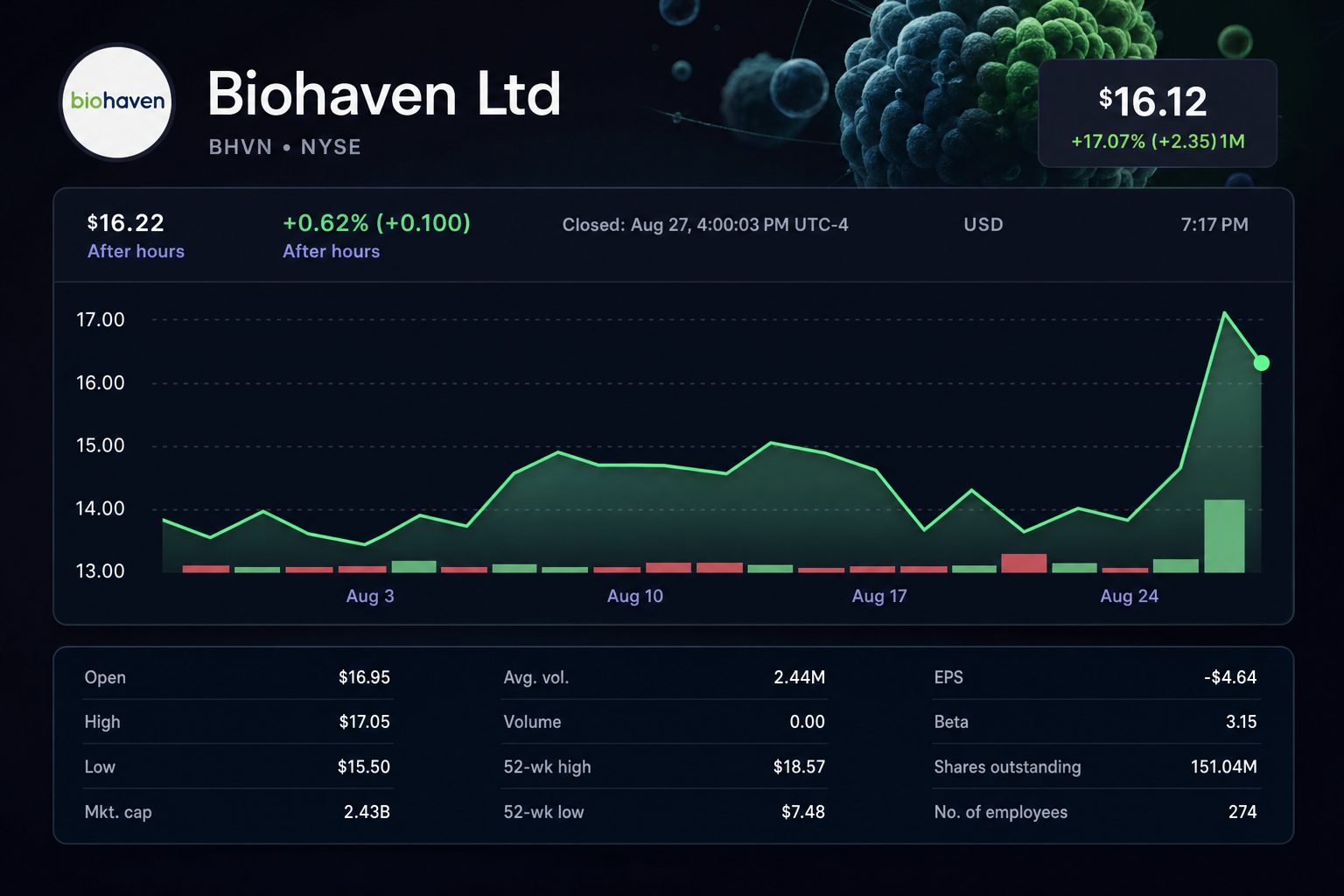
Biohaven Ltd. NYSE:BHVN shares fell 4.9% on Thursday after Raymond James cut its price target by 40%. The stock closed at $16.12.
The decline exposes the trade-off in Biohaven’s opakalim transaction. The company gained cash and removed near-term clinical risk. Investors also lost much of the drug’s direct economics.
Raymond James lowered its target to $30 from $50 while retaining Strong Buy. The firm removed opakalim’s full economic benefit from its model after the asset monetization. Its new target remains 86% above Thursday’s close analyst note.
Biohaven licensed its Kv7 ion-channel platform to SK Biopharmaceuticals. The agreement provides $400 million in cash, including $350 million at closing. Total upfront and milestone payments could reach $795 million, plus royalties.
That cash matters. Biohaven reported $238.0 million in cash and equivalents at June 30. The transaction therefore supplies cash equal to about 1.7 times that balance and extends management’s runway through 2028 second-quarter update.
The funding reduces pressure to raise equity near current prices. It also shifts valuation toward the company’s remaining pipeline. Raymond James identifies BHV-1300 as the more important value driver.
BHV-1300 is an IgG degrader in a pivotal Graves’ disease study. Raymond James expects pivotal data in late 2027 and a possible 2028 launch. Those dates now carry more weight in Biohaven’s equity story.
Trading reflected that repricing. Volume reached 5.43 million shares, compared with a 3.11 million average. The stock ranged from $15.50 to $17.05 before closing near the lower half market data.
Biohaven’s market value was about $2.43 billion at the close. Short interest represented 13.87% of the public float on August 14. That positioning can amplify reactions to clinical or financing news.
| Investor metric | Latest figure | Why it matters |
|---|---|---|
| Closing price | $16.12 | Down 4.9% on August 27 |
| Trading volume | 5.43 million | 175% of 65-day average |
| Market capitalization | $2.43 billion | Frames pipeline value |
| June cash and equivalents | $238.0 million | Pre-transaction balance |
| Deal cash | $400 million | Extends runway through 2028 |
| Potential deal payments | Up to $795 million | Includes contingent milestones |
Opakalim, also called BHV-7000, selectively activates Kv7.2 and Kv7.3 channels. Biohaven had advanced the therapy in epilepsy studies. The platform was designed to limit adverse effects associated with older potassium-channel activators company pipeline.
RBC Capital recently raised its target to $23 from $22 and kept Outperform. That target sits 43% above Thursday’s close. The gap between $23 and Raymond James’s $30 shows how pipeline assumptions now drive valuation.
Risks: Biohaven remains a clinical-stage biotechnology company with negative earnings. Trial delays, weak efficacy, safety findings or higher spending could shorten the runway. Milestone payments are contingent and may never be earned.
The deal improves near-term liquidity but narrows the valuation debate. Investors are no longer pricing only opakalim’s epilepsy potential. They are pricing Biohaven’s ability to convert its remaining pipeline into late-stage data.
Related articles: Pharmaceuticals