
SAN JOSE, California, April 29, 2026, 05:07 (PDT)
- Bloom Energy bumped up its 2026 revenue outlook to a range of $3.4 billion to $3.8 billion following a record-setting first quarter.
- Revenue for the first quarter surged 130.4% to $751.1 million, fueled by product revenue, which shot up 208.4%.
- Oracle and BorderPlex announced that Project Jupiter, located in New Mexico, is set to tap as much as 2.45 gigawatts of Bloom fuel-cell capacity.
Bloom Energy lifted its full-year forecast as first-quarter revenue soared, more than doubling. The company is offering investors a glimpse at whether surging AI data-center power needs might translate into substantial, repeat business.
Revenue at the San Jose company jumped 130.4% to $751.1 million for the quarter ending March 31. Net income came in at $70.7 million, or 23 cents per diluted share. That’s a swing from last year’s $23.8 million loss, or 10 cents a share.
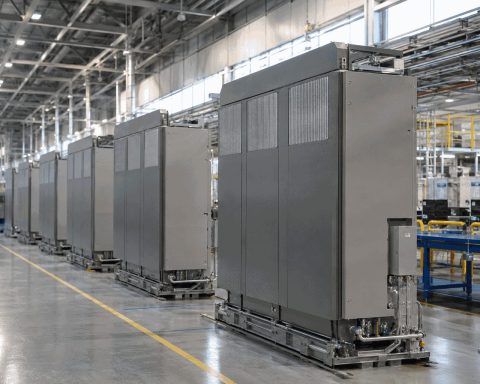
Power’s a sticking point for artificial intelligence expansion right now. Bloom’s solid oxide fuel cells—on-site generators producing electricity via electrochemical reactions, not combustion—are getting attention as data-center builders hunt for quicker solutions than waiting on grid improvements.
Bloom has updated its guidance, projecting 2026 revenue between $3.4 billion and $3.8 billion, and adjusted earnings per share coming in at $1.85 to $2.25. The company’s investor presentation shows revenue growth landing near 80% at the midpoint of that forecast.
Bloom blew past analysts’ forecasts for the quarter. According to The Wall Street Journal, which referenced FactSet, projections sat at roughly $540 million in revenue and 12 cents in adjusted EPS. The company instead posted $751.1 million and 44 cents per share.
Oracle raised the stakes with its new energy blueprint. Together with BorderPlex Digital Assets, Oracle announced that Project Jupiter—a planned AI data center campus in Doña Ana County, New Mexico—will be entirely powered by Bloom systems. That shift ditches the earlier plan for gas turbines and diesel generators, swapping them out for one on-site microgrid.
Mahesh Thiagarajan, executive vice president at Oracle Cloud Infrastructure, described Bloom’s technology as providing the project with “reliable on-site power with a lower environmental footprint.” Bloom’s Chief Commercial Officer Aman Joshi, for his part, labeled the company a “platform of choice” for AI data centers. Oracle
Bloom’s founder and CEO KR Sridhar called it the “era of digital power.” Chief Financial Officer Simon Edwards pointed to “disciplined execution” as Bloom ramps up. SEC
Regular trading in New York hadn’t begun yet when the numbers came in. Bloom was quoted at $226.37, off $8.36 from the prior close, according to market data.
The landscape is filling up with contenders. Plug Power and Ballard Power Systems show up in industry research as key fuel-cell generator competitors, while Oracle’s shift in design puts Bloom up against not just them but also traditional gas turbine and diesel backup gear.
Execution stands out as the main risk. Bloom’s filings highlight a laundry list of potential setbacks: steep system launch costs, financing hurdles, possible supply snags, tariffs, lags in AI data-center takeup, plus construction or installation holdups.
Oracle’s position comes with an equity twist. According to a prospectus supplement filed Monday, the tech giant holds a warrant that could let it buy as many as 3.53 million Bloom Class A shares at $113.28 apiece, exercisable through Oct. 9, 2026. Bloom won’t get any proceeds if Oracle later sells those shares.
Bloom’s story goes beyond its AI theme. There’s a sizable forecast in play, a major Oracle-backed project on deck, and first-quarter profits riding the AI surge. Now, the company faces a different hurdle: scaling up capacity quickly, all while holding onto those hard-won margin improvements.
Related articles: NYSE:BE