
San Jose, California, April 28, 2026, 15:05 PDT
Bloom Energy lifted its full-year 2026 outlook on Tuesday after reporting that first-quarter revenue more than doubled and the fuel-cell maker flipped to a profit. Quarterly revenue hit $751.1 million for the period ended March 31, up 130.4% year-over-year, while net profit attributable to common shareholders landed at $70.7 million—erasing a $23.8 million loss from a year ago. The results are another signal that AI data center demand is translating into real sales.
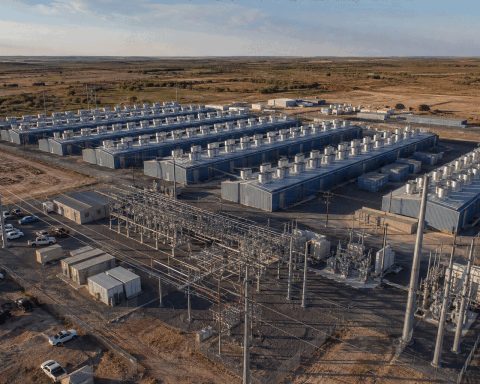
Timing is critical here. Data-center operators want big chunks of power—and they want them before utilities can lay transmission or ramp up generation. That’s pushed Bloom’s on-site fuel cells, which generate electricity close to where it’s needed, into the spotlight. The Wall Street Journal flagged a quarter fueled by surging digital-power demand from the AI wave.
Bloom now sees 2026 revenue landing somewhere between $3.4 billion and $3.8 billion, and it’s projecting adjusted (non-GAAP) earnings will hit $1.85 to $2.25 per share. These non-GAAP numbers set aside certain expenses like stock-based pay, so they differ from what’s reported under standard accounting.
Wall Street was caught off guard as the results blew past forecasts. Investors.com noted adjusted earnings came in at 44 cents a share, sailing over expectations. Revenue landed well above analyst targets of roughly $539.9 million. Shares of Bloom jumped more than 13% after hours once the numbers dropped.
Product revenue surged 208.4% to hit $653.3 million, taking the lead in results. Gross margin came in at 30.0%. Operating income clocked $72.2 million—up by $91.3 million from the same period last year. Bloom reported $73.6 million in operating cash flow, flipping last year’s outflow into positive territory.
Founder and CEO KR Sridhar called it “the era of digital power for the digital age” at Bloom. CFO Simon Edwards pointed to “differentiated technology” and a strategy that’s all about “disciplined execution.” Stock Titan
Just ahead of its earnings release, Oracle teamed up with BorderPlex Digital Assets to announce that Bloom fuel cells will provide all the power for Oracle’s Project Jupiter AI data-center in Doña Ana County, New Mexico. According to both companies, the facility is expected to tap up to 2.45 gigawatts of Bloom fuel-cell capacity—a shift away from the site’s previously planned gas turbines and diesel generators.
Mahesh Thiagarajan, an executive at Oracle Cloud Infrastructure, said Bloom’s fuel-cell setup is expected to provide “highly reliable on-site power with a lower environmental footprint.” According to Oracle and BorderPlex, the new approach would slash nitrogen oxide (NOx) emissions—smog-forming pollutants—by around 92% compared to the previous gas-turbine proposal, while water use would be almost zero. Oracle
Oracle’s ambitions stretch beyond just one campus. Earlier this month, Bloom announced a master services agreement with Oracle to supply up to 2.8 gigawatts of fuel-cell systems. Of that, 1.2 gigawatts are already locked in, and installations have started. Last year, Bloom managed to deliver a fuel-cell system to Oracle in just 55 days—well ahead of the scheduled 90 days.
Bloom isn’t the only player seeing action. Solaris Energy Infrastructure shares climbed after it landed a long-term deal to deliver over 600 megawatts to a major tech firm’s data center, according to Barron’s. It’s another sign of distributed-power providers scrambling to meet surging demand as AI buildouts accelerate the need for faster energy hookups.
There’s a risk the AI power curve could veer off course. Bloom pointed to a grab bag of potential setbacks—construction delays, supply bottlenecks, snags connecting to utilities, tariffs, financing crunches, even manufacturing hiccups. Any real or rumored stall in AI uptake could also tap the brakes on data-center growth. On top of that, Bloom said backlog doesn’t always translate neatly into revenue.
This quarter, Bloom finally has a straightforward narrative: revenue is climbing, margins are improving, and those sizable AI deals are now tangible, not just projections. Still, the higher forecast means expectations are up. Now, the company has to prove it can deliver and install quickly enough to meet the demand investors have already factored in.
Related articles: Earnings Reports