
New York, Feb 27, 2026, 08:07 ET — Premarket
- Blue Owl closed Thursday at $11.22, slipping roughly 1.2%.
- Rating agencies flagged liquidity stress, not loan quality issues, for a major Blue Owl retail credit fund.
- CoreWeave shares stumbled after earnings, bringing fresh focus to AI data-center lending—an area where Blue Owl remains exposed.
Blue Owl Capital Corp II’s move to tweak its redemption policy was prompted by liquidity requirements, not by any deterioration in credit, according to Moody’s and S&P Global Ratings, cited by Alternative Credit Investor. Marc Pinto, who oversees private credit globally at Moody’s, noted, “Funds will need to hold a larger proportion of more liquid and lower-yielding investments.” Shares of Blue Owl Capital Inc slid 1.2% to end Thursday at $11.22. Alternative Credit Investor
Timing is key here. OBDC II lands squarely in the tricky middle ground of private credit’s retail expansion—investors expect to cash out at intervals, yet these loans aren’t stocks and don’t move like them. Blue Owl’s approach to handling withdrawals has turned into a real-world example of what happens to “semi-liquid” credit vehicles once the mood shifts. Financial Times
Blue Owl’s business development companies filed on Feb. 18, laying out plans to offload $1.4 billion in direct-lending assets at roughly 99.7% of their face value. Cash proceeds are set to go back to OBDC II shareholders by March 31, assuming the board signs off. “We saw strong demand to purchase these investments at fair value from highly sophisticated institutional investors,” said Craig W. Packer, chief executive of Blue Owl’s BDCs. SEC
Blue Owl keeps returning to scale and diversification when talking to investors. Its most recent deck pegs assets under management at more than $307 billion as of Dec. 31, breaking out $157.8 billion in Credit AUM and $80.6 billion for Real Assets.
Still, the incident has thrown more fuel on the debate over valuations, tender offers, and the true definition of “liquidity” in private credit. Last week, Reuters reported that investors were casting a sharper eye across the space, looking not just at credit-focused alternative managers but also at funds heavily tilted toward software. Reuters
CoreWeave’s numbers dropped just ahead of Friday’s open. The AI cloud firm reported a capital spending jump—more than double, according to Reuters. Shares slid over 8% after the bell on Thursday.
CoreWeave’s CFO Nitin Agrawal says the company is “laying a strong foundation for the future” during its scaling phase, pointing to a contracted revenue backlog of $66.8 billion. That figure highlights just how crucial financing and counterparties have become on this trade. CoreWeave
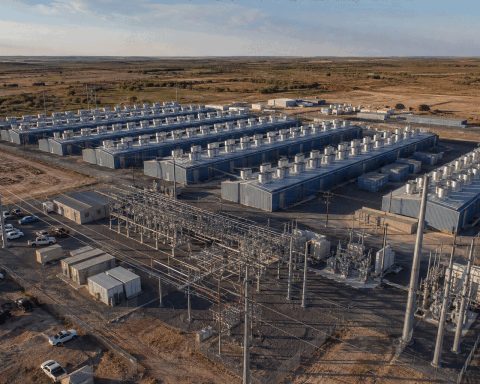
Blue Owl’s connection comes via a data-center venture in Lancaster, Pennsylvania, with CoreWeave as tenant. The firm has indicated it’s on the hook for roughly $500 million in bridge financing until March 2026, and per Bisnow, its CoreWeave exposure sits at about 1% of real-assets AUM.
But there’s another risk in play. It’s not just about potential credit losses—funds catering to retail investors often offer redemption windows, yet the assets themselves can be tough to unload quickly, especially if markets turn south. According to MarketWatch, the private-credit surge hasn’t really faced a full-blown recession without the safety net of government support. Add in layers of complexity and leverage, and trouble spots can stay hidden until they erupt.
OWL stock now faces the question of whether its cash return schedule can settle the ongoing debate. The company plans to distribute its $0.225 quarterly dividend per share on March 2. Investors, meanwhile, are eyeing the OBDC II return-of-capital payout, which management has said will come by the end of March.