
New York, Jan 28, 2026, 11:08 EST — Regular session
- Boeing shares dropped roughly 1% in morning trading following Q4 results that were largely driven by a divestiture gain
- Management holds firm on positive 2026 free cash flow forecast despite Spirit integration expenses hitting
- Investors are zeroing in on the pace of 737 MAX production increases and the timing uncertainties tied to the 777X certification process
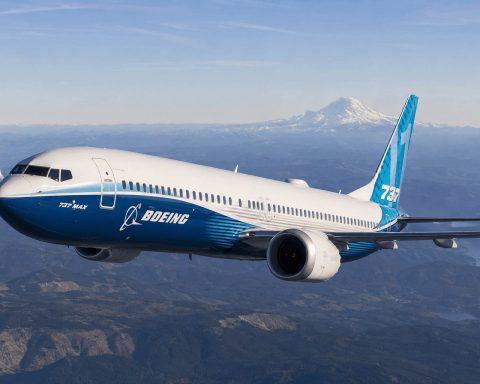
The Boeing Company’s shares slipped roughly 1% Wednesday, retreating from earlier gains as investors digested a cash-flow forecast that clashed with earnings boosted by a one-off divestiture gain. Boeing stock traded down 1.0% at $242 in morning New York session.
This matters because Boeing is pushing to prove its recovery can be self-financed. Wall Street has zeroed in on free cash flow — the cash left after capital expenditures — as the key measure, following years weighed down by heavy debt and costly production fixes.
Earnings grabbed the spotlight. The tougher question: can the factory and its suppliers maintain momentum without fresh delays? And will that translate into actual cash flow in 2026, rather than just paper profits?
Boeing reported fourth-quarter revenue of $23.948 billion on Tuesday, with GAAP earnings per share at $10.23 and “core” earnings per share at $9.92. The results were largely boosted by a $9.6 billion gain from closing its Digital Aviation Solutions deal. Free cash flow hit $375 million for the quarter. Commercial deliveries stood at 160 for the period and are projected at 600 for 2025. The backlog climbed to a record $682 billion. CEO Kelly Ortberg said Boeing has “set the foundation to keep our momentum going in the year ahead.” MediaRoom
On the earnings call, CFO Jay Malave indicated Boeing anticipates $1 billion to $3 billion in free cash flow by 2026, starting with cash burn in H1 before picking up later, Aviation Week reported. The outlook factors in about a $1 billion hit from integrating Spirit AeroSystems, hefty capital expenditures, a $684 million DOJ penalty tied to the 2025 MAX settlement, plus a new $565 million charge on the KC-46 tanker. Melius Research’s Scott Mikus noted the guidance might improve if Boeing can dodge a prolonged strike by SPEEA engineers in October.
Executives directed investors back to the fundamentals: steady production and certifications. Ortberg noted on the call that the 737 program has ramped up to 42 jets per month and aims for 47 later this year. The 787 line is holding steady at eight per month, with plans to increase to 10. He also mentioned a potential durability concern spotted on the 777X engine during an inspection, adding that Boeing is collaborating with GE to get to the bottom of it. Malave said, “we continue to believe the $10 billion free cash flow mark is very attainable.” The Motley Fool
Boeing’s stock tracked the sector, sliding alongside the iShares U.S. Aerospace & Defense ETF, which fell roughly 1% on the day.
On Wednesday, Boeing forecast that India and South Asia will bring in 3,290 commercial aircraft over the next two decades. The company raised its long-term demand outlook for the region, driven by carriers growing capacity instead of just replacing aging fleets.
The widebody market stays tight. On Wednesday, Delta Air Lines placed an order for 31 Airbus widebodies to update its international fleet, replacing aging Boeing 767s and early A330s. This comes after Delta had already committed to adding 30 Boeing 787-10s.
That said, challenges remain. Any delay in FAA certification, a production ramp-up that falls short of expectations, or another expensive defense charge could drag cash flow down to the bottom of guidance and keep debt concerns front and center.
Boeing’s next key date is early February at the Singapore Airshow, running Feb. 3-8. It’s usually where the company fields tough questions on orders, production, and delivery schedules.
Related articles: NYSE:BA