
NEW YORK, August 9, 2026, 11:03 EDT — U.S. exchanges have ended trading for the session.
- The FAA has mandated checks for 471 737-8, 737-9, and 737-8200 aircraft registered in the U.S., starting September 10. At this time, no cracks have been detected on MAX aircraft.
- The FAA projects an initial visual inspection will cost $40,035, with each detailed inspection cycle potentially reaching $160,140. Costs for repairs have not yet been determined.
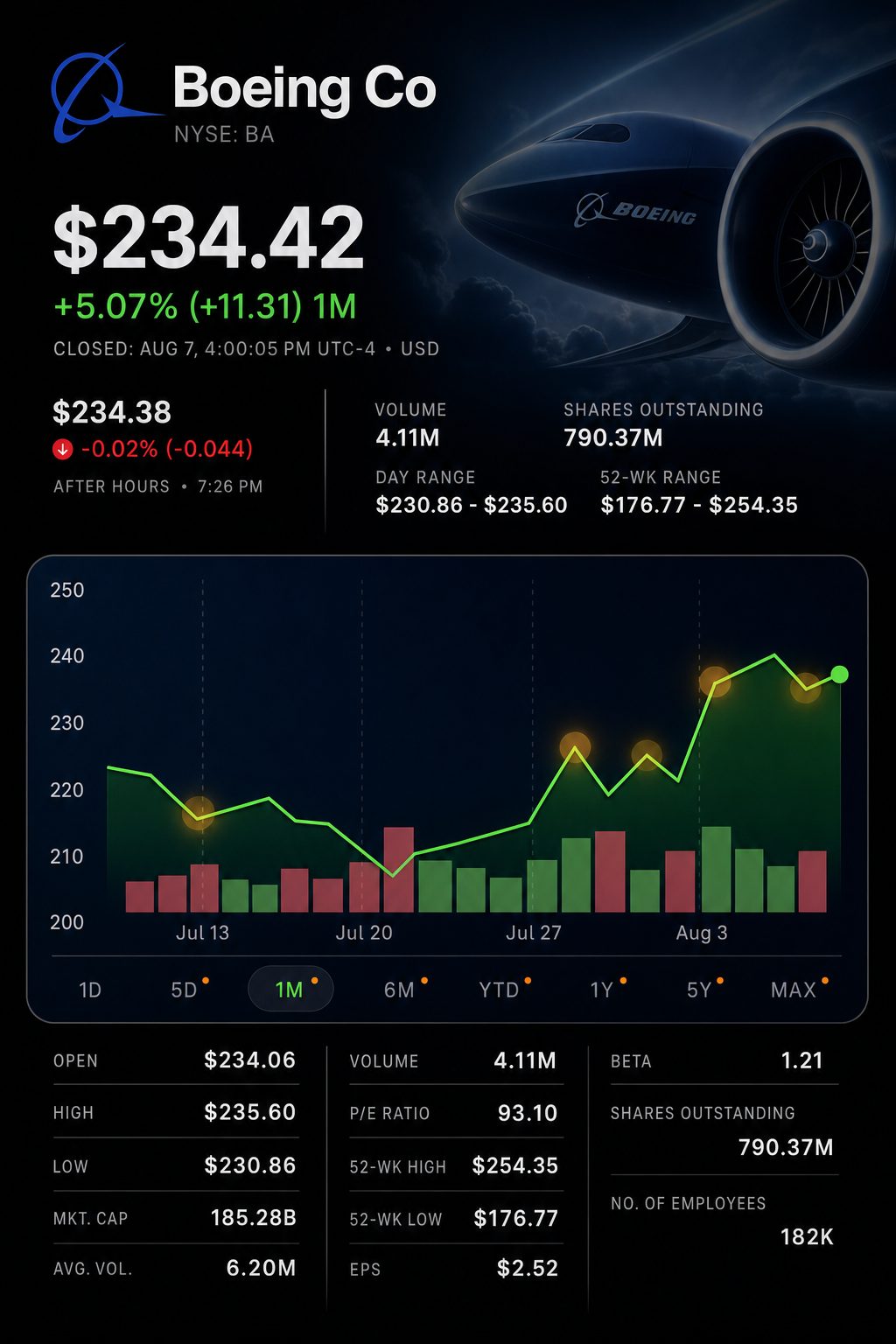
- Boeing ended Friday’s session at $234.42, rising 0.96%. The stock advanced 8.5% for the week.
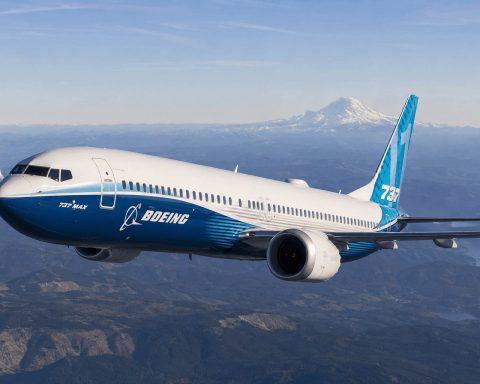
Boeing Co NYSE:BA closed higher on Friday following a regulator directive for crack inspections on several hundred 737 MAX aircraft. The stock advanced 0.96% to reach $234.42, marking an 8.5% increase compared to the prior Friday’s close.
Markets viewed the directive as a routine maintenance issue rather than a new grounding. Inspections have not uncovered any cracks in the relevant MAX models, and anticipated inspection expenses remain low.
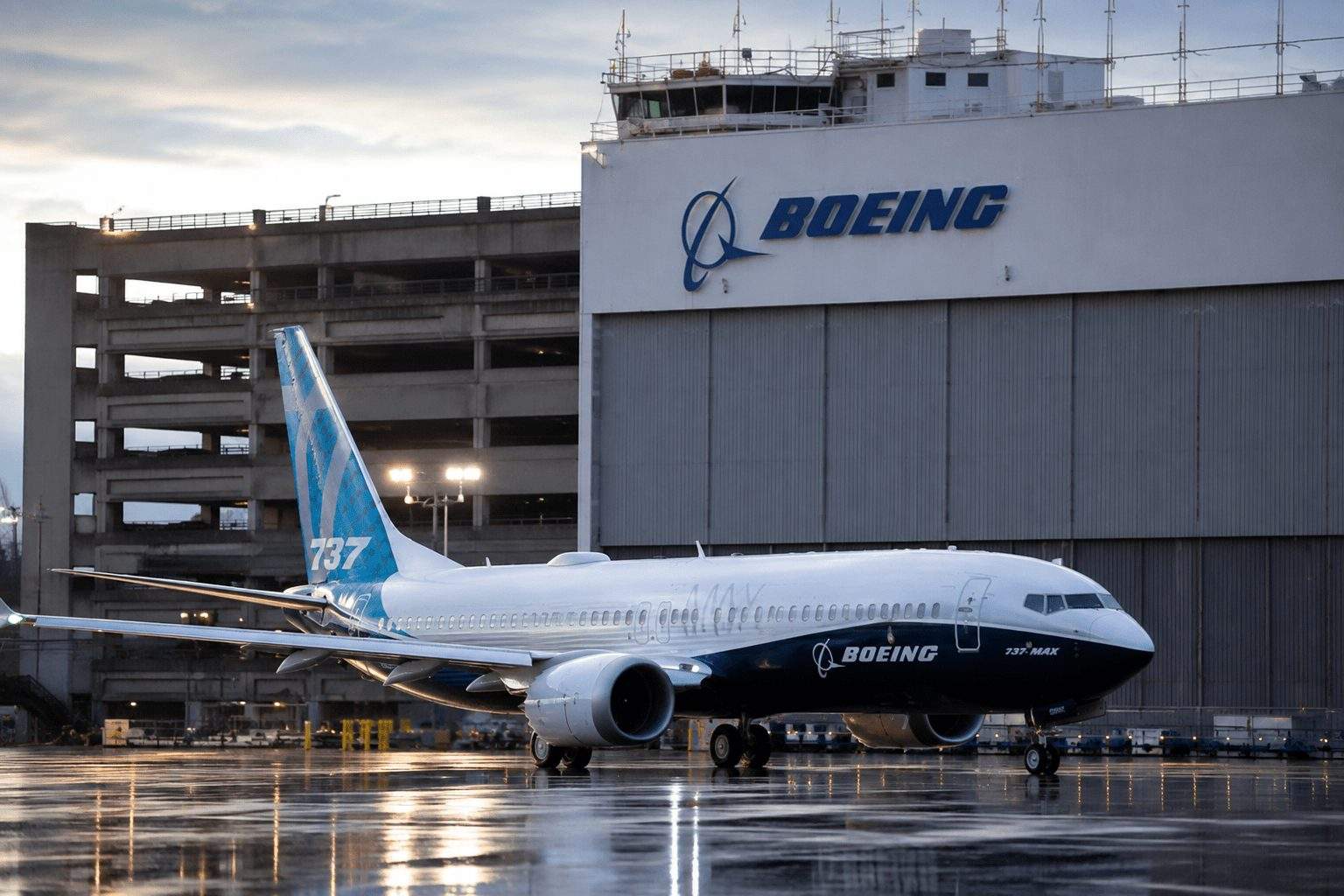
The regulation applies to the 737-8, 737-9 and 737-8200 models and will come into force on September 10. Examinations target a metal reinforcement next to the forward galley door, an area where cracks could compromise the fuselage’s strength.
FAA inspection range and projected cost for operators
| Required action | Labor per aircraft | Cost per aircraft | Estimated U.S. operator cost |
|---|---|---|---|
| Check exterior visually for prior repairs | 1 hour | $85 | $40,035 |
| Conduct detailed and eddy-current crack checks | Up to 4 hours per cycle | Up to $340 | Up to $160,140 per cycle |
| Repair work or alternative checks | Not estimated | Not estimated | FAA has not provided a specific estimate |
The data pertains to 471 aircraft registered in the U.S., not counting subsequent repairs.
The directive follows reports of cracks found on aging 737 Next Generation jets. The 737 MAX shares both the design and manufacturing approach. Boeing noted it has collaborated with airlines to address the matter over the past six years.
The calculation stands out for investors. The FAA’s top-end fleet estimate for a specific inspection cycle amounts to roughly 0.025% of Boeing’s $631 million free cash flow in the second quarter. This represents a comparison of scale, not an expense recorded by Boeing. The airlines are responsible for the listed inspection labor.
Friday’s advance sealed a robust week. The FAA approved the smaller MAX 7 earlier in the week on Monday. BNP Paribas SA EPA:BNP issued a double-upgrade for Boeing, driving shares up by 8.03% during the session. That surge accounted for almost the entire weekly increase.
Market response on Friday
| Security | Friday close | Daily move |
|---|---|---|
| Boeing Co NYSE:BA | $234.42 | up 0.96% |
| Southwest Airlines Co NYSE:LUV | $47.05 | gained 0.20% |
| United Airlines Holdings Inc NASDAQ:UAL | $129.56 | up 0.34% |
| American Airlines Group Inc NASDAQ:AAL | $15.94 | fell 0.62% |
| S&P 500 | 7,757.64 | rose 0.62% |
Airline stocks showed varied performance, with no widespread decline linked to the directive.
Boeing’s second-quarter figures point to that strength. Revenue for the period climbed 8% to $24.6 billion. The company delivered 171 commercial aircraft, and free cash flow amounted to $631 million. Backlog reached an all-time high of $715 billion.
Chief Executive Kelly Ortberg commented, “Our operations are more stable and key certification programs remain on plan.” Analyst Rob Stallard of Vertical Research Partners summarized the quarter succinctly: “The recovery continues.” Boeing Investors
Highlighted analyst ratings
| Firm and analyst | Recommendation | Price target | Implied upside from $234.42 | Latest cited action |
|---|---|---|---|---|
| BNP Paribas SA EPA:BNP, Matthew Akers | Outperform; upgraded by two notches | $300 | 28.0% | August 3 |
| JPMorgan Chase & Co NYSE:JPM, Seth Seifman | Overweight | $290 | 23.7% | July 29 |
| Jefferies Financial Group Inc NYSE:JEF, Sheila Kahyaoglu | Buy | $295 | 25.8% | February 2 |
| Wall Street consensus snapshot | 80% Buy | $276 average | 17.7% | August 3 |
The target upside is based on the closing price from Friday. Analyst snapshots may differ depending on the source and when they are published.
The investment thesis continues to depend on operational performance. Boeing advanced 737 output to a pace near 47 jets each month and launched initial low-rate manufacturing at its new Everett facility in July. The next significant certification milestone is the MAX 10, with Boeing’s certification anticipated in 2026 and initial deliveries set for 2027.
Boeing’s upcoming July order-and-delivery report will be the next key checkpoint. Airbus SE EPA:AIR recorded 67 aircraft deliveries in July, bringing its total for the first seven months to 418. In comparison, Boeing delivered 314 aircraft through June, marking its best first-half performance since 2018.
Commercial delivery performance report
| Planemaker | First-half 2026 deliveries | July deliveries | Latest reported total |
|---|---|---|---|
| Boeing Co NYSE:BA | 314 | Update not published | 314 as of June |
| Airbus SE EPA:AIR | 351 | 67 | 418 as of July |
The reporting periods are not aligned. Boeing’s upcoming July update will offer the next comparable snapshot.
Risks: The FAA has not provided a definitive repair cost figure. Discovering additional cracks, more frequent inspections, or increased time out of service could increase claims from airlines. Additional regulatory attention might also delay production or certification of the MAX 10. Such developments would have greater impact than the usual inspection costs.
Currently, the market response remains contained. Investors view the inspections as under control. The key question is if Boeing can continue turning increased output and deliveries into consistent cash generation.
Related articles: NYSE:BA