
NEW YORK, August 9, 2026, 11:06 EDT — U.S. markets have closed.
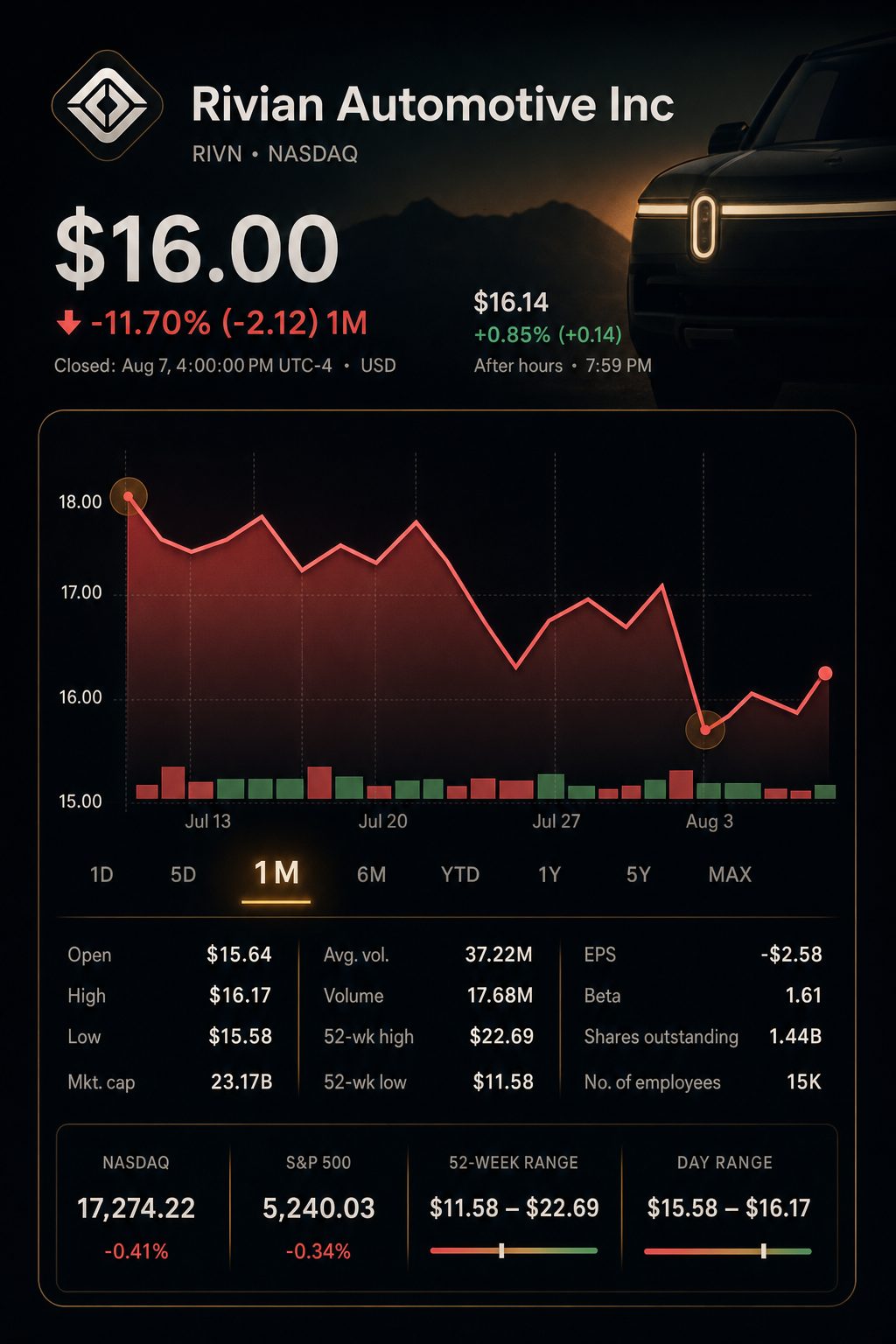
- Rivian shares finished at $16.00 on Friday, rising 4.03% for the day and adding 4.20% across five sessions.
- To reach its yearly goal, the company must deliver 42,441–47,441 vehicles in the second half, representing an increase of 88%–110% compared to the first-half total.
- Gross profit from software and services reached $215 million, while automotive posted a $36 million loss.
Rivian Automotive’s stock rebounded last week, but the more challenging phase lies ahead.
The electric-vehicle manufacturer reported deliveries of 22,559 vehicles in the first half. To meet its midpoint guidance of 67,500 units, the company needs to deliver 44,941 more vehicles in the second half. This target is nearly twice the volume achieved in the first half.
The necessary quarterly average is 22,471 vehicles, which is 84% higher than deliveries in the second quarter. This provides limited margin for production setbacks.
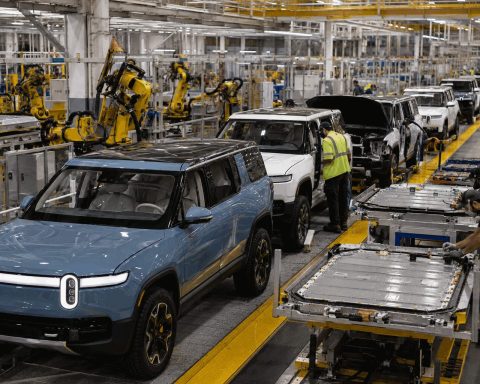
Rivian started external R2 deliveries on June 9. The coming half will mark the initial extended assessment of the company’s latest production line.
| 2026 delivery scenario | Full-year target | H2 deliveries required | H2 versus H1 | Required quarterly average |
|---|---|---|---|---|
| Low end | 65,000 | 42,441 | +88% | 21,221 |
| Midpoint | 67,500 | 44,941 | +99% | 22,471 |
| High end | 70,000 | 47,441 | +110% | 23,721 |
Based on Rivian’s announced deliveries for the first half and its latest guidance.
RJ Scaringe, Chief Executive, said to Reuters that Launch Edition conversion rates had “meaningfully above our own internal projections.” He added that he anticipates the R2’s vehicle gross margin will become positive in the second half. Reuters
Demand represents just one part of the equation. Rivian needs to fulfill those orders while keeping unit costs from rising again.
Revenue for the second quarter increased by 27% to reach $1.658 billion. Consolidated gross profit turned positive at $179 million, and adjusted EBITDA losses improved by $288 million. Nevertheless, free-cash-flow consumption more than doubled.
| Operating measure | Q2 2025 | Q2 2026 | Year-on-year change |
|---|---|---|---|
| Deliveries | 10,661 | 12,194 | up 14% |
| Revenue | $1.303 billion | $1.658 billion | up 27% |
| Automotive gross profit/(loss) | $(335) million | $(36) million | $299 million better |
| Software/services gross profit | $129 million | $215 million | $86 million higher |
| Adjusted EBITDA | $(667) million | $(379) million | $288 million higher |
| Free cash flow | $(398) million | $(849) million | $451 million lower |
Software and services accounted for 120% of total gross profit before losses in the automotive division lowered the overall figure. The segment posted a margin near 42%. The automotive margin stayed close to negative 3.1%.
Volkswagen Group ETR:VOW3 provided $308 million via its partnership with Rivian. This amount accounted for 60% of the company’s software and services income. As a result, Rivian’s stated profitability is still influenced by factors beyond vehicle margins.
Rivian climbed 4.03% on Friday amid a rally in growth stocks. The Nasdaq Composite added 1.3% after U.S. payrolls registered a surprise decline of 23,000 and Treasury yields fell. Rivian’s trading volume was just 52% of its 65-day average.
The stock advanced more over five days than key auto sector peers, but its performance remained below the Nasdaq, which climbed 5.2% in the week.
| Company | Friday close | Friday change | Five-day change | 2026 year to date |
|---|---|---|---|---|
| Rivian Automotive NASDAQ:RIVN | $16.00 | +4.03% | +4.20% | -18.82% |
| Tesla NASDAQ:TSLA | $328.58 | +2.83% | +2.02% | -26.94% |
| Lucid Group NASDAQ:LCID | $7.04 | +0.86% | -8.57% | -33.40% |
| General Motors NYSE:GM | $87.58 | +0.74% | -0.11% | +7.70% |
The recovery has not fully offset the drop following the earnings report. Rivian is still trading 4.9% under its July 30 closing price of $16.83, which was logged before the release of quarterly results.
Rivian’s liquidity offers operational runway, though dilution is still a significant factor. At the end of June, the company held $5.31 billion in cash and short-term investments. Subsequently, it brought in about $1.3 billion through a sale of 86.25 million shares. This represented approximately 6.3% of the corporation’s outstanding shares as of June.
Opinions among analysts are mixed. Over a three-month span, Google Finance tracked five buy ratings, seven holds, and four sells. The mean 12-month price target was $16.88, representing a 5.5% premium to Friday’s closing price. These projections are analysts’ estimates, rather than official guidance.
| Analyst | Firm | Recommendation | Target | Versus $16 close | Date |
|---|---|---|---|---|---|
| Edison Yu | Deutsche Bank ETR:DBK | Buy | $24 | +50.0% | July 31 |
| Alexander Potter | Piper Sandler NYSE:PIPR | Buy | $20 | +25.0% | July 31 |
| Tom Narayan | RBC Capital Markets / Royal Bank of Canada TSE:RY | Hold | $16 | 0.0% | July 30 |
| Andrew Percoco | Morgan Stanley NYSE:MS | Sell | $14 | -12.5% | July 31 |
Price targets range from $14 to $24, highlighting the main point of contention: can R2 scale up before the benefits of software support and new capital begin to fade?
The macroeconomic calendar is packed next week. July consumer inflation data is due Wednesday, with producer prices out Thursday and retail sales figures on Friday. All three reports are set for release at 8:30 a.m. EDT. High-beta EV stocks are likely to remain sensitive to trends in interest rates and consumer demand expectations.
Risks: Delays in the R2 ramp, lower order conversion, price reductions, increased supply costs, or additional equity issuance may put pressure on margins. Improved production yields and continued software expansion could help mitigate these risks.
Related articles: NASDAQ:RIVN