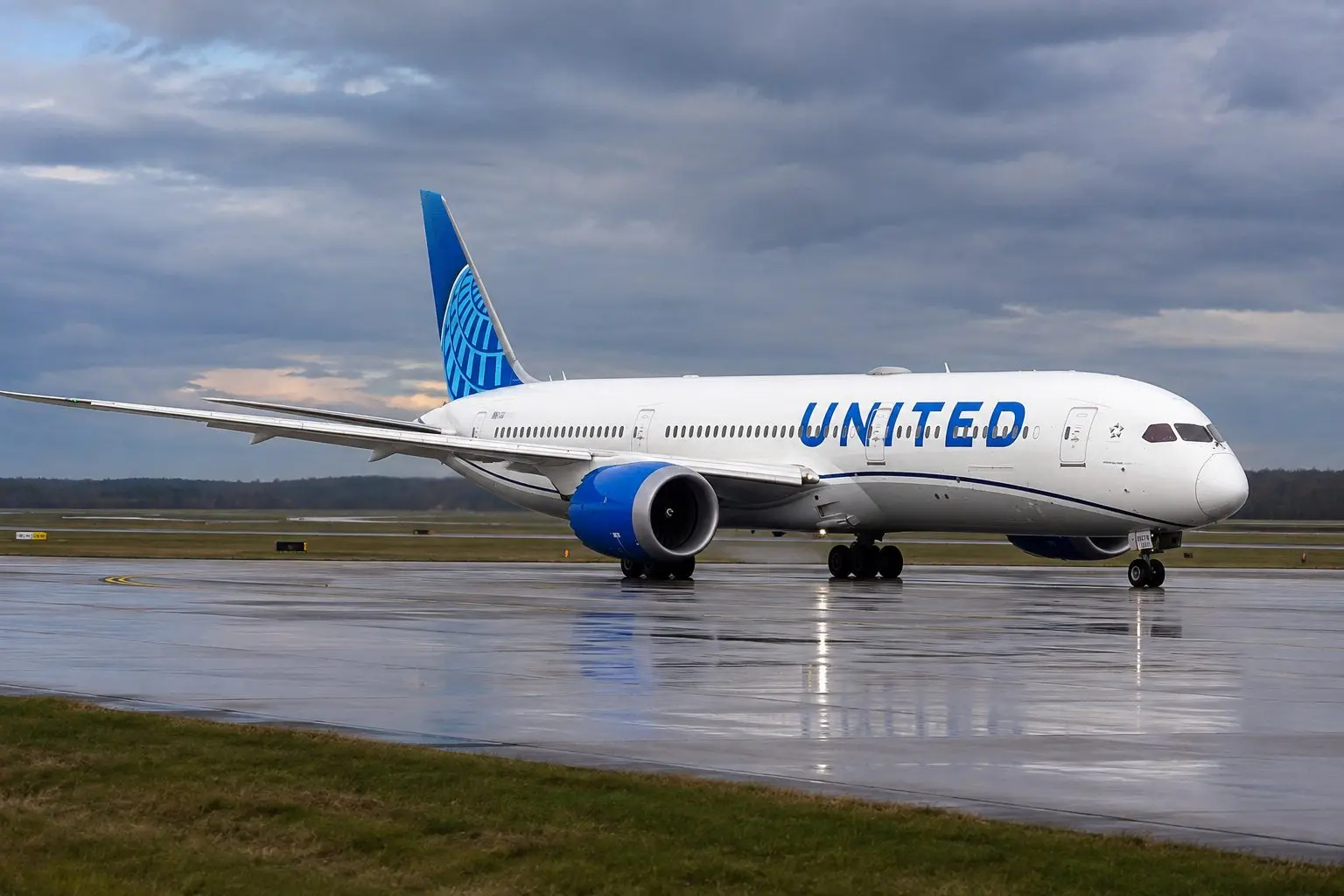

CHICAGO, August 10, 2026, 03:08 CDT — United Airlines is increasing premium seating on its Boeing 787s and will gauge revenue performance across eight routes.
- United’s new 787-9 Elevated configuration features 99 premium seats out of a total 222.
- United rose 6.8% over the past week, outperforming two leading U.S. rivals.
- San Francisco and Houston will see eight long-haul city pairs on the schedule.
United Airlines Holdings Inc. NASDAQ:UAL will deploy its premium-focused Boeing Co. NYSE:BA 787-9 on eight additional long-haul routes. The configuration dedicates 44.6% of seats to Polaris or Premium Plus, compared to 26.8% in United’s regular 787-9 layout.

The adjustment increases the number of premium seats by 30 for each departure, while eliminating a total of 35 seats. The shift places greater emphasis on yield as the primary metric for investors, instead of total passenger volume.
United’s newest financial figures back its approach. Premium revenue for the second quarter climbed 16% year-over-year. Revenue from contracted business jumped 27%, and passenger yields were up 12%.
| 787-9 configuration | Elevated | Standard | Change |
|---|---|---|---|
| Total seats | 222 | 257 | decrease of 35, or -13.6% |
| Polaris seats | 64 | 48 | increase of 16, or +33.3% |
| Premium Plus seats | 35 | 21 | increase of 14, or +66.7% |
| Total premium seats | 99 | 69 | increase of 30, or +43.5% |
| Premium-seat share | 44.6% | 26.8% | rise of 17.7 percentage points |
| Economy, including Economy Plus | 123 | 188 | drop of 65, or -34.6% |
United’s listed seat counts come from its official configurations. Changes in percentages are calculated.
Initial estimate: Based solely on configuration, a single daily roundtrip adds 21,900 premium seats each year while reducing total seats by 25,550. For eight hypothetical daily routes, this equates to 175,200 additional premium seats and an overall decrease of 204,400 seats.
Capacity figures may fluctuate. Service frequencies are not constant, a number of flights operate on a seasonal basis, and certain routes were once flown using different aircraft models.
The existing schedule places the jets primarily in San Francisco and Houston. Services from San Francisco to Singapore and London Heathrow are already underway. Houston will get its initial three routes beginning October 24.
| Hub | Long-haul market | Elevated service | Current schedule note |
|---|---|---|---|
| San Francisco | Singapore | Operating | Present deployment |
| San Francisco | London Heathrow | Operating | Present deployment |
| San Francisco | Zurich | September 8, 2026 | Set to run through October 24 |
| San Francisco | Seoul Incheon | September 15, 2026 | Set to run through October 24 |
| Houston | São Paulo | October 24, 2026 | Winter deployment planned |
| Houston | Sydney | October 24, 2026 | Winter deployment planned |
| Houston | Tokyo Narita | October 24, 2026 | Winter deployment planned |
| Houston | London Heathrow | January 5, 2027 | Deployment planned |
The eight city pairs correspond to schedules as of August 10. Aircraft types assigned may be updated.
The Houston-based aircraft features 64 Polaris seats, with eight of those being the expanded Studio suites. There are also 35 Premium Plus seats. “These new innovations provide more premium experience overall,” Chief Commercial Officer Andrew Nocella said in United’s announcement. Chronicle
AeroXplorer said United has started enabling the sliding privacy doors in the suites following certification. The Studio product features roughly 25% greater personal area compared to traditional Polaris. Each suite is equipped with a 27-inch screen and an ottoman.
Aircraft availability continues to pose a challenge. United had eight Elevated 787s in its fleet as of August 2. The carrier had projected 20 deliveries in 2026 when announcing the plan in March.
U.S. markets were shut at the dateline. United ended Friday at $129.56, climbing 0.34%. Shares rose 6.8% for the week, ahead of Delta Air Lines Inc. NYSE:DAL and American Airlines Group Inc. NASDAQ:AAL.
| Airline | August 7 close | Friday move | Weekly move | Trailing P/E |
|---|---|---|---|---|
| United Airlines | $129.56 | up 0.34% | rose 6.8% | 12.1 |
| Delta Air Lines | $91.34 | down 0.70% | increased 4.5% | 15.2 |
| American Airlines | $15.94 | fell 0.56% | advanced 4.4% | N/M |
Weekly returns are measured from July 31 to August 7. American’s price-to-earnings ratio cannot be calculated as it reported negative trailing earnings.
Analysts have maintained an upbeat outlook, with their price targets suggesting potential increases ranging from 19.6% to 56.7% over Friday’s close.
| Broker and analyst | Date | Recommendation | Target | Action | Upside to $129.56 |
|---|---|---|---|---|---|
| Citigroup Inc. NYSE:C, John Godyn | August 7 | Buy | $171 | Reaffirmed | 32.0% |
| Wells Fargo & Co. NYSE:WFC, Christian Wetherbee | August 6 | Buy | $165 | Reaffirmed | 27.4% |
| JPMorgan Chase & Co. NYSE:JPM, Jamie Baker | July 21 | Buy | $203 | Reaffirmed | 56.7% |
| Jefferies Financial Group Inc. NYSE:JEF, Sheila Kahyaoglu | July 19 | Buy | $155 | Lowered from $160 | 19.6% |
| Morgan Stanley NYSE:MS, Ravi Shanker | July 17 | Buy | $190 | Increased from $185 | 46.7% |
Analyst recommendations and price targets are based on the updates referenced. Projected returns are computed using United’s closing price on August 7.
Chief Executive Scott Kirby commented, “Our results show why we have been investing in customer improvements throughout every cabin,” following the company’s second quarter performance. United increased its full-year adjusted earnings guidance to a range of $9 to $11 per share. PR Newswire
Upcoming economic indicators include July consumer-price data, due on Wednesday, with producer prices set for release on Thursday. Both reports are expected at 08:30 EDT, and may influence interest-rate outlooks, projections for consumer spending, and the valuation of airlines.
Risks: Fuel is still the biggest short-term uncertainty. United projects nearly $6 billion in extra fuel costs by 2026 compared with its original estimate. Possible Boeing delivery setbacks may impact the route network, and softer corporate demand could pose a risk to the airline’s premium-focused strategy.
The investment assessment is now clear. Higher-positioned 787s need to generate sufficient revenue per departure to balance out a 13.6% reduction in seats. United’s 12% yield rise in the second quarter provides the standard. The eight new routes will measure if that improvement can continue.
Related articles: NASDAQ:UAL