
SANTA CLARA, California, August 30, 2026, 02:08 (EDT)
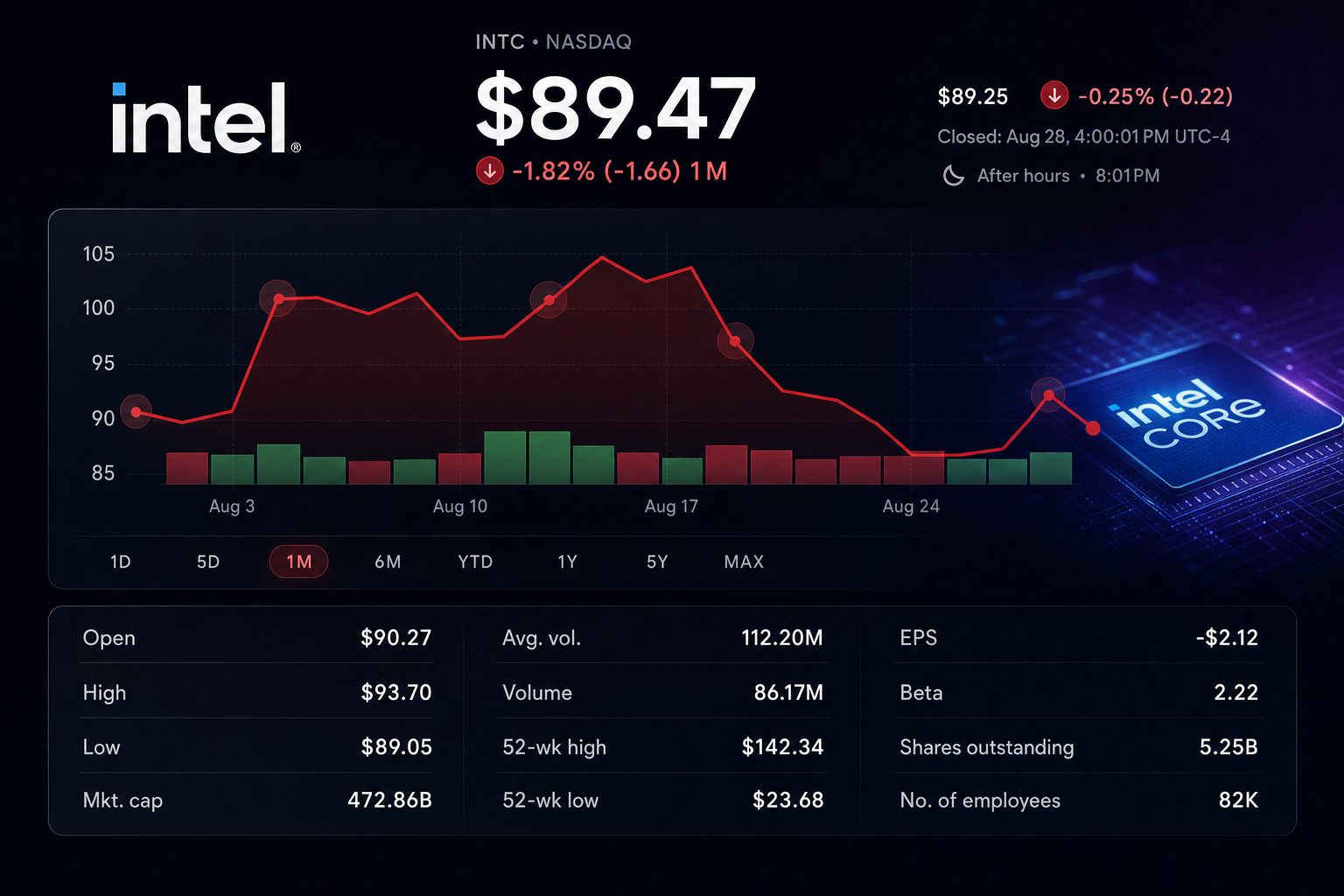
- Intel closed Friday at $89.47, down 2.85%, on 86.17 million shares.
- Intel 14A defect density is falling faster than its internal target curve.
- Foundry lost $2.09 billion in Q2 despite 31% revenue growth.
Intel Corporation NASDAQ: INTC shares fell 2.85% Friday as investors weighed promising Intel 14A manufacturing data against a still-heavy foundry loss.
The new data improve Intel’s technology case. They do not yet prove profitable manufacturing at commercial scale.
CFO David Zinsner said 14A defect density was tracking above Intel’s target curve. He added that Intel had not seen comparable progress since 22nm Tom’s Hardware.
Defect density measures imperfections per wafer area. A faster decline can support better yields, lower unit costs and improved factory utilization.
It remains an early indicator. Intel plans 14A risk production in the second half of 2027 and high-volume manufacturing during 2028.
| Investor measure | Latest figure | Read-through |
|---|---|---|
| Friday close | $89.47 | Down 2.85% |
| Q2 Foundry revenue | $5.77B | Up 31% YoY |
| Q2 Foundry operating loss | $2.09B | 36.2% of segment revenue |
| 14A risk production | H2 2027 | Precedes yield ramp |
| 14A volume production | 2028 | Commercial proof point |
| Average analyst target | $107.46 | 20.1% above close |
Customer interest is also becoming more concrete. Zinsner said outside discussions had shifted from examining data toward asking how much 14A capacity Intel could provide.
The economics remain difficult. Intel Foundry produced $5.77 billion of second-quarter revenue but recorded a $2.09 billion operating loss Intel results.
That loss narrowed from $3.17 billion a year earlier. However, it still equaled 36.2% of the segment’s quarterly revenue.
Intel’s product businesses are carrying the investment. Data Center and AI revenue rose 59% to $6.3 billion, while client revenue increased 13% to $8.9 billion.
Companywide revenue grew 25% to $16.1 billion. Non-GAAP gross margin reached 41.8%, and operating cash flow totaled $7 billion.
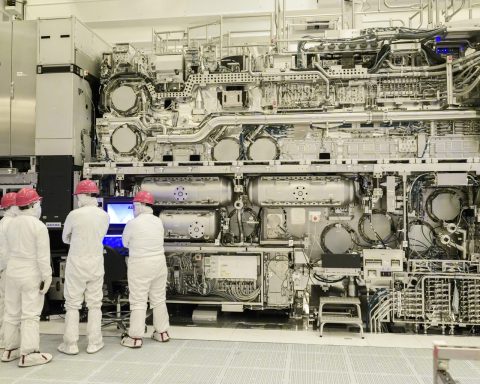
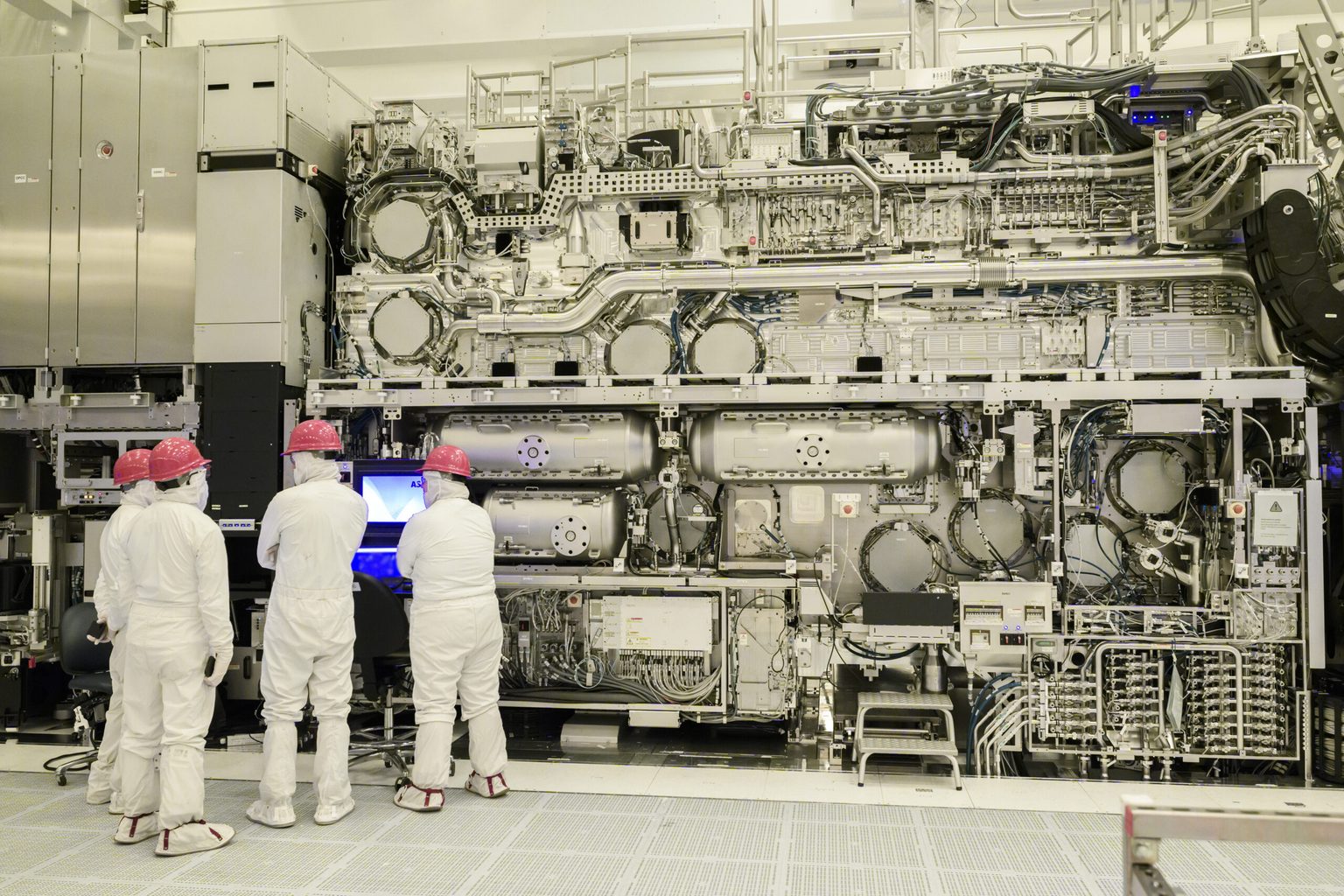
The High-NA EUV platform is central to 14A. Intel says the technology can print smaller features and increase pattern density versus existing EUV systems Intel Foundry.
Analyst sentiment remains cautious. Fifty tracked analysts include 16 buys, 31 holds and three sells, with a $107.46 average target MarketBeat.
Risks: Defect density does not directly equal production yield. Schedule slips, weak external demand or high High-NA tool costs could delay any margin payoff.
Related articles: NASDAQ:INTC