
SANTA CLARA, California, August 20, 2026, 11:50 EDT
- Intel stock was last at $91.38, 3.8% under the $95 price set for the stock sale.
- Intel’s $20 billion capital spending plan for 2026 is closely matched by the $19.7 billion in net proceeds.
- Despite a marked rebound in data-center sales, analysts continue to express caution.
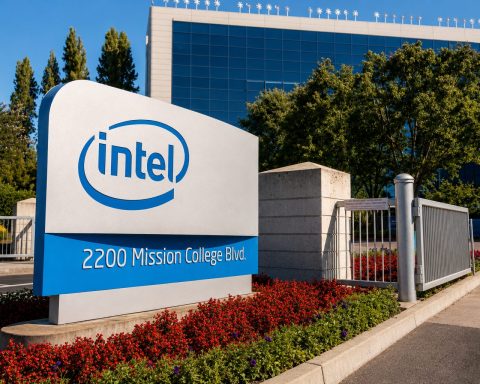
Shares of Intel Corporation NASDAQ:INTC dropped under the level set in its recent record stock sale on Thursday, resulting in immediate losses for fresh investors and drawing increased scrutiny to the chipmaker’s investment strategy.
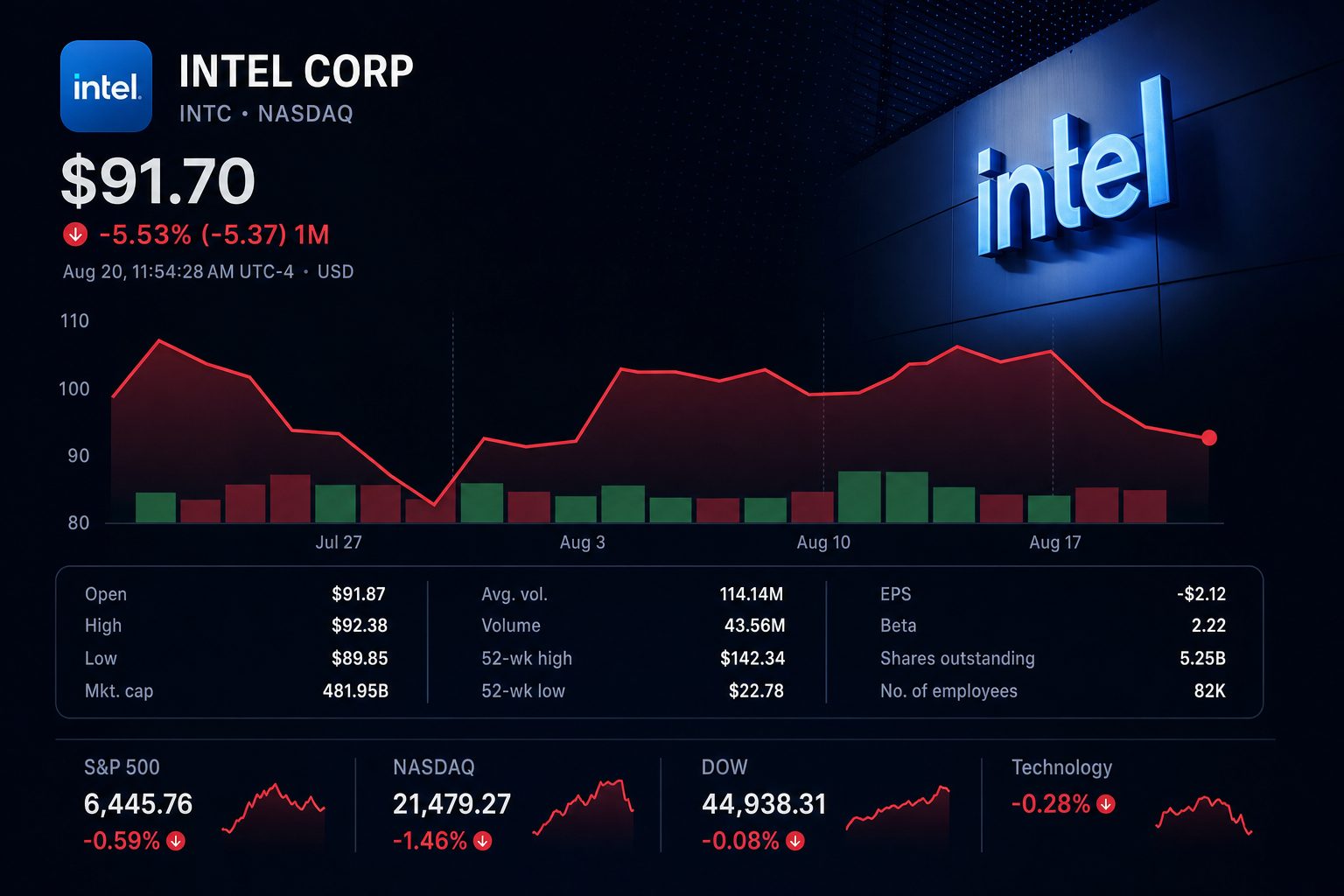
Shares were at $91.38 as of 11:50 EDT, marking a 1.5% decrease from their closing value on Wednesday. The price was 3.8% under the $95 offering price. On Wednesday, shares had already dropped by 4.0%.
| Market marker | Value | Investor read-through |
|---|---|---|
| Intel price, 11:50 EDT | $91.38 | Dropped 1.5% Thursday |
| Offering price | $95.00 | Traded at a 3.8% discount |
| Wednesday move | -4.0% | First entire session after closing showed a decrease |
| 52-week high | $142.35 | Shares now 35.8% below peak |
The difference is significant as Intel raised capital by issuing equity to support its ongoing turnaround efforts. The company offered 210.5 million shares and provided underwriters with an option to purchase an additional 31.6 million shares. Net proceeds were anticipated to total approximately $19.7 billion.
The funds nearly match Intel’s projected 2026 gross capital spending. In July, the company lifted that figure to roughly $20 billion. This near parity moves the focus from liquidity concerns to investment returns.
| Capital bridge | Amount | Calculated comparison |
|---|---|---|
| Gross equity raise | $20.0 billion | 100% of planned gross capex |
| Estimated net proceeds | $19.7 billion | 98.5% of planned gross capex |
| 2026 gross capex plan | About $20.0 billion | Up from $18.0 billion |
| Base shares issued | 210.5 million | Roughly 4.0% share increase |
| Maximum with option | 242.1 million | Approximately 4.6% share increase |
The example serves to illustrate. Intel did not allocate all funds strictly for factories. Its filing listed uses such as working capital and other general corporate needs. Nonetheless, the numbers highlight the scale of the challenge.
Intel is showing new signs of operational progress. Revenue for the second quarter increased by 25% to $16.1 billion. Adjusted earnings came in at $0.42 per share, and adjusted gross margin improved to 41.8%.
| Second-quarter measure | Q2 2026 | Year-on-year change |
|---|---|---|
| Revenue | $16.1 billion | Up 25% |
| Adjusted EPS | $0.42 | Reversed from a $0.10 loss |
| Adjusted gross margin | 41.8% | Rose by 12.1 percentage points |
| Operating cash flow | $7.0 billion | Cash inflow recorded |
| Q3 revenue outlook | $15.8–$16.8 billion | Company forecast |
Chief Executive Lip-Bu Tan described the period as the company’s most robust revenue growth in over 15 years. He noted that artificial intelligence is fueling “unprecedented demand for compute.” Intel anticipates this demand will continue to constrain supply. Intel newsroom
The data-center segment delivered the bulk of the gains, with revenue climbing 59% to $6.3 billion. Foundry revenue increased by 31%, though the division continued to report an operating loss of around $2.1 billion.
| Operating unit | Q2 2026 revenue | Year-on-year growth |
|---|---|---|
| Data Center and AI | $6.3 billion | up 59% |
| Client and Physical AI | $8.9 billion | increased 13% |
| Intel Foundry | $5.8 billion | rose 31% |
| Foundry operating result | Roughly -$2.1 billion | Smaller loss |
Wall Street analysts are divided. Across 48 analysts, the average 12-month price target stands at $114.88, StockAnalysis shows. Out of these, 32 analysts have issued a Hold rating on the shares.
| Analyst or consensus | Recommendation | Price target | Date |
|---|---|---|---|
| Bank of America | Buy | $145 | Aug. 12, 2026 |
| UBS | Hold | $112 | Aug. 12, 2026 |
| Bernstein | Hold | $110 | July 27, 2026 |
| Rosenblatt | Sell | $80 | July 24, 2026 |
| 48-analyst consensus | Hold | $114.88 average | Aug. 2026 |
The range is notably broad. Estimates vary between $75 and $200. This variation highlights differing perspectives on server demand, foundry performance and the returns from significant capital investments.
Risks: Robust AI demand could exceed forecasts, boosting revenue and utilisation rates. Conversely, a downturn scenario would be more severe. Slower process scale-ups, softer foundry demand or additional dilution may weigh on returns from the new equity.
The following challenge is straightforward. Intel needs to convert a balance-sheet reset into increased output. For now, the $95 bid continues to serve as a clear market benchmark.
Related articles: NASDAQ:INTC
The $95 credibility line
Intel’s equity raise nearly funds its full 2026 capital plan. The stock now trades below the offer price, turning execution into the next valuation test.
Aug. 20, 2026 · 11:50 EDT
3.8% below the $95 offering price. The stock is 35.8% under its 52-week high.
Fresh capital almost equals planned spending
Net proceeds cover an illustrative 98.5% of gross capex. Funds are not formally earmarked one-for-one.
Equity cost
Estimated share-count increase, depending on the underwriters’ option.
Q2 momentum improved the funding case
Growth is concentrated in data-center demand
Foundry still lost about $2.1B operationally. Revenue includes internal sales.
Analyst targets remain divided
Recommendation mix: 14 Buy/Strong Buy, 32 Hold, 2 Sell/Strong Sell.
What can break the thesis
A smoother process ramp and stronger AI demand could lift returns quickly. Delays, weak external foundry orders or further dilution would make the $20B capital plan more expensive.