London, Jan 29, 2026, 11:59 GMT — Regular session
- Brent crude hit a four-month high above $70 as traders priced in Middle East supply risks.
- Kazakhstan outages and U.S. storm disruptions kept the tone firm.
- Focus shifts to OPEC+ on Feb. 1 and U.S. inventory data due Feb. 4.
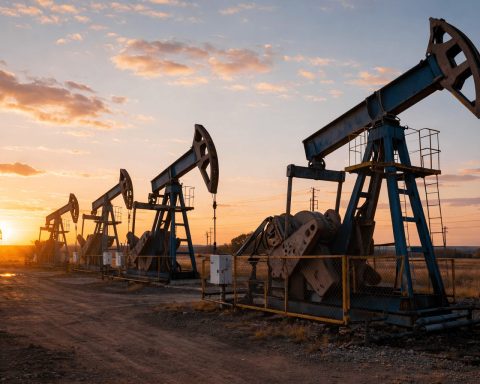
Brent crude futures jumped more than 2% on Thursday and briefly traded above $70 a barrel, a four-month high, as investors weighed the risk of a U.S. military strike on Iran, OPEC’s fourth-largest producer at about 3.2 million barrels per day. Brent was up $1.39, or 2.03%, at $69.79 by 1011 GMT after touching $70.35; U.S. West Texas Intermediate (WTI) rose $1.37 to $64.58. The immediate fear is Iran could “close the Strait of Hormuz” — a route for about 20 million barrels per day of oil — PVM analyst John Evans said, while DBS Bank’s Suvro Sarkar called the geopolitical risk premium the “main driver.” Reuters
The move matters because Brent is the benchmark used to price much of the world’s crude, and a sharp rise can filter quickly into diesel and gasoline costs. Traders have been adding a geopolitical risk premium — the extra dollars in a barrel to cover the chance of supply disruption — even as the market still argues about longer-term oversupply.
U.S. President Donald Trump is weighing options against Iran that include targeted strikes on security forces and leaders, according to sources, though they said no final decision had been made. Two sources familiar with the discussions said Trump wanted to create conditions for “regime change” after a crackdown crushed a nationwide protest movement earlier this month. Reuters
Citi said the run-up has lifted the geopolitical premium by about $3 to $4 a barrel, and warned that more escalation could stretch the rally. “Further geopolitical escalation can lift prices to our 0-3m target of $70 a barrel,” the bank wrote, also flagging a bullish case of $72 for Brent. Citi added that the market is also watching OPEC+ — the Organization of the Petroleum Exporting Countries and allies including Russia — which is expected to keep a pause on output increases for March at a Feb. 1 meeting. Reuters
Supply news hasn’t been clean either. Kazakhstan said it was restarting the huge Tengiz oilfield in stages, aiming to reach full production in a week after three electrical fires this month cost it 7.2 million barrels, and the government said Chevron had assured it would take steps to ensure reliable and safe operations. Kazakhstan’s oil sector accounts for around 2% of daily global supply, Reuters reported.
In the United States, producers have been bringing wells back online after a severe winter storm strained energy infrastructure and power grids. Domestic crude output was still estimated to be down about 600,000 barrels per day — roughly 4% of total output — versus a peak loss of 2 million barrels per day on Saturday, consultancy Energy Aspects said. “I am not expecting any additional curtailments in the near term,” Justin Kringstad, director of the North Dakota Pipeline Authority, said. Reuters
Wednesday’s settlement set the table. Brent closed up 83 cents at $68.40, and was on track for its biggest monthly percentage rise since July 2023, as a weaker U.S. dollar added support and Iran headlines kept buyers active. “The markets were up on concerns about the U.S.’ armada, but they pulled back on the possibility of peace,” said Phil Flynn, senior analyst at Price Futures Group, pointing to renewed talk of Russia-Ukraine diplomacy. Reuters
U.S. crude inventories also helped. The Energy Information Administration said commercial crude stocks fell by 2.3 million barrels to 423.8 million in the week ended Jan. 23 — an inventory draw, meaning stocks declined — and it noted inventories were about 3% below the five-year average for this time of year. The agency’s next weekly report is due on Feb. 4.
There are risks both ways. If Washington and Tehran step back, the risk premium can leak out fast, and storm-related outages tend to reverse as crews restart wells and pipelines. A smooth return at Tengiz would also soften the supply story, and any signal from OPEC+ that output could rise sooner would test the rally.
For now, traders are watching three dates and one headline stream: Feb. 1 for OPEC+ policy, any new signals on U.S.-Iran military planning, and Feb. 4 for the next U.S. inventory snapshot that could show how much the cold-weather disruption really tightened supply.