
TORONTO, May 3, 2026, 11:04 (EDT)
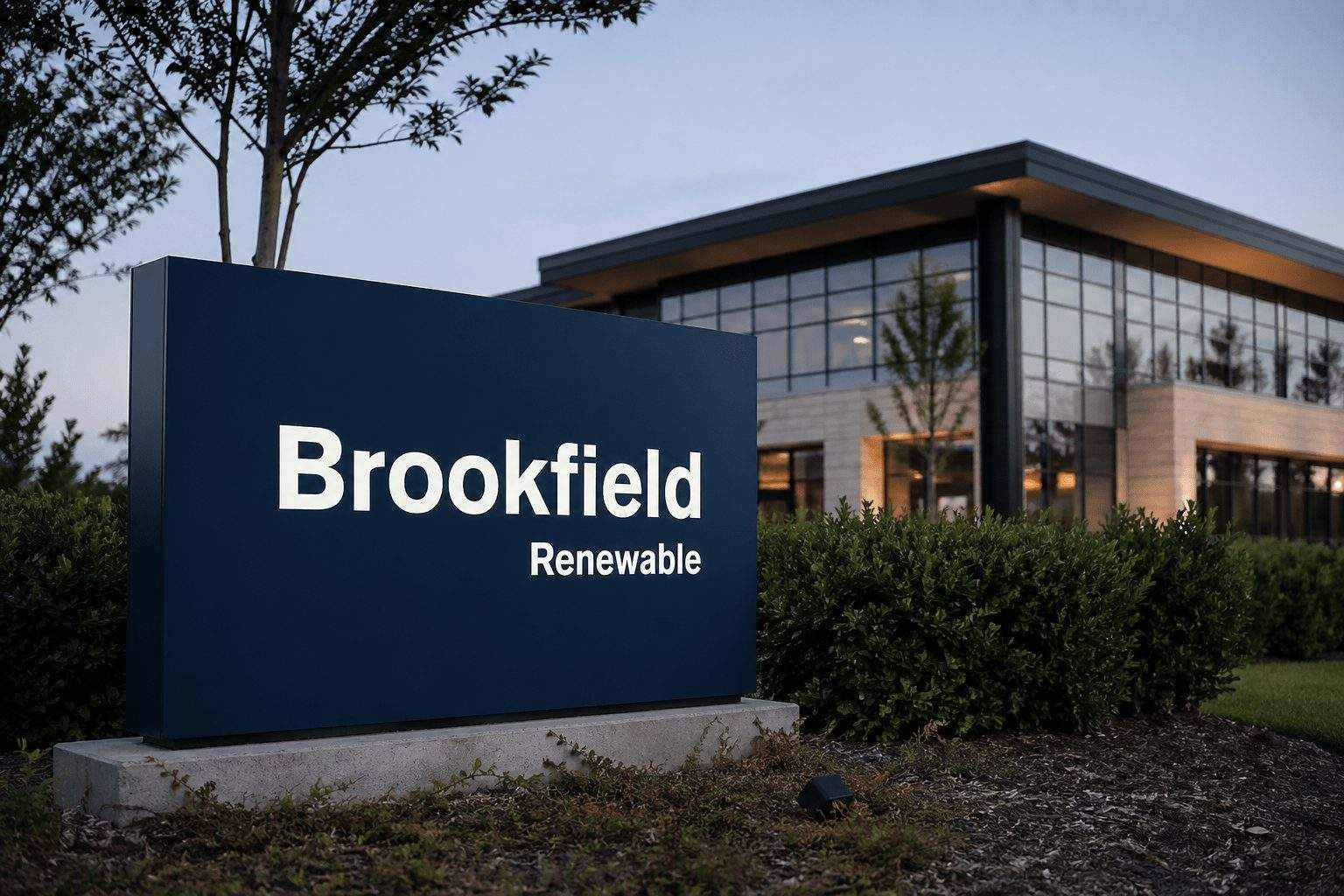
Brookfield Renewable Corporation is weighing a potential merger of its BEPC shares and Brookfield Renewable Partners units into a single corporate security, looking to sharpen liquidity and improve index eligibility. The company kicked off the review after BEPC posted higher first-quarter funds from operations, though it booked a $2.3 billion net loss—mostly driven by a non-cash remeasurement on exchangeable shares.
Timing is key here. BEPC was set up as the corporate twin of Brookfield Renewable Partners’ limited partnership units, matching them on dividends and allowing holders to swap one-for-one into BEP. Now, if everything is rolled into a single security, the real question is whether that flexibility still justifies the split structure, especially as the group looks to raise capital, unload assets, and snap up more renewable platforms.
On May 1, Brookfield’s investor portal listed BEPC shares in New York at $35.26, off 2.77% for the day. BEP units, meanwhile, closed at $33.47, up 1.09%. A notable gap for securities designed to mirror each other’s economics.
BEPC’s funds from operations climbed to $171 million for the quarter ended March 31, a jump from $139 million the year before. FFO—a metric tracked by infrastructure and real-asset players that puts certain charges back into cash flow—rose even as revenue slipped to $883 million, down from $907 million. The net loss for the quarter held steady, matching a $5 million loss in the same period last year.
Brookfield Renewable’s FFO hit a record $375 million—up 19%—with per-unit figures landing at 55 cents. CEO Connor Teskey pointed to a “strong start to the year,” adding that demand for “low-cost, quick to market” energy is buoying the business. Brookfield Renewable Partners
The payout stays unchanged. BEPC’s board has announced a quarterly dividend at 39.2 cents a share, set for payment on June 30 to shareholders registered by May 29, the same as what BEP units receive.
Brookfield is stepping up its focus on capital recycling—the company’s shorthand for offloading mature assets and channeling those funds into fresh investments. Signed and completed deals are expected to bring in around $2.8 billion in proceeds. Among those: Northview Energy’s sale of approximately 2,300 megawatts of U.S. wind and solar holdings, plus possible additional sales under the same platform.
Chief Financial Officer Patrick Taylor reported to analysts that the company wrapped up nearly $4 billion in financings during the first quarter, finishing with over $4.7 billion in available liquidity. According to Taylor, the balance sheet now holds “the most durable and stable capital structure” the company has ever had. The Motley Fool
Deal activity is crowding the landscape. Brookfield’s latest quarter featured its planned purchase of Boralex, a Canadian renewables company running wind, solar, hydro, and battery sites in Canada, France, the U.S., and Britain. The agreement with La Caisse values Boralex at a total enterprise worth C$9.0 billion, with closing targeted by the fourth quarter of 2026—pending shareholder, court, and regulatory sign-off.
Brookfield pointed to wind and solar FFO gains driven by its Neoen and Geronimo Power acquisitions, plus some asset sale profits. That sets it apart from smaller listed renewable developers—those players need capital but can’t tap into the private funds and institutional partnerships that Brookfield enjoys.
The structure review hasn’t turned into a deal yet. Taylor told Barclays’ Christine Cho that Brookfield is still figuring out if a simpler setup could avoid taxes, adding there’s not much else to share at this stage. When Mizuho’s Anthony Crowdell pressed for timing, Taylor offered no specifics. Approvals are still pending for Boralex. On top of that, Brookfield noted that softer U.S. water conditions pushed some hydro output into the second quarter.
Related articles: Renewable Energy