Updated: December 13, 2025
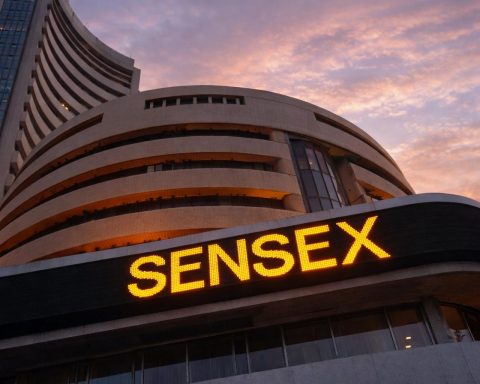
BSE Ltd (Asia’s oldest stock exchange and India’s benchmark Sensex home) is back in the headlines this weekend—less because of a one-day price spike, and more because of a potentially structural distribution partnership that could expand its mutual fund ecosystem deep into India’s towns and villages. Press Information Bureau
On Friday, December 12, 2025 (the most recent trading session), BSE Ltd shares closed around ₹2,735, up about 1.35% from the prior close, with the stock sitting below its 52-week high of ₹3,030 and above its 52-week low of ₹1,226.10. The Economic Times
So what’s driving the narrative now—and how are analysts framing the road ahead? Here’s the full news-and-forecast round-up as of December 13, 2025, with the key numbers and the context investors typically miss on first read.
The headline: Department of Posts and BSE sign a 3-year MoU to expand mutual fund access
The biggest fresh development (reported widely on Dec 12–13) is a Memorandum of Understanding (MoU) signed on December 12, 2025 in New Delhi between the Department of Posts (Ministry of Communications) and BSE. The goal: use India Post’s national footprint to distribute mutual funds via BSE StAR MF, BSE’s mutual fund distribution platform. Press Information Bureau+2Fortune India+2
Key operational details from the government release matter because they hint at how quickly this can move from “nice headline” to “real transactions”:
- Selected postal employees will be trained and certified as mutual fund distributors, enabling investor servicing and transactions at the last mile. Press Information Bureau
- BSE will support onboarding and compliance by enabling EUIN (Employee Unique Identification Number) generation and facilitating the required NISM Mutual Fund Distributor certification. Press Information Bureau
- The MoU is valid for three years: 12.12.2025 to 11.12.2028, with renewal provisions. Press Information Bureau
Why this is strategically interesting: distribution is a scale game, and India Post’s network is enormous—over 1.64 lakh post offices—a reach that few private financial distribution channels can match on cost and trust. Press Information Bureau+1
Why investors care: StAR MF is already a volume monster—and BSE says it’s still accelerating
The MoU lands on top of a platform that BSE itself describes (and independent reporting repeats) as the country’s largest exchange-based MF distribution infrastructure.
In BSE’s own recent public disclosures around its latest quarterly performance, the company highlighted that:
- BSE StAR MF revenue rose 18% YoY to ₹69.7 crore in Q2 FY26. NSE Archives
- Transactions processed grew 24% YoY to 20.1 crore in Q2 FY26, up from 16.2 crore a year earlier. NSE Archives
- The platform hit a new high of 7.13 crore transactions in October 2025 (a useful data point because it’s roughly the “monthly run-rate” investors use to sanity-check growth claims). NSE Archives
Several outlets covering the India Post tie-up also point out that StAR MF clocks 7+ crore transactions a month and holds over 85% share among exchange-based mutual fund transaction platforms—figures broadly consistent with BSE’s own October scale disclosure. Fortune India+1
Interpretation (not a guarantee): if India Post distribution actually converts into sustained MF transaction flow, the MoU could become a volume multiplier—but the near-term pace depends on training throughput, certification, and how aggressively post offices operationalize MF servicing. Press Information Bureau
BSE share price today: where the stock stands as of Dec 13, 2025
Because December 13 is a Saturday, Indian markets are closed; the latest traded data is from Friday, December 12, 2025.
From the latest available market data snapshot:
- Last traded/close: ~₹2,735 (up ~1.35% day-on-day) The Economic Times+1
- 1-year return: ~46% (per ET’s returns table) The Economic Times
- Market cap: ~₹1.11 lakh crore (as shown on ET’s company page) The Economic Times
- Valuation multiples (headline): ET lists P/E ~60.67 and P/B ~7.98 The Economic Times
Those multiples are a big deal: BSE isn’t being priced like a sleepy “infrastructure utility.” The market is pricing in continued growth in high-margin transaction-linked lines (especially derivatives, data, and ecosystem services).
The fundamentals: record revenue streak, profitability surge, and what’s driving it
The MoU is the shiny new object. But the base narrative for BSE stock in 2025 has been operating performance—especially the quarter ended September 30, 2025 (Q2 FY26).
Across BSE’s own disclosures and mainstream earnings coverage:
- BSE posted its highest-ever quarterly topline of ₹1,139 crore (10th consecutive record quarter per BSE commentary). NSE Archives+1
- Net profit attributable to shareholders was cited around ₹558 crore, up sharply YoY. NSE Archives+1
- Operating EBITDA rose to about ₹680 crore, with margin expanding to roughly 64% (BSE’s commentary emphasizes operating leverage + volume-linked scale). NSE Archives+1
BSE also flagged several business levers that matter for forward expectations:
- Index derivatives: average daily premium turnover over ₹15,000 crore in the quarter. NSE Archives
- Co-location: revenue rose to ₹46 crore vs ₹27 crore in the previous quarter, linked to revised charges effective July 1 (as described in BSE’s commentary). NSE Archives
- Index business scale: passive products tracking BSE indices were cited at about ₹2.54 lakh crore AUM as of September 2025. NSE Archives
In plain English: BSE is leaning into businesses that can scale with relatively limited incremental cost—exactly the kind of mix that markets tend to reward (and exactly why valuation becomes a risk if growth slows).
The regulatory chessboard: expiry-day standardisation changed the derivatives fight
If you want the “why does this stock swing on policy headlines?” answer, it’s derivatives.
In mid-2025, India’s regulator approved changes that moved weekly derivatives expiry days:
- NSE to Tuesdays
- BSE to Thursdays Reuters
At the time, some analysts worried BSE’s market-share trajectory could wobble during the transition; a Reuters report quoted Goldman Sachs expecting BSE’s share to dip in the adjustment period. Reuters
But later coverage argued BSE looked “bullet-proof” post-swap, with reports highlighting market share gains and higher premium turnover after the Thursday expiry switch. The Economic Times
Why this still matters on Dec 13, 2025: derivatives are where the revenue “torque” is. Small changes in volumes, market share, and product design can have outsized impacts on exchange earnings—and therefore on the stock’s multiple.
Other current BSE developments investors are tracking this week
1) BSE to meet investors at Citi India Financials Tour (Dec 16, 2025)
BSE disclosed it will attend the Citi 2025 India Financials Tour on December 16, 2025 in Mumbai (physical investor conference). These events sometimes act as sentiment catalysts because investor Q&A can sharpen (or soften) expectations around growth, competition, and regulation. NSE Archives
2) BSE Index Services announced reconstitution across multiple indices (effective Dec 22, 2025)
BSE Index Services announced reconstitution results for several BSE indices, effective at the open of Monday, December 22, 2025, with adds/drops across multiple sectoral and strategy indices (and no change in certain others). While this isn’t usually a direct driver of BSE Ltd’s own stock price, it signals ongoing index product activity that can influence passive AUM tracking BSE indices. MarketScreener+1
3) BSE invested ₹41.28 crore into its IFSC exchange subsidiary (India INX)
BSE disclosed an investment of about ₹41.28 crore by subscribing to India INX rights issue (Overseas Direct Investment route), with BSE’s stake expected to rise to 65.27% post-investment (assuming full subscription) and allotment targeted on or before January 11, 2026. NSE Archives
This is notable because it’s BSE putting capital behind its international/GIFT City footprint—strategic, but also a reminder that not all growth is “free”; some comes with capital commitments.
Analyst targets and forecasts for BSE Ltd stock: what the Street expects
Forecasts vary—partly because BSE is both a “market infrastructure” name and a “growth optionality” name, and analysts disagree on how sustainable market-share gains are versus competitive responses.
Here are the most current, widely-circulated target snapshots available as of Dec 13, 2025:
- Economic Times (consensus snapshot): median target price around ₹2,768.78 over 12 months (15 analysts), with a high estimate ~₹3,303 and low estimate ~₹1,666.66. The Economic Times
- Trendlyne (consensus snapshot): average target price around ₹2,687.33, implying roughly -1.74% from ₹2,735. Trendlyne.com
- Jefferies (via Business Standard coverage): maintained ‘Hold’ with a target price of ₹2,930 (reported post-results). Business Standard
How to read this without fooling yourself: consensus targets clustering near the current price typically means the Street sees BSE as fairly priced unless something changes—either (a) a new leg of derivatives share gains, (b) stronger-than-expected scaling in MF/data/index revenues, or (c) a favourable regulatory or competitive development that extends the runway.
What could move BSE stock next: catalysts and risks (the realistic version)
Near-term catalysts
- Operational details + timeline on India Post rollout: training cadence, pilot locations, early transaction flow. Press Information Bureau+1
- Investor messaging at the Citi Financials Tour (Dec 16): updates on derivatives competitiveness, pricing, product design, co-location demand, and regulatory engagement. NSE Archives+1
- Broader market activity: exchanges are volume-and-volatility sensitive; strong IPO pipeline and active trading environment support revenue momentum (BSE itself highlighted continued IPO vibrancy). NSE Archives
Key risks
- Regulatory risk in derivatives: any additional constraints aimed at retail protection, contract design, or market microstructure can hit volumes and profitability. Reuters+1
- Competitive response: exchange economics often turn on pricing, incentives, and liquidity—if competitors adjust tactics, market share can shift faster than fundamentals. Reuters+1
- Valuation sensitivity: at the current multiples shown on ET, BSE’s stock can punish even small disappointments in growth rates. The Economic Times
Bottom line on Dec 13, 2025
As of today, the BSE Ltd story has two layers:
- A fresh distribution expansion headline (India Post MoU) that could deepen mutual fund penetration and strengthen BSE’s ecosystem reach over a multi-year window. Press Information Bureau+1
- A fundamentals-driven rerating narrative built on record revenue, strong margins, and scaling platform businesses (StAR MF, derivatives, co-location, index services). NSE Archives+1
Analyst targets suggest the market is currently in a “show me the next catalyst” stance—close enough to fair value that execution and policy/competition dynamics are likely to decide the next major move.