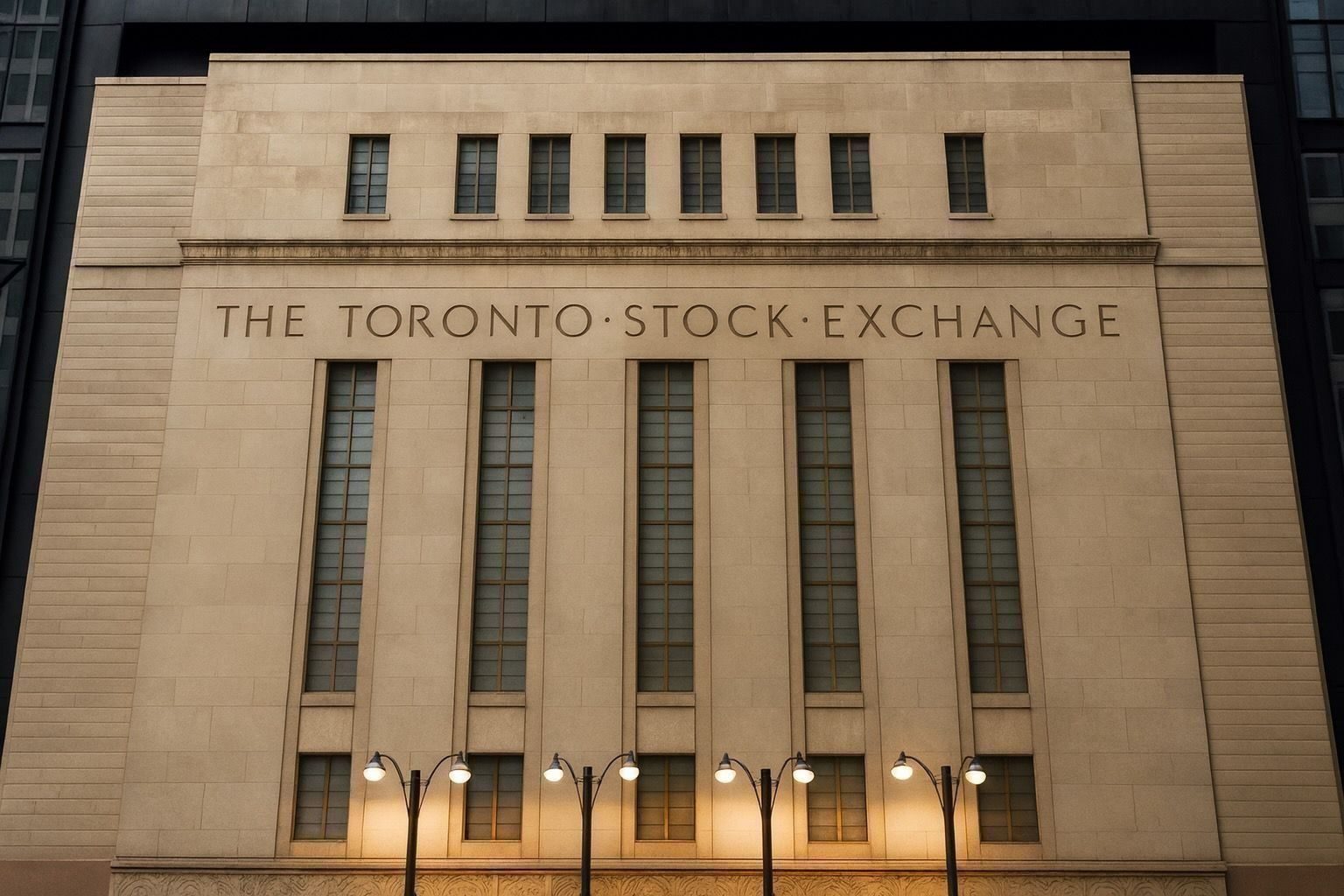
Canada’s stock market will not open on Friday, December 26, 2025. The Toronto Stock Exchange (TSX), TSX Venture Exchange, and Montréal Exchange are closed for Boxing Day—meaning Canadian investors head into the day watching U.S. markets, oil and metals, and the Canadian dollar for the signals that could shape sentiment when TSX trading resumes. TMX Investors
With year-end positioning in full swing and liquidity thin, what happens in commodities, currencies, and U.S. equities on Dec. 26 could have an outsized impact on Canada’s next trading session: Monday, December 29, 2025. TMX Investors
First, is the TSX open on Dec. 26, 2025? No—Canada markets are closed
Per TMX Group’s published holiday operating schedule:
- TSX/TSXV/MX were closed Thursday, Dec. 25 (Christmas Day)
- TSX/TSXV/MX are closed Friday, Dec. 26 (Boxing Day)
- TSX/TSXV had an early close on Wednesday, Dec. 24 (1:00 p.m. ET) TMX Investors
That matters because it changes what “pre-market” looks like for Canada: instead of focusing on TSX futures or domestic order flow, the practical “market read” comes from U.S. trading, cross-listed Canadian names in the U.S., and macro assets (oil, gold, USD/CAD, rates).
Where the TSX left off: near records, then a holiday wobble
The last TSX session (the shortened Christmas Eve trade) saw the S&P/TSX Composite dip in thin holiday volume, with weakness tied largely to mining-related moves even as metals remained elevated. Reuters
Despite the late-week pause, the bigger picture for 2025 remains the story: the TSX is still tracking one of its strongest years since the post-financial-crisis era, supported by the index’s heavy exposure to financials, energy, and materials—sectors that have tended to benefit when commodities are strong and rate expectations stabilize. Reuters
The key Canada macro headline: GDP posted its biggest monthly drop in nearly three years
Canada’s economic data into the break has been a reality check:
- Real GDP fell 0.3% in October 2025, reversing September’s gain, with 11 of 20 sectors contracting, according to Statistics Canada. Gc
- The decline was driven by manufacturing (-1.5%), with notable weakness including machinery manufacturing (-6.9%) and wood product manufacturing (-7.3%) (StatCan cites production slowdowns following additional U.S. tariffs on Canadian lumber effective Oct. 14). Gc
- StatCan’s advance estimate points to GDP up 0.1% in November, with the official November GDP-by-industry update due January 30, 2026. Gc
Why this matters for TSX positioning: a softer domestic growth pulse can keep investors sensitive to any shift in the interest-rate narrative—especially for banks, rate-sensitive cyclicals, and the Canadian dollar.
Bank of Canada: policy rate on hold, but the next move is “hard to predict”
The Bank of Canada’s policy stance remains central to how investors price Canadian risk assets into year-end.
- The Bank of Canada held its overnight rate at 2.25% on December 10, 2025 and signaled the rate is “about the right level” if the outlook evolves as expected. Bank of Canada
- In minutes released this week, policymakers said it was difficult to predict whether the next move would be a hike or a cut, citing uncertainty around U.S. trade policy and volatile economic data. Reuters
- The minutes also flagged the 2026 review of the USMCA trade pact as a “significant risk” that could weigh on business investment. Reuters
- The BoC’s next scheduled rate announcement is January 28, 2026. Bank of Canada
For TSX investors, the takeaway is less about a single data point and more about policy optionality: if growth slows further, rate expectations could shift again; if inflation or trade dynamics heat up, the conversation can turn in the other direction.
Canadian dollar watch: the loonie hit a near five-month high into the holiday
One of the more important “live” signals for Canada risk sentiment has been FX.
The Canadian dollar strengthened to a near five-month high on Dec. 24, trading around 1.3672 per U.S. dollar (about 73.14 U.S. cents) and touching an intraday level around 1.3666, according to Reuters. Reuters
What’s driving that move, per strategist commentary cited by Reuters:
- A softer U.S. dollar
- Commodity strength (notably oil)
- A narrowing U.S.–Canada two-year yield spread Reuters
Why it matters for TSX: a firmer loonie can be a headwind for some exporters and CAD-translated earnings, but it can also signal improving risk appetite and support foreign inflows—especially if the move is commodity-led rather than purely rate-differential-driven.
Commodities are still the TSX heartbeat: oil steady, gold remains a dominant theme
For Canada’s market structure, commodities aren’t just “another input”—they’re often the driver of index-level leadership.
Oil: Reuters reported U.S. crude futures extending gains into Dec. 24, with prices around $58.43/barrel, supported by supply-risk narratives tied to Venezuela and Russia. Reuters
Gold and metals: The TSX’s materials and miners have been pivotal in 2025. Even when mining stocks pulled back in thin trade, broader analysis has continued to emphasize gold’s role as a safe-haven and a portfolio diversifier in a world of fiscal and geopolitical uncertainty. Reuters
Bottom line: if oil or gold make a decisive move while Canada is closed on Dec. 26, that can shape the tone for energy-heavy and materials-heavy TSX leadership when the market reopens.
The global tone-setter on Dec. 26 is the U.S. market—because it’s open
While Canada is closed, U.S. markets are the main scoreboard.
Major U.S. exchanges are operating a regular full trading day on Friday, Dec. 26, even after a U.S. federal government closure order around the holiday period, according to Reuters. Reuters
And the U.S. market enters that session with momentum:
- On Dec. 24, the Dow and S&P 500 closed at record highs in a holiday-shortened session, with the market’s “Santa rally” narrative back in focus and investors still pricing roughly 50 bps of Fed cuts next year (per Reuters reporting citing CME’s FedWatch). Reuters
- The same reporting highlighted thin volume, ongoing debate over AI-related valuations, and growing market attention on the Fed leadership outlook ahead of 2026. Reuters
For Canadian investors, that U.S. tape matters immediately because it can move:
- U.S.-listed shares of Canadian companies
- Canada equity ETFs that trade in the U.S.
- The U.S. dollar, Treasury yields, and in turn USD/CAD
- Commodities priced globally in U.S. dollars
Year-end dynamics: why moves may look bigger than they “should”
Even without a major Canada data release on Dec. 26, markets can move sharply this time of year for mechanical reasons:
- Lower liquidity (fewer participants, lighter volume)
- Tax and calendar effects (loss harvesting already largely done, but portfolio rebalancing can still be active)
- Window dressing and final positioning into year-end
- Sensitivity to headline risk—especially trade and central bank narratives
That’s particularly relevant for the TSX because the index is concentrated in a few macro-sensitive groups (financials, energy, materials). BMO
What to watch on Friday, Dec. 26 while the TSX is closed
Here’s the practical checklist heading into Dec. 26, 2025:
1) U.S. risk appetite and interest-rate pricing
If U.S. equities extend the year-end rally—or if rates jump and risk sours—it can carry over into Canadian sentiment for Monday. Reuters
2) USD/CAD and Canada-U.S. yield spreads
The loonie’s recent strength has been linked to commodity support, U.S. dollar softness, and narrowing spreads—moves that can keep feeding back into TSX sector leadership. Reuters
3) Oil, gold, and industrial metals
Canada’s market beta often runs through energy and materials. Watch whether oil breaks out of its recent range and whether gold remains firm (or pulls back) into year-end positioning. Reuters
4) Trade headlines and USMCA risk framing
BoC minutes explicitly flagged USMCA review risk and trade-policy unpredictability as reasons the rate outlook is hard to forecast—trade headlines can move Canada-sensitive sectors fast. Reuters
5) Any major corporate updates from cross-listed Canadian bellwethers
Even if Bay Street is dark, cross-listed names can still react in New York—creating a “shadow price” for Monday’s TSX open.
The 2026 setup: optimism is rising, but “correction risk” hasn’t disappeared
While the focus now is the next open (Dec. 29), investors are already trading the 2026 narrative.
- A Reuters poll of strategists and portfolio managers projected the S&P/TSX Composite could rise to a new high by end-2026 (median forecast around 32,125), supported by hopes of easing trade uncertainty and continued tailwinds for resource-linked shares. Reuters
- BMO Nesbitt Burns’ 2026 outlook included an S&P/TSX target of 34,000 and cited consensus-style expectations for 2026 earnings growth (with the report noting estimates around the mid-teens) while emphasizing the TSX’s concentration in financials, energy, and materials. BMO
- RBC Wealth Management’s Canada outlook noted the TSX trading at a premium valuation versus its long-term average (while still less stretched than U.S. large caps), and it highlighted gold and domestic lenders as key contributors to 2025 performance. RBC Wealth Management
- Separately, Reuters reporting on 2025 global central bank policy described one of the biggest synchronized easing waves in years—while also emphasizing that the tone is shifting and 2026 could bring more two-sided rate risk. Reuters
Translation for a pre-open mindset: into year-end, markets can rally on momentum and liquidity, but valuations and policy uncertainty can still make for sudden air pockets—especially with trade policy and central bank leadership questions looming in 2026. Reuters
The bottom line before Dec. 26: the TSX is shut, but the signals aren’t
Canada’s stock market won’t ring the opening bell on December 26, 2025, but investors still have a full slate of market inputs to digest:
- U.S. stocks are open and remain the primary sentiment driver. Reuters
- Canada’s latest macro data has raised growth questions, even as policymakers keep emphasizing uncertainty and flexibility. Gc
- The loonie and commodities are doing the heavy lifting in near-term market pricing—an especially big deal for the TSX’s sector mix. Reuters
- The next real “Canada open” is Monday, December 29, 2025—and the market could arrive with a very different mood depending on what happens in New York and in commodities on Friday. TMX Investors
This article is for informational purposes only and is not investment advice.