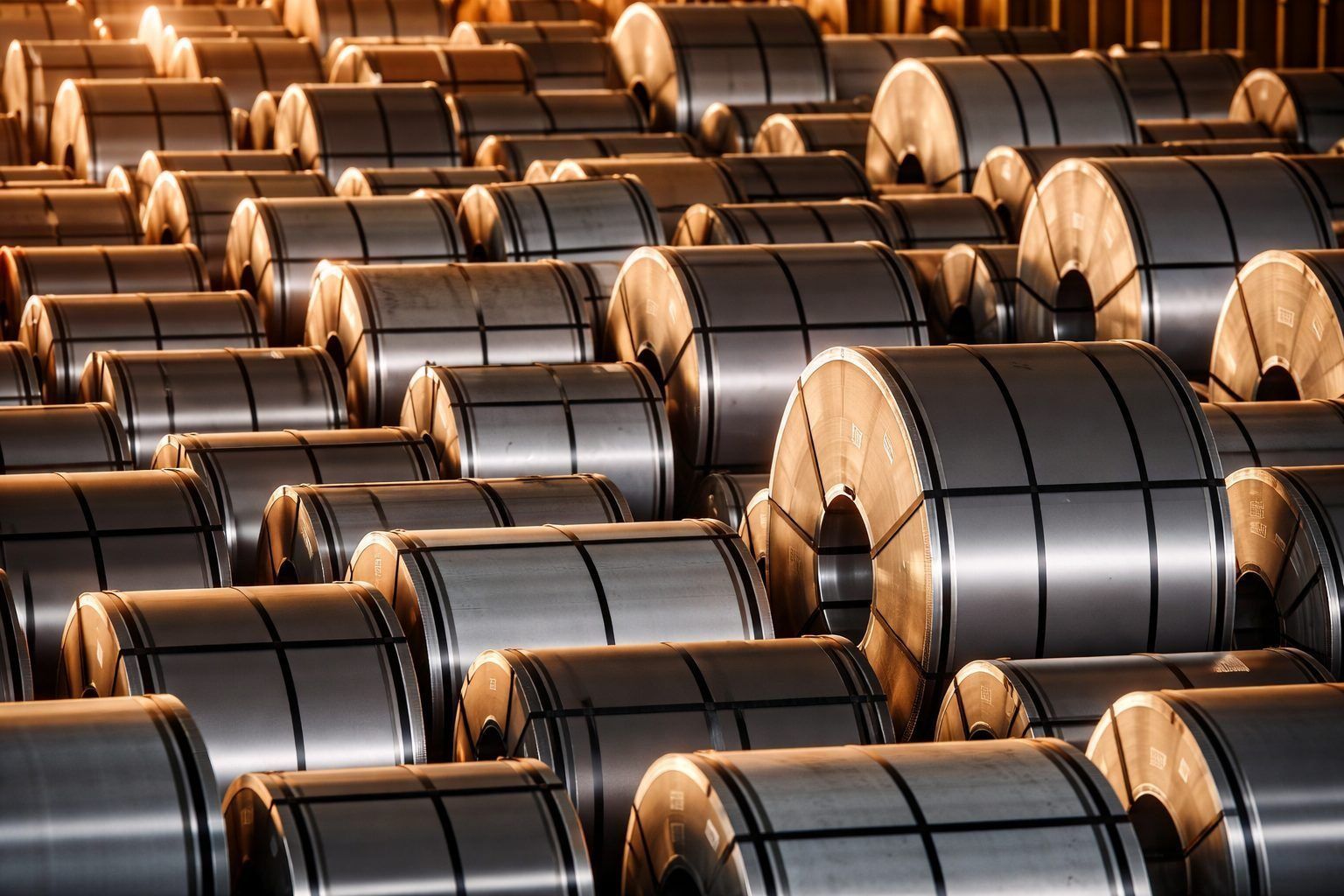
OTTAWA — December 18, 2025 — Canada is days away from a major tightening of its steel trade policy that will reshape supply chains for manufacturers, builders and clean‑energy developers. On December 26, 2025, the federal government will simultaneously (1) cut steel import tariff‑rate quotas (TRQs) and (2) impose a new 25% tariff on a wide list of “steel derivative” products—items made with steel ranging from fasteners and wire to prefabricated structures and wind turbine towers. Prime Minister of Canada+2Canada+2
Ottawa says the measures are designed to protect Canadian steelmakers from global overcapacity and “dumping” as trade friction intensifies, particularly with the United States. Prime Minister of Canada+2Reuters+2 But downstream industries warn the policy could ripple quickly into higher costs for construction, manufactured goods and electricity—and in a country racing to expand clean power, wind developers are pressing for exemptions before the Boxing Day start date. Canadian Renewable Energy Association+2Can…
What changes on December 26: two levers at once
Canada’s new approach hits steel imports through two separate mechanisms that will operate at the same time.
1) Tighter steel import TRQs with a 50% surtax above the cap
TRQs allow a set volume of steel to enter Canada without an additional surtax. Under the changes taking effect December 26, Canada will reduce the amount that can enter tariff‑free:
- Non‑free trade agreement partners: TRQs reduced from 50% to 20% of 2024 levels. Prime Minister of Canada+1
- Free trade agreement partners (excluding CUSMA/USMCA partners): TRQs reduced from 100% to 75% of 2024 levels. Prime Minister of Canada+1
- United States and Mexico: Canada says it will continue to honour its CUSMA carve‑out, meaning those two partners remain outside the tightened TRQ requirement described for other countries. Prime Minister of Canada+1
Steel imported above these thresholds will continue to face a 50% surtax, according to government descriptions of the TRQ system and industry reporting on the measures. Prime Minister of Canada+1
2) A new 25% tariff on “steel derivative products” (on the full value)
Separate from the TRQ framework, the federal government will apply a 25% tariff on the full value of a published list of steel‑derivative products imported from all countries, starting December 26. Prime Minister of Canada+2Canada+2
Ottawa has said the initial list is expected to cover over $10 billion in steel derivative imports, and it may be updated over time as market conditions change. Prime Minister of Canada
Which goods are covered: from wind towers to wires and fasteners
“Steel derivative products” can sound abstract—until you look at what’s included. The government list covers categories that touch everything from job sites to industrial plants.
Examples and categories highlighted by Ottawa include:
- Structures and parts of structures (including items such as bridges, towers and related fabricated components) Prime Minister of Canada+1
- Wire, ropes, cables, chains and related products Prime Minister of Canada+1
- Fasteners such as nails, screws, bolts, nuts, washers and rivets Prime Minister of Canada+1
- Doors and windows and related frames/thresholds (as described in the government’s backgrounder list) Prime Minister of Canada+1
- Utility wind towers appear explicitly in the broader policy discussion, and tower-related HS classifications are included in the product list (with certain project‑based exemptions described below). Prime Minister of Canada+1
For many importers, the key detail is that the 25% tariff applies to the full value of the product—not only the estimated steel content. That design is one reason downstream industries say the impacts could be broader than “steel” headlines suggest. Canada+1
Exemptions and carve‑outs: autos, aerospace, wind towers in the West and goods in transit
The government’s product backgrounder lays out several notable carve‑outs and time‑limited exclusions.
According to the published list, the 25% steel-derivative tariff will not apply to:
- Goods already subject to certain other surtax orders (Canada’s system is designed to avoid “stacking” multiple steel-related tariffs on the same good). Canada+1
- Motor vehicle manufacturing inputs imported before July 1, 2026 for use in manufacturing motor vehicles/chassis or parts/accessories. Canada
- Aircraft/spacecraft-related goods imported before July 1, 2026 for use in aircraft, trainers, spacecraft or their parts. Canada
- Utility wind towers (and tower sections) classified under a specific tariff item and imported for installation in energy projects west of the Ontario–Manitoba border. Canada
- Goods in transit to Canada on the day the tariffs come into force. Canada
Ottawa also says it will consider remission requests case‑by‑case where goods cannot be sourced domestically or where exceptional circumstances could cause severe adverse impacts to the Canadian economy. Canada+1
Why Ottawa is tightening steel trade now
The federal government’s rationale centers on a mix of domestic industrial strategy and global trade shock absorption.
In its background materials, Ottawa argues that tighter TRQs and derivative tariffs are needed to prevent Canada from being overwhelmed by low‑priced steel driven by global overcapacity and shifting trade flows, especially as access to the U.S. market narrows. Prime Minister of Canada
The backdrop is a wider U.S.–Canada trade dispute. Reporting and government statements describe steep U.S. tariffs on Canadian steel and other goods in 2025 and note that negotiations have been disrupted. Reuters+2AP News+2
Canada is also framing the move as part of a broader push to rebuild domestic demand for Canadian materials—through procurement rules and measures meant to curb dumping and enforce compliance at the border. Prime Minister of Canada+1
Industry reaction: steel producers cheer, downstream users brace
Steel sector: “protect the market,” crack down on dumping
Within the steel sector, the policy has been broadly welcomed as a way to “create space” in the domestic market—particularly if enforcement improves and dumping is deterred.
Industry reporting on the announcement quoted the Canadian Steel Producers Association emphasizing tougher anti‑dumping enforcement and broader border measures as central benefits of the package. constructconnect.com
Manufacturers and builders: tariffs can move fast through supply chains
The concern from downstream industries is that steel doesn’t just show up as coils and rebar—it shows up as components. If fasteners, wire products, structural parts and prefabricated assemblies become more expensive, many businesses argue the costs won’t stay neatly contained inside “steel” line items.
Ottawa’s own product list reads like a cross‑section of construction and manufacturing inputs—items that can touch homebuilding (fasteners, doors/windows, structural components) and industrial production (wire, chain, fabricated parts). Canada+1
Wind power and clean electricity: the flashpoint before Dec. 26
No sector has organized more loudly against the steel derivative tariff than wind power—because towers are large, expensive, and difficult to source quickly from inside Canada.
Developers warn projects could “fail or be cancelled”
In reporting republished by the Canadian Renewable Energy Association (CanREA), a senior executive at Capstone Infrastructure said the new 25% levy introduces serious risk for projects bid into competitive procurements with “very tight margins,” especially when contracts are fixed‑price with provincial utilities. Canadian Renewable Energy Association
CanREA also said member developers received rapid signals from financial backers that they would reassess investments in Canada after the tariff announcement. Canadian Renewable Energy Association
CanREA’s calculations suggest the tariff could add over $6 billion to the cost of developing wind farms through to the end of the decade. Canadian Renewable Energy Association
Why towers matter: 20–30% of project cost, up to $1 million per tower
The same reporting notes that turbine towers can represent 20% to 30% of a wind farm’s capital cost, and that a single tower for today’s larger turbine models can cost as much as $1 million. Canadian Renewable Energy Association
That makes a 25% tariff on imported towers a direct hit to project economics—especially when bids were priced before the policy was final or where procurement rules don’t allow easy cost pass‑through.
Canada’s capacity constraint: one tower maker, long distances
Another core argument from the wind industry is industrial geography. CanREA representatives have warned that Canada’s domestic tower capacity is limited—citing that the country has a single tower manufacturer based in Quebec and that logistics make it difficult to supply far‑west projects competitively. Canadian Renewable Energy Association+1
Provinces need power now, not later
The pressure is heightened by the scale of upcoming procurements. The CanREA‑republished reporting describes 9 GW of wind-related requests for power underway across multiple provinces and cites a Canada Energy Regulator outlook expecting wind to account for a major share of new generation in coming years. Canadian Renewable Energy Association
In British Columbia, CanREA has amplified warnings that the tariff could hit wind projects in western provinces particularly hard and could ultimately flow through to electricity rates. Canadian Renewable Energy Association+1
BC Hydro has also explicitly told bidders in its procurement process that proposals need to account for “any Tariffs that are in effect” at the RFP closing date—reinforcing how quickly federal trade policy can become a pricing variable in power contracts. bchydro.com
Remission, deadlines and the “race to Dec. 26”
With the new tariff scheduled for December 26, the next week is effectively a sprint for businesses and project developers trying to protect contracts signed under different assumptions.
CanREA has urged Ottawa to establish a remission approach for projects already contracted or under construction and highlighted urgency around provincial procurement timelines—arguing that without relief, developers could face “massive” price spikes and projects may no longer pencil out. Canadian Renewable Energy Association
Ottawa’s official position is that remission requests will be considered case‑by‑case, particularly where domestic sourcing isn’t possible or where the consequences could be severe for the economy. Canada+1
Prices: where Canadians could feel this first
Even if the steel policy is aimed at protecting jobs and industrial capacity, the short-term consumer question is straightforward: Do these tariffs raise the price of everyday goods?
The biggest risk areas flagged by the structure of the policy itself include:
- Housing and construction: Fasteners, structural components, doors/windows, and prefabricated elements appear on the list. Those categories are ubiquitous in residential and commercial builds—so price effects can surface quickly through contractors, suppliers, and bids on public infrastructure. Canada+1
- Vehicles and industrial products: Ottawa built in time‑limited exclusions for auto and aerospace manufacturing inputs (through July 1, 2026), suggesting the government recognizes how sensitive these supply chains can be. But not every steel‑based component in the broader economy is necessarily covered by those carve‑outs, and uncertainty itself can push procurement costs higher. Canada+1
- Electricity bills (indirectly): If wind projects become more expensive or delayed, that can affect procurement pricing and timelines for provinces trying to add capacity—an issue wind developers say could show up in the cost base for ratepayers. Canadian Renewable Energy Association+2Can…
It’s important to note that price impacts are unlikely to be uniform across the country. Ottawa’s exemption for certain wind towers used in energy projects west of the Ontario–Manitoba border signals that regional differences—especially in Western Canada—are already a policy consideration. Canada
Global context: steel protectionism is rising, not falling
Canada’s move is arriving amid a broader global hardening of steel trade policy.
For example, Reuters reported that China plans to introduce an export licence system for some steel products starting January 1, 2026, a step framed as a response to growing global protectionist pressure as Chinese exports rise. Reuters
Whether or not that policy materially changes near‑term supply, it highlights a reality Canadian importers are increasingly living with: steel and steel-containing supply chains are being pushed and pulled by policy decisions across multiple capitals.
What to watch next
With the Dec. 26 start date approaching, here are the key “next steps” shaping the story:
- Remission decisions: Companies importing covered products may move quickly to seek case‑by‑case tariff relief where domestic alternatives aren’t feasible. Canada+1
- Procurement repricing: Power procurements and infrastructure projects could see bids incorporate the tariff explicitly (as BC Hydro guidance suggests). bchydro.com
- Policy fine‑tuning: Ottawa has said the steel derivative list may be updated as market conditions change, and sectors like wind are pressing for adjustments that don’t undercut clean‑power buildouts. Prime Minister of Canada+2Canadian Renewab…
- Trade talks and retaliation: Canada’s measures are part of a broader trade war environment that remains politically volatile and economically consequential for both sides of the border. Reuters+2AP News+2
As the Boxing Day implementation date nears, the core tension is coming into focus: Ottawa is trying to defend a strategic steel industry under global pressure, while downstream manufacturers, builders and clean‑energy developers warn that tariffs on steel derivatives can land quickly on consumers—through the cost of homes, vehicles, infrastructure and electricity. Canada+2Canada+2