
DUBLIN, Ohio, August 13, 2026, 15:30 EDT — U.S. equity markets were open.
- CAH fell 1.67%, erasing about $912 million in market value.
- Levothyroxine recall searches passed 50,000 as the Class II action remained active.
- Cardinal’s $63.67 billion quarter makes the recall a scale test, not the main earnings driver.
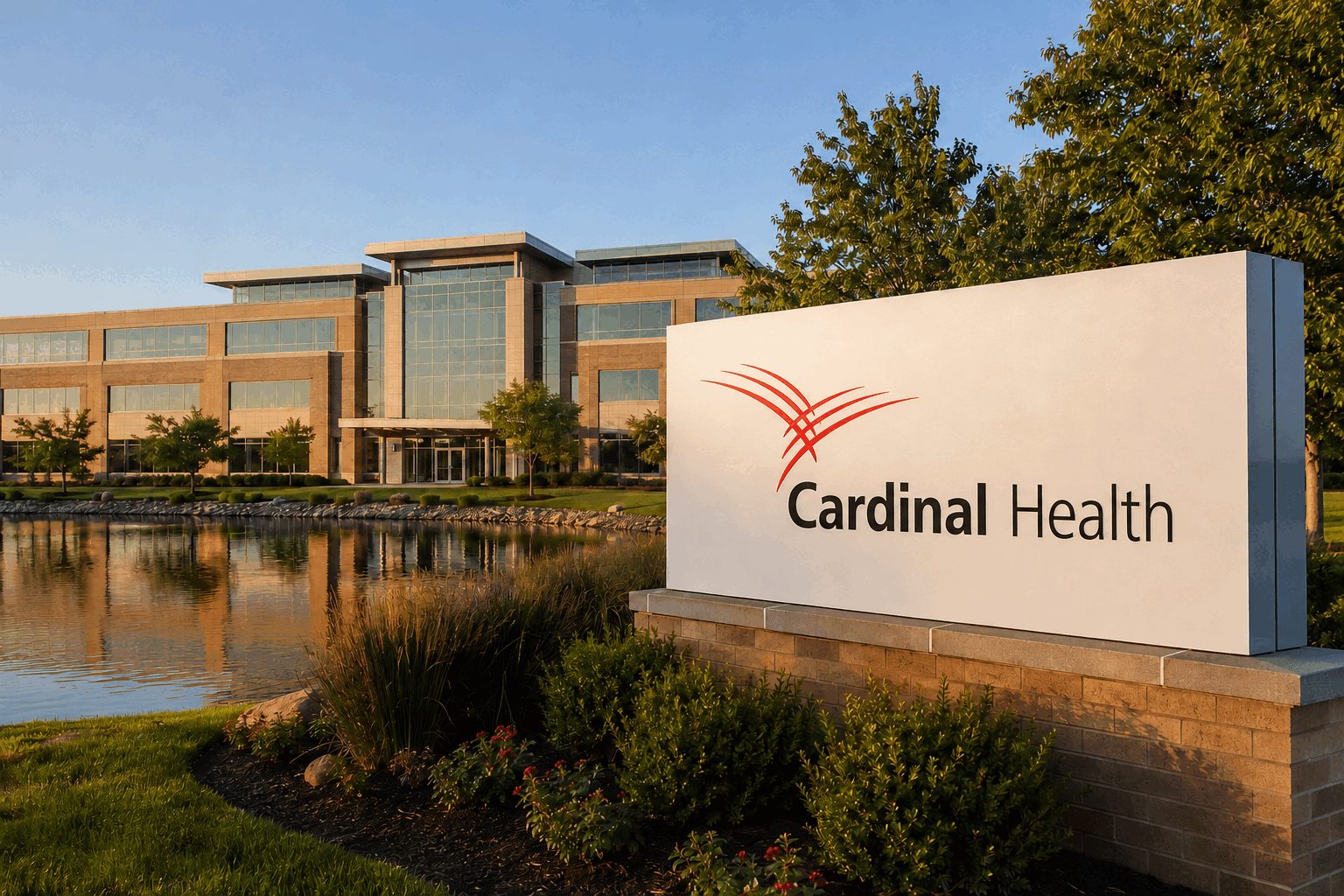
Cardinal Health, Inc. NYSE:CAH lost about $912 million in market value Thursday. Its shares fell 1.67% while the S&P 500 gained 0.73%.
The drop coincided with more than 50,000 Google searches for “levothyroxine recall 2026.” The recall includes tablets distributed under Cardinal Health labels. Timing alone does not show that the recall caused the share move. Google Trends
The investor angle is scale. Cardinal generated $63.67 billion of quarterly revenue. The recalled lots matter for patients and quality controls, but no direct financial impact has been disclosed.
| Market snapshot | Latest level | Daily move |
|---|---|---|
| Cardinal Health | $230.24 | −1.67% |
| S&P 500 | 7,805.42 | +0.73% |
| CAH relative gap | — | −2.40 points |
| Estimated CAH market-value change | −$912 million | Based on 232.58 million shares |
CAH traded at $230.24 at 3:21 p.m. EDT. The session range was $229.36 to $235.67. Volume of 1.33 million shares remained below its 2.24 million average.
The FDA classified the nationwide recall as Class II. Major Pharmaceuticals initiated it July 13 because some tablets may be subpotent. Certain unit-dose packs carried Cardinal Health labels.
| Recall measure | Verified scope | Investor read-through |
|---|---|---|
| FDA classification | Class II | Serious harm probability described as remote |
| Strengths named | Seven, from 25 mcg to 150 mcg | Multiple presentations require inventory checks |
| Base lots named | Nine | Related A and B pack variants also included |
| Distribution | Nationwide | Patient reach exceeds any one region |
Patients should contact a pharmacist or clinician before changing therapy. Abruptly stopping levothyroxine can be riskier than temporarily taking a weaker tablet. The affected strengths and lots are listed in the FDA enforcement record.
Cardinal’s earnings picture is much larger. Fourth-quarter adjusted profit reached $2.91 a share, including a $0.31 tariff refund. Excluding that item, $2.60 still beat the $2.42 consensus.
| Fiscal Q4 2026 | Reported | Comparison | Result |
|---|---|---|---|
| Adjusted EPS | $2.91 | $2.42 estimate | 20.2% above |
| Adjusted EPS excluding tariff refund | $2.60 | $2.42 estimate | 7.4% above |
| Revenue | $63.67 billion | $65.03 billion estimate | 2.1% below |
| Pharma and Specialty revenue | $55.4 billion | Year earlier | 6% growth |
Management expects fiscal 2027 adjusted earnings of $12.40 to $12.60 a share. The $12.50 midpoint stands 3.8% above the $12.04 analyst consensus cited by Reuters. Cardinal also plans $1 billion of share repurchases.
That guidance rests on specialty-drug demand. Chief Executive Jason Hollar has described the business as durable and resilient. Recent acquisitions also expanded Cardinal’s home-care exposure.
Peers were mixed. McKesson Corporation NYSE:MCK fell 2.19%. Cencora, Inc. NYSE:COR slipped 0.22%.
| Distributor comparison | Daily move | Market value | P/E |
|---|---|---|---|
| Cardinal Health | −1.67% | $53.57 billion | 31.84 |
| McKesson | −2.19% | $100.09 billion | 22.99 |
| Cencora | −0.22% | $59.8 billion | Not shown |
| S&P 500 | +0.73% | Not applicable | Not applicable |
Analysts remain positive after the earnings update. Twelve of 14 current ratings are buys. The average target of $269.50 implies 17.1% upside from $230.24.
| Analyst recommendation | Count | Share of 14 |
|---|---|---|
| Buy | 12 | 85.7% |
| Hold | 2 | 14.3% |
| Sell | 0 | 0% |
| Average target | $269.50 | 17.1% upside |
Fresh targets range from $250 to $292. Mizuho maintained a buy at $250 Thursday. Deutsche Bank held its neutral view with a $261 target.
Risks: Additional lots, patient claims or supply disruption could raise costs. Revenue guidance, specialty demand, tariffs and acquisition execution carry greater earnings weight.
The near-term test is disclosure. A quantified recall charge would change the scale comparison. Without one, fiscal 2027 guidance remains the stronger valuation signal.