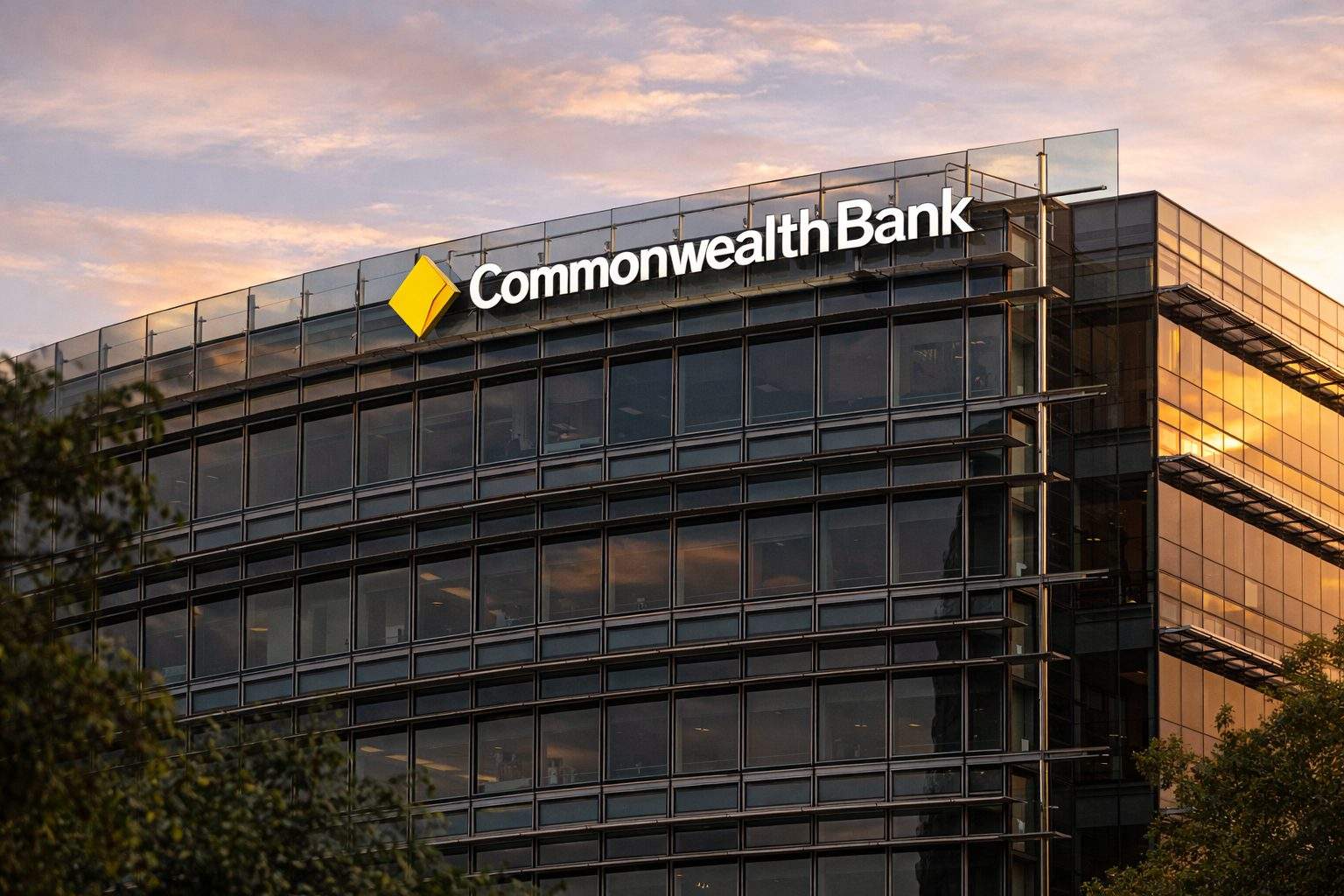
Sydney, Feb 8, 2026, 10:19 AEDT — The session has ended.
- Commonwealth Bank of Australia shares finished 0.2% lower at A$158.91, faring better than the wider market’s decline.
- With half-year numbers due Feb. 11, investors are bracing for any clues on margins, cost pressures, or bad debt trends from the bank.
- Investors are keeping an eye on the Reserve Bank’s cash-rate hike, along with mortgage repricing set for later in February.
Commonwealth Bank of Australia slipped 0.23% to close at A$158.91 on Friday, a softer decline compared to the S&P/ASX 200’s steeper 2.03% drop as investors pulled back before the weekend. Yahoo Finance
Australian markets remain closed through Monday, so traders are already eyeing what CBA has lined up for a packed week ahead. The bank drops its half-year numbers on Feb. 11, and has scheduled a briefing the same day featuring Chief Executive Matt Comyn and CFO Alan Docherty. ASX Announcements
The bank’s figures tend to influence how the entire sector is viewed during earnings season, especially when it comes to net interest margin—the gap between income from loans and outlays on deposits and funding. Another key point: these results give early hints about shifts in credit costs.
The macro picture’s changed as well. On Feb. 3, the Reserve Bank of Australia bumped its cash rate target up to 3.85%, reigniting questions about where funding costs might head for both lenders and borrowers. Reserve Bank of Australia
Australia’s big four banks aren’t wasting time passing through the increase. According to Reuters, CBA and the other majors bumped up variable home-loan rates by 25 basis points. Customers will see the higher rates kick in sometime between Feb. 13 and Feb. 17—exact dates vary by lender. Reuters
Friday saw the rest of the big banks slide further than CBA. Westpac dropped 1.20%, ANZ shed 1.52%, and NAB slipped close to 1.6%, pricing data showed. Yahoo Finance
CBA pointed to a few moving pieces in its latest results. According to an ASX filing, the bank set aside a A$68 million pre-tax provision for an extra goodwill payment to certain customers after ASIC’s Better Banking review. Beyond that, it logged A$53 million in other operating income from non-recurring items—a milestone payout from the sale of Commonwealth Insurance Limited, plus a fair-value gain from its Gemini investment following the IPO. ASX Announcements
Those one-off items aren’t enough to move the stock by themselves. Still, they tend to cloud the numbers, making that “cash” profit figure—Australia’s own adjusted metric—trickier to line up with last year’s.
Dividends are set to take the spotlight. CBA notes it tends to reveal dividends alongside its half-year results in February, and those interim payouts generally land in March. CommBank
Another wildcard: rate forecasts. Cherelle Murphy, chief economist at EY Oceania, called the February increase “unusual” in its timing, telling the Associated Press it leaves the door ajar for additional tightening if growth heats up. AP News
Still, things can easily turn against the bulls. Higher rates could hit harder, pushing up arrears and slowing loan growth. Margins might get squeezed too, with deposit competition intensifying right as investors demand tighter cost control.
Sydney trading picks up again Monday, and traders look set to tread lightly with CBA’s Feb. 11 result and investor briefing on the radar. The first round of revised mortgage rates lands later in the month.