SYDNEY, Jan 13, 2026, 16:51 AEDT — Market has closed.
- Shares in Commonwealth Bank climbed as Australia’s major banks gained ground amid renewed attention on interest rate forecasts
- CBA’s wages-and-jobs tracker indicated steady pay growth amid a persistently tight labour market
- All eyes are on the Feb. 11 earnings to glean insights into margins, costs, and credit quality
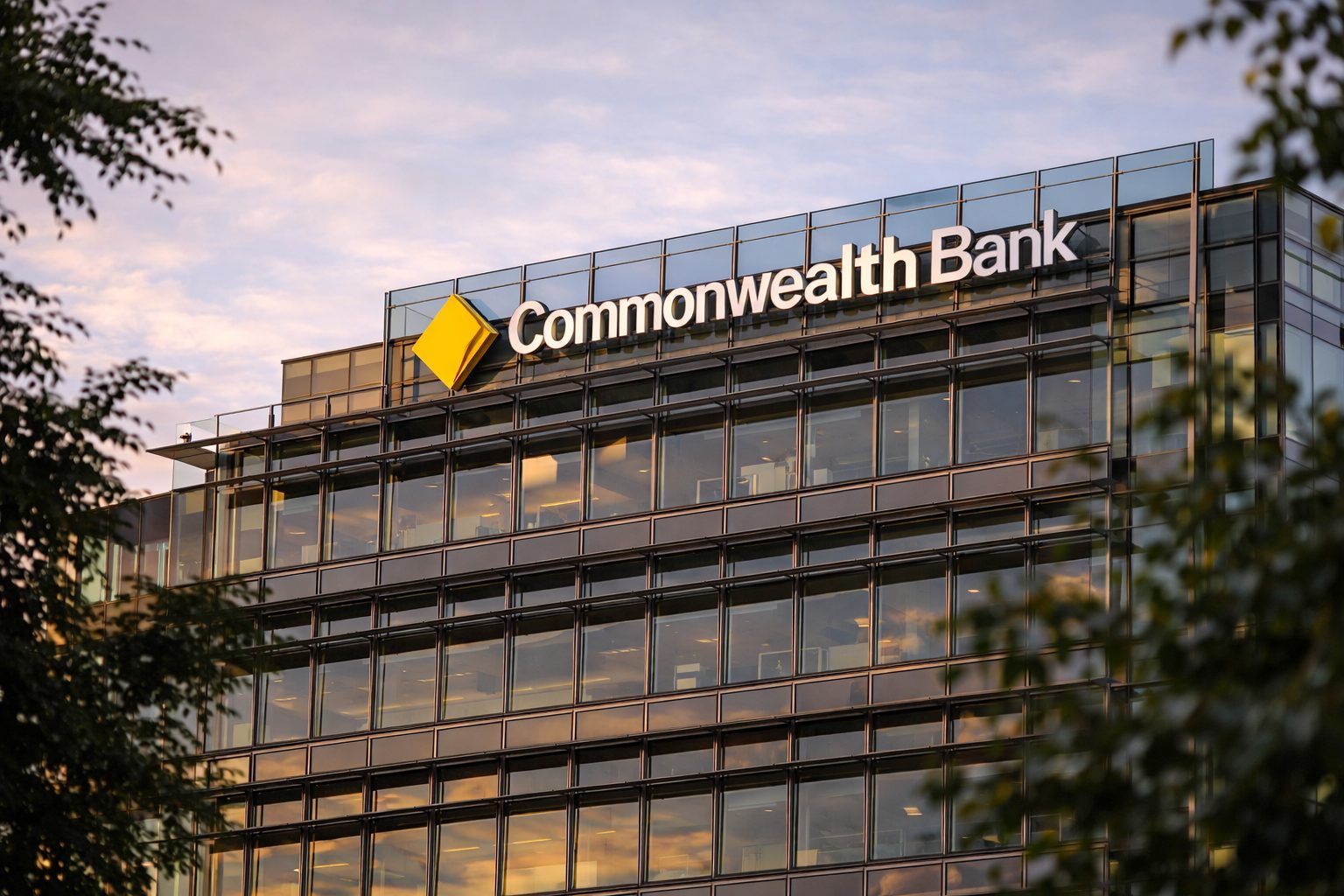
Shares of Commonwealth Bank of Australia (CBA.AX) ended Tuesday up 0.8%, buoyed by new labour-market data that continue to fuel discussion around interest rates. Investing.com Australia
This is significant since CBA has lately behaved more like a “rates stock” than usual. Even minor shifts in Reserve Bank of Australia policy expectations can jolt the sector, and with CBA’s valuation, there’s little margin for negative surprises.
Banks tend to gain when the cash rate — the RBA’s benchmark — climbs, since lending rates usually adjust quicker than deposit rates. But on the downside, funding costs increase and borrowers face more pressure, which can lead to a rise in bad debts down the line.
CBA closed at A$155.36, having fluctuated between A$154.30 and A$156.10 during the session. ANZ (ANZ.AX) climbed 1.6%, National Australia Bank (NAB.AX) jumped 1.9%, and Westpac (WBC.AX) rose 1.1%. The ASX 200 finished 0.6% higher.
The CBA Wage and Labour Insights report revealed a 0.8% rise in wages for the quarter and a 3.1% increase over the year to December. Employers added around 23,000 jobs, with unemployment steady at 4.3%.
“The labour market remains tight … and the RBA is expected to lift the cash rate in 2026,” CBA head of Australian economics Belinda Allen said in the report.
A private survey revealed consumer sentiment dropped 1.7% in January, beyond the bank’s own figures. Westpac’s Matthew Hassan highlighted a significant shift in rate expectations. Reuters
The RBA cut rates three times last year to 3.6%, but signalled the easing cycle might be done as inflation picked up, Reuters reported. CBA and NAB are now forecasting a rate hike next month. Reuters
Morgan Stanley cautioned investors to brace for another year of sharply divergent returns among the major banks, flagging CBA as a potential underperformer once more amid rising competition and its still-high valuation. Market Index
The narrative can flip fast. Should inflation or jobs figures ease and a rate hike seem less certain, the “higher-for-longer” bet on banks could unravel. That would put CBA’s valuation more in the spotlight—for all the wrong reasons.
CBA’s half-year results drop on Feb. 11, putting the spotlight on net interest margin — the spread between earnings on loans and costs on deposits and wholesale funding. Investors will also scrutinize costs, impairments, and the interim dividend plans. commbank.com.au