
NEW YORK, June 23, 2026, 17:06 EDT
• Cerebras posted first-quarter revenue of $193.4 million, jumping 94%. Cloud and other services brought in 178% more than a year ago. Cerebras
• The company projected core gross margin in the second quarter at 36% to 38%, well under the 46.5% it reported for the first quarter. Cerebras
• Shares last traded at $226.72, up 1.1%. The stock moved in a range of $210.11 to $236.99.
Cerebras Systems’ first earnings as a public company showed strong growth, but investors zeroed in on the second-quarter margin outlook from management, further down the release.
Cerebras’s full-year guidance points to a much larger revenue pace in the back half, while this quarter’s profit margins are getting squeezed. That’s a focus now with the stock seen as one of the few public names playing against Nvidia for AI inference, or running AI models once trained.
Cerebras posted GAAP revenue of $193.4 million for the quarter ended March 31, a 94% gain from the same quarter last year. Core revenue, which is non-GAAP and removes pass-through data-center costs and customer warrant accounting, climbed 92% to $191.3 million.
Cloud and other services brought in $82.8 million, making up 43% of revenue, up from 30% this time last year. Hardware was still the bigger part, but services grew faster and are more linked to the company’s key AI-infrastructure deals.
Cerebras is guiding for second-quarter core revenue of around $194 million, about flat with the first quarter. The company sees core gross margin coming in at 36% to 38%, which at the midpoint is roughly 950 basis points under the first quarter’s 46.5%. A basis point equals one-hundredth of a percentage point.
Cerebras is guiding for full-year core revenue between $855 million and $865 million. That range, based on the midpoint and after factoring in the first-quarter results and the second-quarter forecast, means the company has to bring in around $237 million per quarter in core revenue for the rest of the year. That’s about 22% more than what Cerebras is projecting for the second quarter.
Cerebras shares did better than the rest. Nasdaq Composite lost 2.21%, S&P 500 fell 1.44% according to Reuters market data. Nvidia dropped 4.1%. AMD was down 5.8%.
Options traders were looking for a bigger swing. Options contracts had priced in a possible move of up to 13% for Cerebras by week’s end versus Monday’s close, according to Investopedia.
Cerebras CEO Andrew Feldman called out speed for the quarter, saying, “fast AI is more valuable than slow AI.” CFO Bob Komin said the quarter proved there’s a “large and rapidly growing opportunity.” Cerebras named OpenAI and Amazon Web Services as key drivers for growth. Cerebras
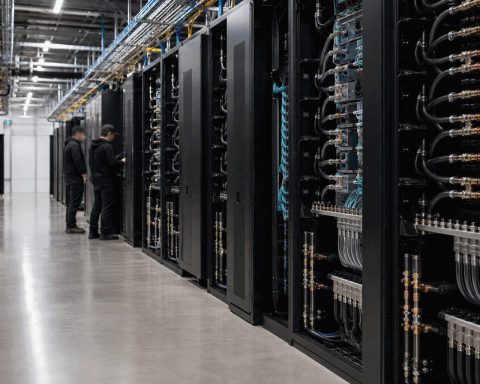
Cerebras’ main advantage comes from its wafer-scale chip, about the size of a dinner plate, built to cut the networking load for GPU clusters. GPUs, or graphics processing units, are the backbone in AI setups for Nvidia and are also key for AMD’s AI ambitions. Morgan Stanley’s Joseph Moore and team said earlier this month that there’s a surge in demand for “fast, low-latency inference,” and pointed to Cerebras as an early challenger to Nvidia. Reuters
Cerebras shares trade above the IPO price. The company wrapped up its May offering at $185 per share, bringing in around $6.38 billion in gross proceeds after underwriters took up their full option.
Cerebras is clear about its risk. The company says the outlook relies on access to capital, data center capacity, timing of deals with big customers and partners, and demand from a small group of major buyers, including OpenAI, G42, Mohamed bin Zayed University of Artificial Intelligence, and AWS. If the ramp in the second half doesn’t stick, or if slimmer service margins are permanent instead of a blip, it could get tougher to keep the stock’s AI scarcity premium.
Related articles: Cloud Computing