December 25, 2025 — The world’s most infamous nuclear disaster site is back in the headlines, as officials in Ukraine warn that damage to Chernobyl’s massive radiation confinement structure has created a dangerous new vulnerability in the middle of a war increasingly defined by drones and missiles.
Serhii Tarakanov, the director of the Chornobyl (Chernobyl) Nuclear Power Plant, says the protective system built to keep radioactive material sealed inside Reactor No. 4 could fail if the site is struck again — even if the impact is nearby rather than direct. In interviews cited by multiple outlets this week, Tarakanov warned that a missile or drone strike could trigger a “mini-earthquake” effect that might bring down the inner shelter. Pravda
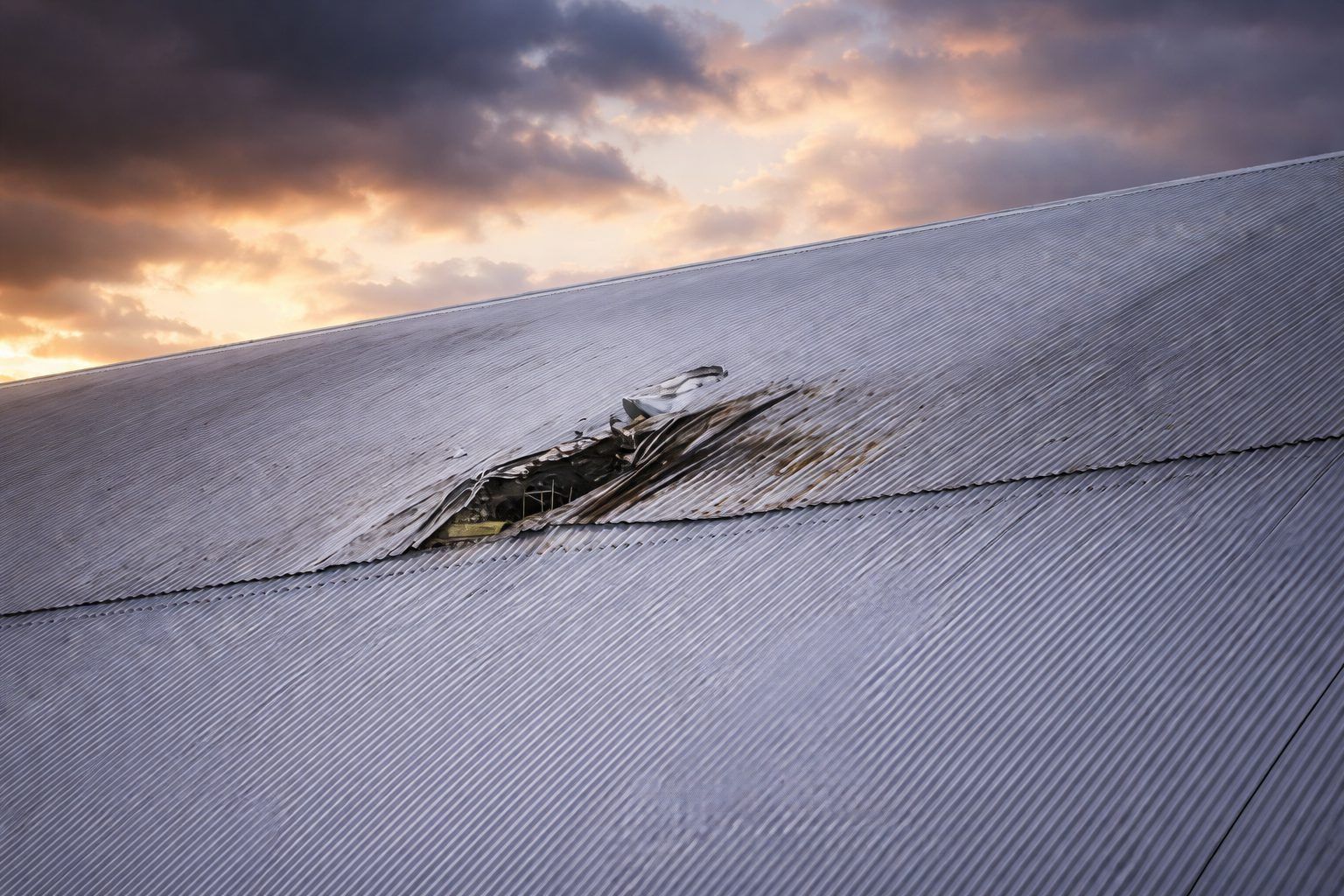
The warning follows a February 2025 drone strike that punctured the outer layer of the New Safe Confinement (NSC), the arched steel structure designed to contain radiation from the 1986 reactor explosion. The International Atomic Energy Agency (IAEA) has since said the NSC has lost its primary safety functions, including its confinement capability — while also noting that radiation levels have remained stable and that key load-bearing elements were not permanently damaged. Reuters
What’s happening at Chernobyl now
The story unfolding in late December is not about a fresh radiation release — it’s about a weakened barrier at a site that still contains highly hazardous material nearly four decades after the catastrophe.
According to Tarakanov, the damaged exterior has been partially patched, but a web of smaller openings still needs to be sealed, and a full restoration could take three to four years. Pravda
Ukrainska Pravda reports that the main hole from the drone strike has been covered with a protective screen, but that around 300 smaller openings made during firefighting efforts still require repairs. The outlet also cites Tarakanov as saying radiation levels remain “stable and within normal limits.” Pravda
Separately, Ukraine’s English-language outlet The New Voice of Ukraine (NV), citing a plant official, reported that firefighters cut 130 openings totaling about 130 square meters into the outer shell to fight the blaze — holes that now raise the risk of moisture intrusion and corrosion. The New Voice of Ukraine
While the exact count varies by source and method of measurement, the underlying concern is consistent: the structure is no longer fully sealed, and repairing it is complex, expensive, and slow — especially under wartime conditions.
The February 2025 strike that changed the risk picture
The current anxiety traces back to the night of February 13–14, 2025, when a drone attack hit the protective shell over Reactor No. 4.
Ukrainska Pravda describes it as a loitering munition carrying a high-explosive incendiary warhead that struck the shelter of Unit No. 4. Pravda
The Associated Press reported at the time that a drone armed with a warhead punched a hole in the outer shell and briefly started a fire. Ukraine blamed Russia; the Kremlin denied responsibility. The IAEA said radiation levels did not rise and that the inner containment was not breached. AP News
Reuters similarly reported that the attack badly damaged the confinement structure intended to prevent the release of nuclear substances, while officials again said radiation levels remained normal. Reuters
That distinction — damaged, but not breached — has defined the discussion ever since. The immediate catastrophe did not happen. But the longer-term integrity of the confinement system has been thrown into question.
Why the “New Safe Confinement” matters
The New Safe Confinement isn’t just a symbol. It’s a working safety system built to do several things at once:
- Keep radioactive dust and material contained
- Prevent weather and water intrusion
- Enable the slow dismantling and decommissioning of the destroyed reactor area over decades
The NSC, completed in 2019 as a giant steel arch enclosing the earlier Soviet-era “sarcophagus,” was built to stabilize and isolate what remains of Reactor No. 4. AP News
When a structure like this loses its airtight seal — even partially — it can compromise the confinement function. That is why the IAEA’s language earlier this month was so stark.
IAEA: “Lost its primary safety functions” — but no radiation spike
In early December, the IAEA assessed the site and delivered a mixed but urgent message: the world isn’t facing an immediate radiation emergency, yet the shelter can no longer perform its core job the way it was designed to.
Reuters reported on December 6 that an IAEA inspection found the protective shield can no longer perform its main safety function due to drone damage, and quoted IAEA Director General Rafael Grossi saying the mission confirmed the structure had “lost its primary safety functions, including the confinement capability,” while also finding no permanent damage to load-bearing structures or monitoring systems. Reuters
The Guardian likewise reported that the “new safe confinement” can no longer perform its main function of blocking radiation and requires major repair, while noting that Ukraine blames Russia for the drone strike and Russia denies involvement. The Guardian
Interfax, citing an IAEA statement, also reported recommendations that point to what “repair” really means here: humidity controls, updated corrosion monitoring, and upgrades to automated monitoring systems for the older shelter structure beneath the arch. Interfax-Ukraine
In short: the IAEA is not warning of a current leak — but it is warning that the system is degraded in ways that matter over time.
The director’s warning: a second strike could be worse
Tarakanov’s central point is not that Chernobyl is currently spewing radiation. It’s that the weakened outer confinement raises the stakes of any future strike — and that even a near miss could be enough to destabilize the inner structure.
In remarks reported by Ukrainska Pravda, The Kyiv Independent, and The Daily Beast, Tarakanov warns that if a missile or drone hits directly — or “even falls somewhere nearby,” such as an Iskander — the resulting vibrations could cause a collapse of the inner shell. Pravda
The idea is grimly simple: a protective system designed for weather and time was never meant to absorb repeated wartime shockwaves.
Repair timeline: why fixes may stretch into 2026 — and beyond
There is a difference between emergency patching, “primary repairs,” and full restoration.
- Tarakanov has warned that a full restoration could take three to four years. The Kyiv Independent
- NV reported that “primary repairs” are scheduled for completion by the end of 2026, citing Serhii Kondratenko, a deputy technical director at the shutdown plant. The New Voice of Ukraine
- Interfax reported that in 2026, with support from the European Bank for Reconstruction and Development (EBRD), the site would undertake additional temporary repairs to support the re-establishment of the NSC’s confinement function — with full restoration envisioned once the conflict ends. Interfax-Ukraine
That sequencing matters for understanding the risk window. If repairs take years, then for years the site could remain more vulnerable than intended — precisely the scenario Tarakanov is warning about.
Who’s paying, and who’s doing the work
Even before the latest December warnings, international partners were already involved in planning repairs and coordinating support.
NV reported that Ukraine and the EBRD signed an agreement under which international partners will fund restoration of the NSC superstructure, and that experts from Bouygues Travaux Publics and VINCI Construction Grands Projets — members of the original consortium involved in building the arch — were engaged to assess restoration options. The New Voice of Ukraine
The Chornobyl Nuclear Power Plant’s own website reported that an EBRD delegation visited the industrial site in September 2025, discussed current safety measures and restoration plans, and signed a grant agreement related to ICCA-funded projects and temporary repair measures. Chornobyl Nuclear Power Plant
Why this matters beyond Ukraine
Chernobyl isn’t an operating nuclear power plant — but that does not make it harmless.
Reactor No. 4 remains a uniquely dangerous wreckage site, containing radioactive material and contaminated infrastructure that must be managed for decades. As the AP noted after the February strike, the site also includes spent fuel and contaminated equipment as part of a long decommissioning process. AP News
What happens at Chernobyl carries weight far beyond Ukraine’s borders for three reasons:
- Symbolic gravity: it is the site of the world’s worst nuclear accident.
- Transboundary fear: even small releases can spark panic across Europe.
- Precedent in wartime: it is a test case for whether nuclear and radiological sites can be protected in modern drone warfare.
That third point is increasingly central. The IAEA and many governments have repeatedly warned against military activity near nuclear facilities, and Ukraine’s nuclear safety concerns have repeatedly escalated during major waves of winter strikes.
December 25 context: drone warfare continues through Christmas
Although the latest direct warnings about the Chernobyl shelter were published earlier in the week, the broader military context remained intense on December 25.
Reuters reported that Ukrainian long-range drones struck oil and gas facilities in Russia on Christmas Day, underscoring that drone attacks remain a defining feature of this phase of the war. Reuters
That reality — ongoing drone exchanges, even during holidays — is part of what makes Tarakanov’s warning feel immediate: repairs are measured in years, but strikes can happen in minutes.
What to watch next
As of December 25, there are no credible reports of abnormal radiation levels outside the confinement system tied to this late-December coverage. Multiple reports continue to emphasize that monitoring remains active and readings have stayed within normal limits. Pravda
The biggest near-term questions now are:
- How quickly can temporary repairs reduce the vulnerability window?
- How will Ukraine and international partners fund and execute long-term restoration during wartime?
- Can the site be effectively protected from future strikes while the conflict continues?
For now, the warning from the plant director and the assessment from the U.N. nuclear watchdog point in the same direction: Chernobyl’s confinement system is no longer in the condition the world paid to build — and the longer it stays that way, the higher the stakes become.