
NEW YORK, August 14, 2026, 15:29 EDT — U.S. cash markets began trading following a record contraction in Chinese loans that left a 385 billion yuan shortfall.
- Chinese bank lending declined by a record 340 billion yuan in July.
- The outcome fell short of the Reuters consensus by 385 billion yuan.
- The influence of the signal diminished as bonds and equity financing gained ground over bank loans.
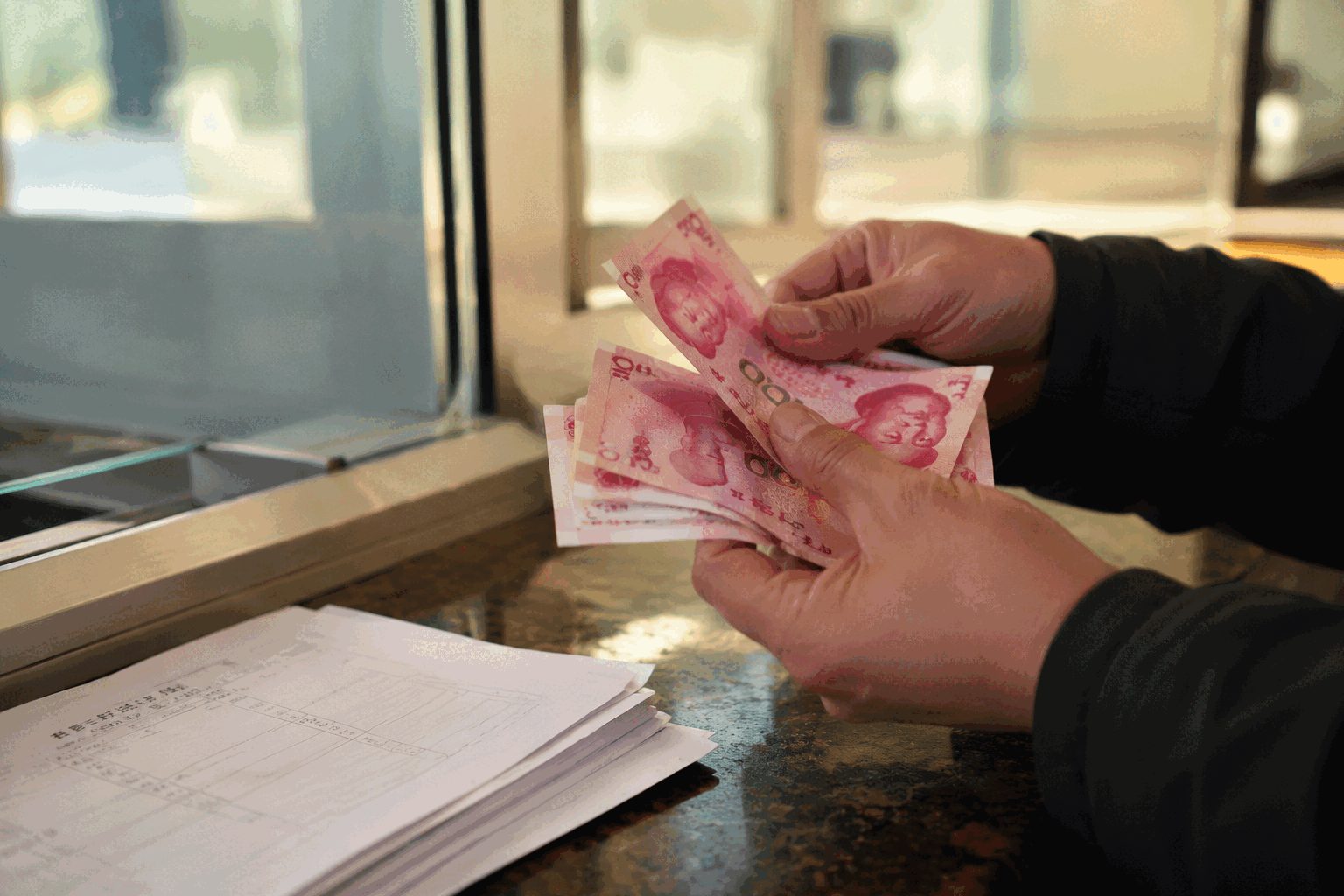
Chinese banks reduced new yuan loans by 340 billion yuan in July, marking a record contraction. Analysts were forecasting an increase of 45 billion yuan. The difference of 385 billion yuan highlighted exceptionally soft private credit appetite in the world’s second-largest economy.
The signal for investors is more limited than the headline indicates. Household borrowing declined more rapidly than overall lending. At the same time, incremental financing is now provided more by bonds and equities than by bank loans.
The divergence indicates a slowdown in consumption and property demand, but does not suggest a comprehensive funding freeze across the system. For international portfolios, consumer-related demand could lose momentum ahead of any decline in corporate liquidity.
China credit trends
| Measure | July 2026 | Benchmark | Gap or change |
|---|---|---|---|
| New yuan loans | -340 billion yuan | +45 billion consensus | -385 billion |
| Outstanding loan growth | 5.1% year on year | 5.3% consensus | -0.2 point |
| M2 money growth | 7.7% | 7.9% consensus | -0.2 point |
| Total social financing growth | 7.4% | 7.4% in June | No change |
Household lending, covering mortgages, decreased by 460.3 billion yuan. Loans to companies dropped by 130 billion. June had seen significant increases in both areas, so while seasonal influences play a role, they do not fully account for the unprecedented figure.
New lending over seven months totaled 10.38 trillion yuan, down 19.3% from 12.87 trillion a year prior, according to a preliminary calculation based on official data. The slowdown has lasted more than just one month.
China’s shifting financing trends
| Funding channel | Share of 2025 TSF increase | Investor reading |
|---|---|---|
| Bank loans | 45% | Remains significant, but not the main source |
| Bonds plus equities | 47% | Now contributes more than bank loans |
| Other financing | 8% | Minor channels make up the rest |
The People’s Bank of China has pledged practical support measures but did not indicate any imminent rate or reserve-ratio reductions. According to Capital Economics, the central bank “doesn’t seem particularly worried” about the latest credit softness, and it predicts around 30 basis points of cuts within the next year. Reuters
Global stock markets were steady, avoiding sharp declines. Asia-Pacific stocks excluding Japan rose 0.29%. The STOXX 600 declined by 0.24%, and the MSCI All-World index edged down 0.02%.
Overview of cross-asset markets
| Asset | Level | Daily move | Published time |
|---|---|---|---|
| S&P 500 | 7,783.14 | down 0.20% | 15:13 EDT |
| Dow Jones Industrial Average | 53,796.72 | down 0.08% | 14:58 EDT |
| Nasdaq Composite | 26,696.16 | down 0.40% | 14:54 EDT |
| Cboe VIX | 14.36 | down 1.85% | 15:01 CDT |
| Bitcoin | $62,790.02 | down 0.99% | 19:06 UTC |
U.S. technology stocks were the main drag on markets Friday, though volatility eased and small caps advanced. This pattern points to sector rotation rather than a broad risk-off mood. Quotes appeared at various times and may reflect a delay.
Signals from rates and currencies aligned. The yield on the U.S. 10-year slipped to 4.631%, while the two-year was last at 4.106%. The dollar index lost 0.39% to 99.53. The euro increased 0.47% to $1.1581.
Oil gave a contrasting signal for inflation. Brent increased 0.92% to $87.87, with WTI up 0.53% at $81.69. Gold rose 0.7% to $4,379.95, and silver advanced 0.7% to $64.88.
Analyst ratings and market outlooks
| Analyst or firm | Market call | Key condition |
|---|---|---|
| Capital Economics | PBOC rate reductions of roughly 30 basis points anticipated in the next year | Ongoing softness in credit appetite |
| Kyle Rodda, Capital.com | Geopolitical developments remain the leading macro obstacle | Persistent escalation over the weekend |
| John Sidawi, Federated Hermes NYSE:FHI | Low risk premiums are expected not to last | Either a rise in conflict or a definitive resolution |
| Jim Wyckoff, American Gold Exchange | Gold benefits from a softer dollar | Inflation from higher oil prices could remove support |
John Sidawi stated that the current phase of low volatility in markets “is unlikely to be permanent.” A separate risk comes from China’s credit figures: a drop in demand may not lead to an immediate increase in global risk premiums. Reuters
Risks: Seasonal repayments could exaggerate July’s apparent weakness. Accelerated fiscal spending may boost overall financing even if bank lending remains subdued. Conversely, a renewed oil shock might push inflation, yields and volatility higher.
Related articles: Stock Market