
- The Perseid meteor shower remains active on August 16–17, even though its peak occurred on August 12–13.
- The meteors originate from debris of Comet 109P/Swift-Tuttle, an ancient celestial body well over 5 billion years old.
- Moonlight washes out fainter meteors, but a few bright Perseid fireballs have still been observed.
- Meteor rates predawn are expected to be around a dozen per hour at mid-northern latitudes, with the American Meteor Society estimating about 15–20 meteors per hour in ideal conditions (though moonlight will reduce that).
- Minor sources like the kappa Cygnids contribute about 1 meteor per hour.
- Venus and Jupiter form a bright pre-dawn pairing, having been within 1° during their Aug 11–12 conjunction and remaining a tandem as they separate.
- Mercury begins its dawn appearance around August 16–17, very low on the eastern horizon, with greatest visibility near August 19 at a 19° elongation from the Sun.
- All four terrestrial planets are visible: Saturn rises in the west before dawn and Jupiter, Venus, and Mercury line up in the east along the Sun’s path, while Mars remains dim and low after sunset.
- Saturn rises around 10 p.m. in mid-August and is visible all night with rings appearing nearly edge-on this year; its official opposition occurs on September 21, 2025.
- On August 16, the Moon passes near the Pleiades (Seven Sisters) in the pre-dawn sky, with a lunar occultation possible in parts of China and Japan around 15:20–17:10 UTC.
Perseid Meteor Shower Sparkles on (Despite the Moon)
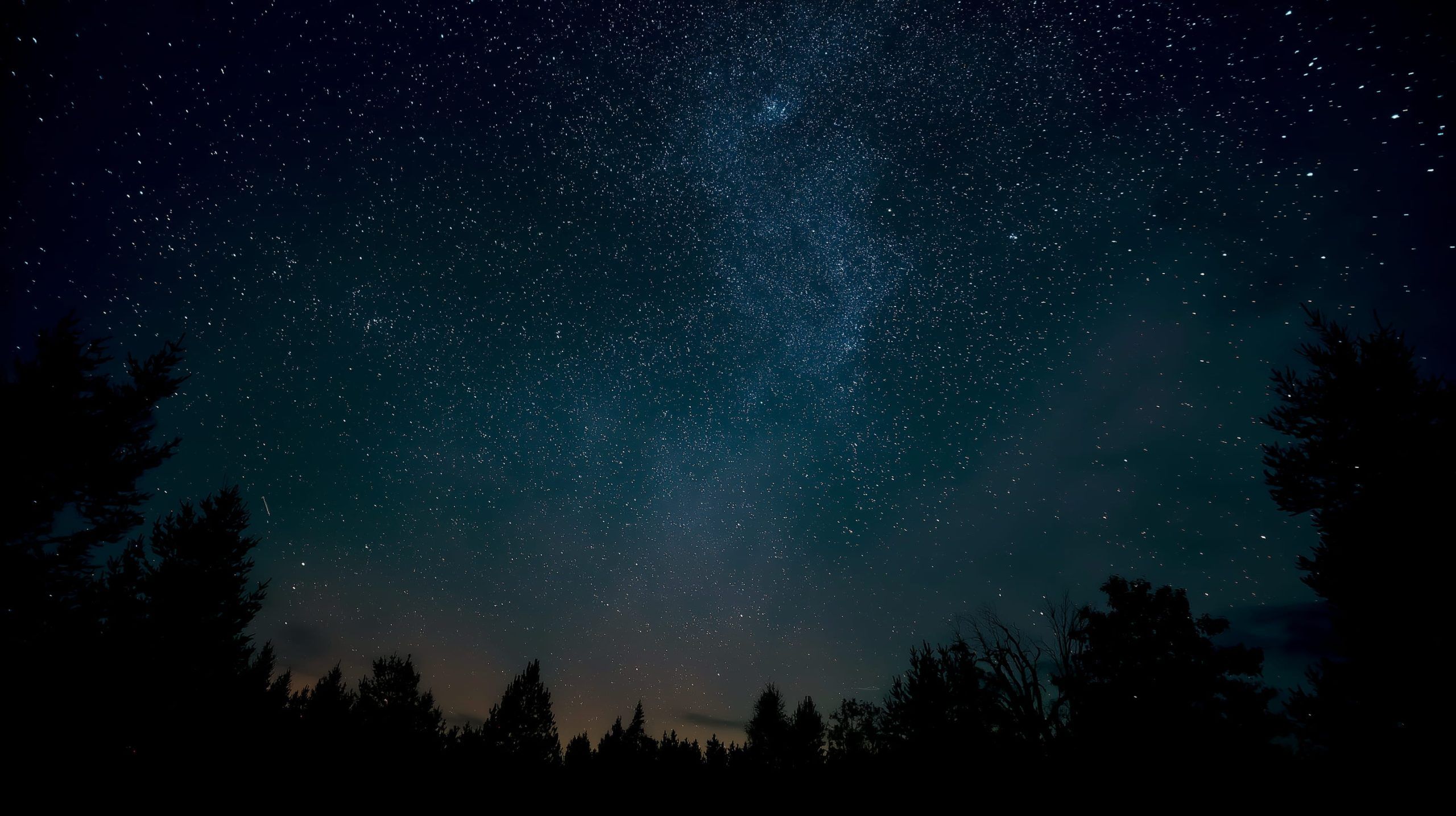
One of the year’s most beloved sky shows – the Perseid meteor shower – is still active this weekend, even though its peak on August 12–13 has passed space.com theguardian.com. The Perseids originate from debris of Comet 109P/Swift-Tuttle, “an ancient celestial body… well over 5 billion years old,” explains astrophysicist Dr. Richard Parker theguardian.com. During peak nights, the nearly full moon’s glare washed out all but the brightest meteors science.nasa.gov. Fainter shooting stars are tricky to see this year due to moonlight, experts warn theguardian.com. However, a few bright Perseid fireballs have still streaked across the sky, outshining the moon for lucky observers space.com space.com.
You can expect modest meteor counts on August 16–17. Under dark, clear skies before dawn, observers at mid-northern latitudes might catch on the order of a dozen meteors per hour (mainly late Perseids) amsmeteors.org. The American Meteor Society notes that around 15–20 meteors/hour could be visible predawn this weekend in ideal conditions, though moonlight will reduce that number amsmeteors.org. Some minor meteor sources like the kappa Cygnids are also active at a very low level (only ~1 meteor per hour) amsmeteors.org. To maximize your chances of spotting shooting stars, find a dark location and be patient. “Head out late at night to as dark a location as possible… and wait up to 30 minutes for your eyes to adjust,” advises Dr. Ed Bloomer of the Royal Observatory Greenwich theguardian.com. Remember that meteors appear randomly – so get comfortable, scan the sky (preferably looking slightly away from the Perseus radiant), and enjoy the quiet show theguardian.com theguardian.com.
Dazzling Planets at Dawn: Venus, Jupiter and a New Mercury Sighting
Early risers on August 16–17 are treated to a brilliant planetary duo in the eastern sky before sunrise. Venus and Jupiter, the two brightest planets, have been shining side by side in the pre-dawn hours all month science.nasa.gov science.nasa.gov. They had an extremely close conjunction (just 1° apart) on August 11–12, and though they are now slowly separating, they remain a gorgeous tandem in the twilight science.nasa.gov. Venus blazes higher and brighter, while Jupiter is a bit lower and dimmer – but still very evident near Venus science.nasa.gov. These planetary “morning stars” rise a few hours before the Sun and are impossible to miss if you’re up at dawn science.nasa.gov. Mark your calendar for a special sight a few days from now: on August 19–20, a slim crescent Moon will join Venus and Jupiter, forming a striking triangle in the eastern sky before sunrise science.nasa.gov.
Mercury is adding to the dawn lineup as well. The innermost planet is just beginning to emerge from the Sun’s glare in mid-August. Around August 16–17, Mercury makes its first appearance of the season, very low on the eastern horizon during dawn twilight manitobamuseum.ca manitobamuseum.ca. It will be challenging to spot – you’ll need an unobstructed view toward the east and perhaps binoculars – but Mercury gets a bit higher and brighter each morning. By August 19 (when Mercury reaches greatest western elongation, 19° from the Sun), it will be slightly easier to see if you know where to look earthsky.org. Essentially, all four terrestrial planets are now visible: Saturn stays up until dawn in the west, while Jupiter, Venus, and Mercury line up in the east along the Sun’s path earthsky.org. (Mars is the one exception – now very dim and low in the west after sunset, it’s becoming hard to observe science.nasa.gov.)
Saturn Shines All Night
Skywatchers can also enjoy Saturn, which is currently rising in mid-evening and visible through the night. The ringed planet comes up around 10 p.m. local time in mid-August, and by dawn it will be low in the western sky science.nasa.gov science.nasa.gov. Saturn is bright enough to spot with the naked eye (around magnitude 0.6) and sits among the stars of Aquarius and Capricornus. If you have a telescope, now’s a great time to observe Saturn’s rings: they’re nearly edge-on from Earth’s perspective this year, appearing thinner than usual manitobamuseum.ca. (Note that Saturn’s official “opposition,” when it’s closest and brightest, comes on September 21, 2025 earthsky.org, but it’s already a prominent late-night object.) On the night of August 16, Saturn shares the sky with a half-lit Moon – the Moon reached last quarter phase on Aug 16, so as it rises around midnight it will appear near Saturn earlier in the night amsmeteors.org manitobamuseum.ca. By the weekend’s wee hours, the waning Moon will have moved onward, leaving Saturn against a darker sky before sunrise.
Moon Meets the Seven Sisters (and Other Celestial Encounters)
In the early hours of Saturday, August 16, the Moon has a special rendezvous with the Pleiades star cluster. The Pleiades – also known as the “Seven Sisters” in Taurus – are just coming into view in the pre-dawn sky. Around midnight into Saturday morning, the last-quarter Moon can be seen approaching the Pleiades; it creeps closer hour by hour until sunrise intervenes manitobamuseum.ca. In some parts of the world (e.g. eastern Asia), skywatchers will actually witness the Moon pass in front of the Pleiades – a lunar occultation of this famous star cluster instagram.com. For example, observers in parts of China and Japan can see the Moon cover some of the Pleiades stars on Aug 16 between about 15:20–17:10 UTC instagram.com. This rare alignment of our Moon with a distant star cluster is a treat for those in the right location with clear skies (binoculars or a small telescope would give the best view of the Pleiades’ stars near the bright Moon).
Even if you’re not in an occultation zone, it’s still lovely to observe the Moon near the Pleiades before dawn on Aug 16. The scene offers a preview of the winter stars: by Sunday and Monday (Aug 17–18), the waning Moon will slide eastward past other bright stars like Capella, Aldebaran, and Betelgeuse, which now adorn the eastern pre-dawn sky earthsky.org. These stars – normally associated with winter constellations Auriga, Taurus, and Orion – are making their late-summer morning appearance as the Earth’s night side gradually faces a new season of stars. Early on August 17 and 18, watch for the Moon positioned amid these twinkling markers (for example, on Aug 17 the Moon will form a line with golden Capella and reddish Aldebaran) earthsky.org. By August 19–20, the crescent Moon will be much thinner and lower, joining Venus and Jupiter as mentioned above. Marking these celestial meet-ups on your calendar can add excitement to your dawn skywatching routine.
Space Weather Watch: Solar Activity and Aurora Outlook
While you’re gazing up this weekend, keep in mind that the Sun itself has been busy – and that can sometimes mean auroras. We are currently near the peak of Solar Cycle 25, and the Sun’s activity is high in 2025 with many sunspots visible. In fact, the monthly sunspot number for July 2025 was 125.6 (slightly higher than June’s count), indicating we’re still in the solar maximum phase of the cycle earthsky.org. This translates into frequent solar flares and bursts of solar wind. Over the past day or so, the Sun produced numerous small flares (C-class) but no major eruptions earthsky.org. Forecasters at NOAA’s Space Weather Prediction Center estimate about a 30% chance of M-class (moderate) solar flares each day right now (and ~5% chance of a bigger X-class flare) services.swpc.noaa.gov earthsky.org. These flares can cause minor radio blackouts on Earth’s sunlit side, but so far no significant disruptions have been observed in the last 24 hours services.swpc.noaa.gov.
The good news is that no geomagnetic storms are currently in progress. Earth’s magnetic field has been mostly quiet to unsettled, with the Kp index (a gauge of geomagnetic activity) lingering below the storm threshold in recent days services.swpc.noaa.gov earthsky.org. NOAA predicts no G1-class (minor) storming on August 16–17 services.swpc.noaa.gov. That means widespread auroras are unlikely for most observers this weekend. However, there is a solar wind disturbance on the horizon: A phenomenon called a co-rotating interaction region (CIR) is expected to reach Earth around August 17–18 spaceweather.com. This occurs when fast solar wind overtakes slower wind, creating a shock that can perturb Earth’s magnetic field. The incoming CIR – possibly followed by a high-speed solar wind stream – could elevate geomagnetic activity to “active” levels (Kp 4, just below storm level) earthsky.org earthsky.org. Space weather experts say minor auroras (G1 level) might develop if the solar wind’s magnetic field tilts southward during that period spaceweather.com. In practical terms, high-latitude skywatchers (e.g. in Canada, northern Europe, Alaska) should remain alert late on Aug 17 and into Aug 18 for a possible glow of the aurora low on the horizon spaceweather.com. Any auroral displays are likely to be modest, but under clear dark skies even a minor geomagnetic uptick can produce beautiful aurora borealis ripples at northern latitudes.
Aside from that, no other space weather alerts are in effect at the moment. There have been no Earth-directed coronal mass ejections in the past day earthsky.org, and solar radiation storm levels are very low services.swpc.noaa.gov. For now, the aurora forecast is quiet, but with the Sun near its peak activity, conditions can change quickly. It’s always a good idea for aurora enthusiasts to monitor updates from official sources like NOAA’s Space Weather Prediction Center. Even when geomagnetic activity is low, the Northern Lights can sometimes surprise observers in polar regions – and August nights are getting longer and darker, increasing your chances to catch any subtle auroral glows.
Bottom Line
August 16–17, 2025, offers a cornucopia of skywatching delights. Keep an eye out for lingering Perseid meteors (especially the bright ones that defy the moonlight) science.nasa.gov, and enjoy the brilliant pair of Venus and Jupiter gracing the morning sky science.nasa.gov. If you’re lucky, you might spot Mercury peeking up just before sunrise near this planetary duo manitobamuseum.ca. The Moon adds its own spectacle by cozying up to the Pleiades star cluster on Saturday morning, and sweeping past bright stars in the dawn sky in the following days manitobamuseum.ca earthsky.org. Saturn stands by as a steady beacon through the night, welcoming telescope users to admire its rings. And while no major aurora displays are guaranteed, the space weather outlook hints at a potential uptick, so high-latitude observers should stay alert for any auroral glimmers late Sunday spaceweather.com earthsky.org. In short, it’s a great summer weekend to look up – clear skies!
Sources: NASA/JPL science.nasa.gov science.nasa.gov; American Meteor Society amsmeteors.org; EarthSky earthsky.org earthsky.org; NOAA Space Weather Prediction Center services.swpc.noaa.gov; SpaceWeather.com spaceweather.com; The Guardian (Royal Observatory Greenwich commentary) theguardian.com.