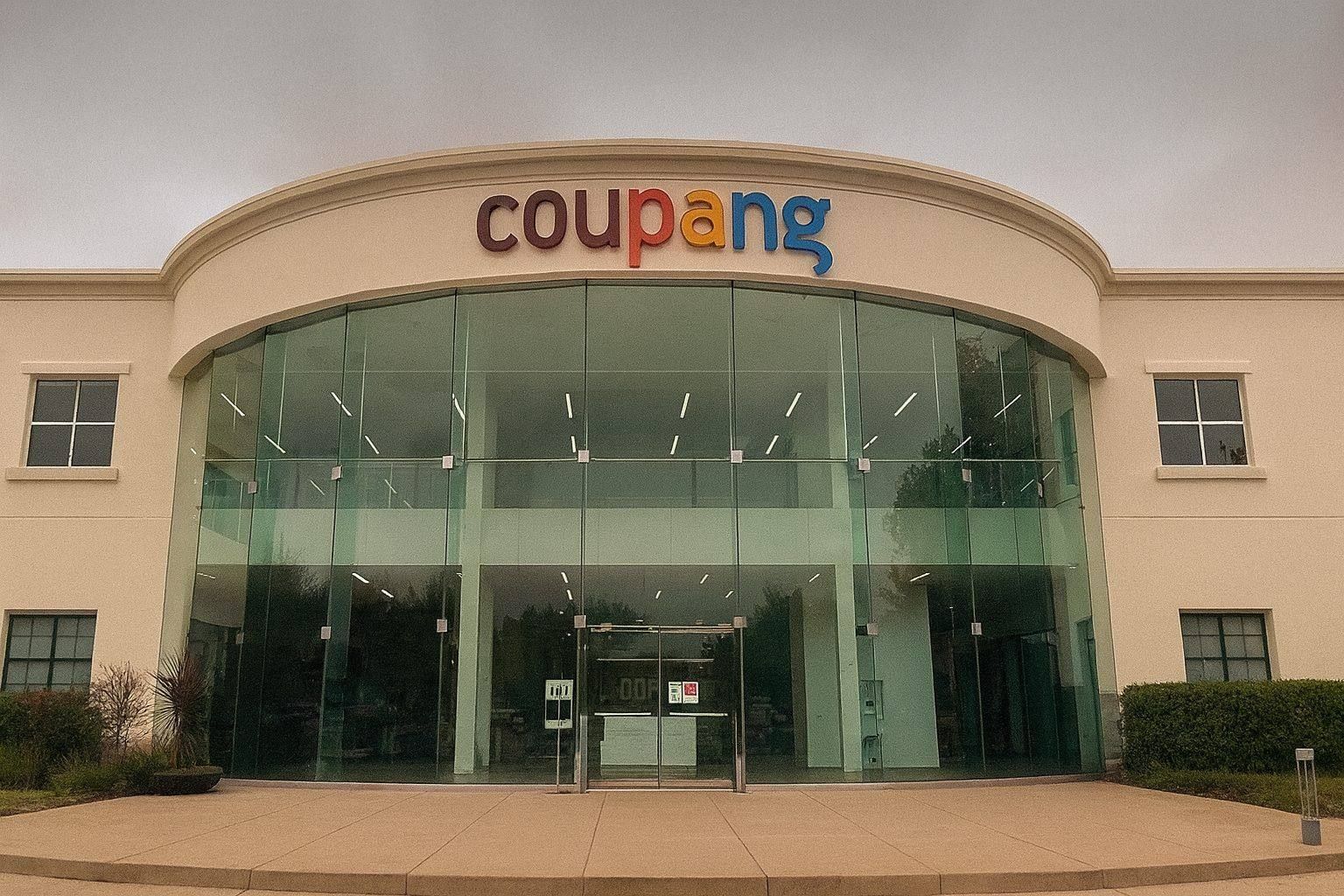
Coupang, Inc. (NYSE: CPNG), often dubbed the “Amazon of South Korea,” is suddenly at the center of a very different story: the biggest reported data breach in the country’s history, a CEO resignation, and a wave of legal and regulatory scrutiny.
On December 10, 2025, Coupang’s U.S.-listed shares traded around $26–26.50, down roughly 3–4% in early trading after CEO Park Dae‑jun resigned over a cyberattack that exposed the personal data of more than 33 million customers.Reuters+2Financial Times+2
At the same time, the company continues to post strong revenue growth and rising profitability, and most Wall Street analysts still rate the stock a “Buy” or “Strong Buy” with double‑digit upside over the next 12 months.StockAnalysis+2MarketBeat+2
Here’s how the Coupang story looks as of December 10, 2025, for investors trying to decide whether CPNG is a buy, sell, or hold.
Coupang Stock Today: Price, Performance and Valuation
Multiple real‑time data providers show Coupang trading close to $26.10–$26.20 on December 10, 2025, after a prior close around $26.93.Investing.com+1
Based on that price:
- Market cap: Roughly $47–49 billion (StockAnalysis pegs it near $47.75B; CompaniesMarketCap and other trackers cluster around the high‑40s).StockAnalysis+1
- 52‑week range: About $19.02 to $34.08.Investing.com
- YTD performance: TipRanks data show ~22–23% gains year‑to‑date, even after the recent drop.TipRanks
On fundamental valuation:
- Trailing P/E: ~128× earnings.
- Forward P/E: ~56× next‑year earnings.
- Price‑to‑Sales (ttm): ~1.5×.Yahoo Finance+1
In short: Coupang trades like a high‑growth, high‑expectations tech/e‑commerce name. The market is already pricing in years of strong growth and margin expansion, which is exactly why a trust‑shattering data breach matters so much.
What Happened: South Korea’s Worst Data Breach and a CEO Exit
The breach
According to filings and multiple media reports, Coupang disclosed in late November that attackers had accessed internal systems starting around June 2025, exfiltrating data tied to about 33.7 million user accounts.Meyka+3Reuters+3Financial Times+3
Leaked information included:
- Names
- Email addresses
- Phone numbers
- Shipping addresses
- Parts of order history
Coupang insists that payment data, credit card details and passwords were not compromised, but the leaked data is still highly usable for phishing, smishing (SMS scams), and targeted fraud.Reuters+1
Investigators and Korean media say the primary suspect is a former Coupang developer now believed to be in China, who allegedly retained or misused access credentials to siphon data over months.Financial Times+2Reuters+2
The fallout in Korea
The breach triggered a political and regulatory pile‑on:
- South Korea’s Personal Information Protection Commission and other agencies opened investigations.
- Police raided Coupang’s Seoul headquarters, seizing equipment and documents.Reuters+2TipRanks+2
- Prime Minister Kim Min‑seok and President Lee Jae Myung publicly criticized the company’s delayed detection and response, calling for tougher penalties and broader regulatory powers over digital platforms.Financial Times+1
Analysts and AI‑driven research platforms estimate Coupang could face fines up to 1 trillion won (roughly $770–900 million) under South Korean data‑protection law, depending on how regulators ultimately judge the severity and the company’s safeguards.Meyka+1
Customer behavior is already shifting
Early data suggests a real, not just theoretical, impact:
- Alternative‑data firm Meyka reports sellers on Coupang’s marketplace are seeing order declines of 30%+ in some cases as nervous customers pull back.TipRanks+1
- A Smartkarma note on a short‑Coupang / long‑CJ Logistics pair trade highlighted that Coupang’s daily active users (DAU) had fallen about 10% between December 1 and December 5 (from 18.0 million to 16.2 million).Smartkarma
Taken together, the breach isn’t just a background risk; it’s already hitting engagement and GMV, at least in the near term.
CEO Park Dae‑jun Resigns, Harold Rogers Steps In
On December 10, Coupang announced that CEO Park Dae‑jun would resign, explicitly linked to the data leak. He publicly accepted responsibility and apologized to customers.Reuters+2TipRanks+2
Key leadership changes:
- Park Dae‑jun – resigns as CEO of the operating business.
- Harold Rogers – previously Chief Administrative Officer and General Counsel of the U.S. parent Coupang Inc. – is appointed interim CEO, tasked with stabilizing operations and dealing with regulators and customers.Nasdaq+2Businesskorea+2
Investors are treating this as a necessary, but not sufficient, step. Market reactions captured by Reuters, TipRanks and Investing.com all show CPNG down roughly 3–4% on the news, with pre‑market and early‑session prices around $26–26.60.Reuters+3TradingView+3TipRanks+3
Legal and Governance Storm: US Class Action and Dual‑Class Control
The breach is now feeding into longstanding governance concerns around Coupang’s structure.
US class action brewing
A New York office of Korean law firm Daeryun (SJKP) is organizing a U.S. class action on behalf of Korean victims, seeking punitive damages from Coupang Inc., the U.S.-incorporated parent listed on the NYSE.Asia News Network
Points to note from Asia News Network / Korea Herald reporting:
- Over 200 plaintiffs have already joined; the firm aims for around 1,000 by year‑end.Asia News Network
- The U.S. suit will not simply duplicate Korean claims for consumer compensation; it targets alleged governance failures and potential violations of SEC cyber‑incident reporting rules (which generally require disclosure within four business days of identifying a “material” cyber incident).Asia News Network
- As of December 9, Coupang had reportedly not filed a cyber‑incident report with the SEC, despite acknowledging the breach on November 18.Asia News Network
If U.S. courts accept jurisdiction and plaintiffs can show that the U.S. parent directed or oversaw data‑security decisions in Korea, this could add real financial and reputational risk on top of Korean regulatory fines.
Bom Kim’s control and shareholder pushback
Underneath the CEO shuffle, Coupang’s true power center remains founder Bom Kim, CEO of Coupang Inc. and holder of Class B shares with 29× the voting power of ordinary Class A shares.Asia News Network
According to governance analysis cited by The Korea Herald:
- Bom Kim owns only about 8.8% of total shares, but his super‑voting Class B stake gives him around 74% of total voting rights.Asia News Network
- Asset managers such as DWS and AllianzGI voted against his re‑election at the 2025 AGM, citing poor handling of ESG risks and opposition to multi‑class structures that disadvantage minority investors.Asia News Network
- Advisory firm SquareWell Partners warns that this structure has likely insulated management from governance pressure, and expects investors to target key directors at the 2026 AGM in response to the breach.Asia News Network
Put bluntly: Coupang combines tech‑style growth metrics with old‑school corporate control, and the data breach has turned that from a footnote into a core part of the investment thesis.
SoftBank Is Selling, But Other Institutions Are Buying the Dip
Coupang’s cap table is also shifting in interesting ways.
SoftBank trims its giant stake
Over 2025, SoftBank Group has been steadily cashing out of Coupang:
- Sold 60 million shares across three transactions between May and August 2025.
- Proceeds of roughly $1.65–1.70 billion, or about 2.3 trillion won.Chosunbiz+2ZUM 뉴스+2
- SoftBank’s stake has dropped from 32.4% (end‑2021) to around 17.4% as of August 2025.ZUM 뉴스
Korean and Japanese business press frame this as SoftBank freeing up capital for AI and semiconductor investments, but the effect for CPNG holders is mixed: it reduces a future overhang but also removes a supportive strategic shareholder.Chosunbiz+1
New money stepping in
Meanwhile, new institutional buyers are appearing:
- Amundi boosted its Coupang stake by nearly 300% in Q2, adding 868,762 shares to reach about 1.16 million shares worth $34.8 million (around 0.06% of the company).MarketBeat
- Soviero Asset Management initiated a new 90,000‑share position worth about $2.7 million, making Coupang roughly 1.6% of its portfolio.MarketBeat
MarketBeat’s write‑up alongside the Amundi filing notes that analysts still see Coupang as a “Moderate Buy” with an average price target near $34.4, implying roughly 30% upside from the mid‑$26s.MarketBeat+1
So while one big legacy backer is quietly walking out the side door, traditional asset managers are walking in through the lobby.
Under the Hood: Q3 2025 Results Show a Still‑Powerful Growth Engine
Lost beneath the breach headlines is the fact that Coupang just turned in very solid Q3 2025 numbers.
From the company’s official Q3 release:Coupang+1
- Total net revenues:
- $9.27 billion, up 18% year‑over‑year (20% in constant currency).
- Gross profit:
- $2.72 billion, up 20% (22% in constant currency).
- Operating income:
- $162 million, up 49% vs. Q3 2024.
- Net income:
- $95 million, up 48%.
- Adjusted EBITDA:
- $413 million, up 20%.
- Free cash flow:
- $442 million, versus ‑$42 million a year earlier – a dramatic swing into positive territory.
Core Product Commerce is already a cash machine
The Product Commerce segment – basically the Korean e‑commerce core – remains the profit engine:Coupang+1
- Revenue: $7.98B, up 16%.
- Adjusted EBITDA: $705M, up 50%, with margins around 8.8%.
- Active customers: 24.7M, up 10% year‑over‑year.
- Net revenue per active customer: up 5–7% depending on currency basis.
This profitable core is what gives Coupang the firepower to fund all the newer, loss‑making bets.
“Developing Offerings”: fast growth, heavy losses
Coupang lumps international operations (notably Taiwan), Coupang Eats (food delivery), and Coupang Play (streaming) into Developing Offerings. That segment in Q3 2025 delivered:Coupang+2AInvest+2
- Revenue: $1.29–1.30B, up 32% year‑over‑year.
- Adjusted EBITDA:‑$292M, with losses widening by about $165M versus the prior year.
AInvest and Motley Fool analyses stress that:
- Coupang Eats has captured roughly 35%+ share of Korea’s food‑delivery market, partly by bundling free delivery with the Rocket WOW membership.AInvest+1
- Coupang Play is bundled into WOW as well, serving mainly as a retention and engagement tool rather than a stand‑alone profit center (for now).AInvest+1
- Management has repeatedly framed these losses as deliberate investments in scale – especially in Taiwan – funded by the cash‑generating Korean core.AInvest+1
Taiwan: The Second Act of the Coupang Story
Nearly every bullish analysis fixates on Taiwan.
- Revenue in Taiwan is reportedly growing at triple‑digit rates, with customer growth and retention ahead of Coupang’s early years in Korea.Nasdaq+2AInvest+2
- Coupang is replicating its playbook: dense local logistics infrastructure, Rocket Delivery, integration with third‑party sellers, and expansion into higher‑margin categories (including luxury via the Farfetch acquisition).AInvest+1
TIKR’s valuation work models about 15% annual revenue growth and assumes Taiwan continues to scale while Product Commerce margins expand above 10%. In that mid‑case scenario, they estimate Coupang stock could reach $42 by December 2027, implying about 29% total return from a not‑too‑distant price of $32 when they ran the model in October.TIKR.com
Of course, that model predates the data‑breach shock. The long‑term economics may still hold, but the discount rate investors demand just went up.
Analyst Ratings and Price Targets: Still Bullish, For Now
Despite the breach and governance noise, traditional equity analysts remain overwhelmingly positive:
- StockAnalysis (consensus):
- Rating: Strong Buy (6 analysts).
- Average 12‑month target:$35.50 (range $28–$40), implying roughly 35–37% upside from the low‑$26s.StockAnalysis
- MarketBeat:
- Consensus: Moderate Buy (11 analysts).
- Average target: about $34.38 (high $40, low $27), roughly 30% upside from recent prices.MarketBeat+1
- TipRanks:
- Consensus: Strong Buy.
- Average target:$37.50, or nearly 39% upside from current levels.
- They also note CPNG is up about 22.5% year‑to‑date.TipRanks
- Public.com:
- Reports a “Buy” consensus and a 2025 price prediction around $35.50.Public
On the earnings side, analyst models compiled by StockAnalysis look for:StockAnalysis
- Revenue 2025: ~$35.6B (+17.6% vs. 2024).
- Revenue 2026: ~$41.9B (+17.5%).
- EPS 2025: about $0.19 (up from $0.08).
- EPS 2026: about $0.56, implying 190%+ EPS growth versus 2025.
That EPS ramp is what makes Coupang’s high P/E ratio somewhat defensible in bull cases – the market is paying up on the assumption that earnings will compound very fast from a low base.
Quant & Technical Models: More Skeptical in the Short Term
Not all models are optimistic.
Quant platform Intellectia currently labels Coupang a “Strong Sell” on technical grounds, citing:Intellectia
- A short‑term falling trend, with multiple moving‑average crossovers pointing bearish.
- Several negative signals from momentum and MACD indicators.
- A rising short‑interest ratio (around mid‑December) suggesting traders betting on further downside.
Their algorithm:
- Projects 1‑month upside of about 8.5% based on pattern matching (targeting a price near $29–30),
- But still concludes that the risk‑reward skew for short‑term traders is negative and categorizes CPNG as a short‑term underperformer.Intellectia
Intellectia also pushes out very long‑dated forecasts (e.g., a 2030 target above $50), but those are essentially curve‑fit extrapolations, not deeply fundamental models. They’re useful as a sanity check on volatility assumptions, not as a standalone investment thesis.
Additional Structural Risks: Labor, Regulation, and “Dawn Delivery”
Even before the hack, Coupang faced rising labor and regulatory risk:
- South Korea has been debating a ban on “early dawn deliveries” (midnight–5 a.m.) after worker deaths and union pressure.조선일보+2Korea Herald+2
- Research notes on Smartkarma explicitly flag a potential dawn‑delivery ban as Coupang’s #1 risk factor, driven by the powerful Korean Confederation of Trade Unions (KCTU).Smartkarma+1
- Public petitions against such a ban have attracted 25,000–27,000+ signatures in a matter of weeks – showing both how beloved and how fraught the dawn‑delivery model is in Korean society.Korea Joongang Daily+1
If regulators eventually restrict or heavily regulate overnight delivery, Coupang’s core service differentiation and unit economics in Korea could take a hit, even aside from the data‑security saga.
Investment Take: Is CPNG a Buy, Sell or Hold After the Breach?
Here’s the condensed bull and bear case as of December 10, 2025.
The bull case
- Strong fundamentals and growth runway
- Taiwan as a high‑potential “second Korea”
- Triple‑digit growth, strong retention, and a clear playbook for logistics‑driven dominance in a dense, affluent market with no entrenched Amazon‑like competitor.Nasdaq+2AInvest+2
- Analysts see 30–40% upside over 12 months
- Multiple platforms converge on price targets in the mid‑ to high‑$30s, with consensus ratings skewed heavily toward Buy/Strong Buy.Public+3StockAnalysis+3MarketBeat+3
- Core profitability funds new ventures
- Product Commerce margins and cash flow can keep subsidizing Eats, Play, and Taiwan even after regulatory fines, so long as those fines are at the hundreds of millions, not tens of billions, level.The Business Times+3Coupang+3AInvest+3
The bear case
- Trust shock and real usage declines
- Evidence of DAU drops (~10%) and 30%+ sales declines for some marketplace sellers suggests behavior is already changing – and trust is much harder to rebuild than to lose.Smartkarma+2Meyka+2
- Legal and regulatory overhang
- Potential 1 trillion‑won fine, plus Korean and U.S. lawsuits focused not just on compensation but on governance and SEC disclosure practices.Meyka+2Asia News Network+2
- Governance concentration and limited shareholder leverage
- Bom Kim’s 74% voting control via Class B shares makes changes in leadership, security oversight, or capital allocation highly dependent on his willingness to adjust, not on investor pressure.Asia News Network
- High valuation and technical weakness
- Even after the drop, Coupang trades around 1.5× sales and a triple‑digit trailing P/E, with short‑term quant models flagging it as a Strong Sell on momentum and moving‑average trends.Yahoo Finance+1
- SoftBank exit and structural risks
- SoftBank’s reduction from ~32% to ~17% stake removes a quasi‑strategic backer and underscores that large, sophisticated investors are comfortable taking money off the table at prices within shouting distance of today’s.ZUM 뉴스+1
How to Think About CPNG from Here
For long‑term, high‑risk growth investors, CPNG is starting to look like a classic “fantastic business, messy governance + headline risk” setup:
- If Coupang contains the breach fallout, pays a manageable fine, and stabilizes user metrics, Taiwan and the Developing Offerings segment could still support double‑digit revenue growth and expanding margins through 2027 and beyond.Coupang+2AInvest+2
- Under scenarios like TIKR’s mid‑case, you can sketch out mid‑teens annualized returns from today’s price, driven by compounding EPS rather than wild multiple expansion.TIKR.com+1
For more conservative investors, three things may be deal‑breakers:
- The combination of data‑security risk + dual‑class governance makes accountability harder than in a typical U.S. or European tech name.Asia News Network+1
- The stock is not cheap on near‑term earnings metrics, even after the drop, so there’s limited valuation cushion if growth slows.Yahoo Finance+1
- Key risks (fines, class‑action outcomes, potential dawn‑delivery restrictions) are binary and political, not just “miss or beat the quarter.”Meyka+2Smartkarma+2
Whatever your risk tolerance, Coupang has abruptly shifted from being “just another high‑growth e‑commerce story” to a case study in how cyber risk, governance and regulation can collide with a dominant platform.