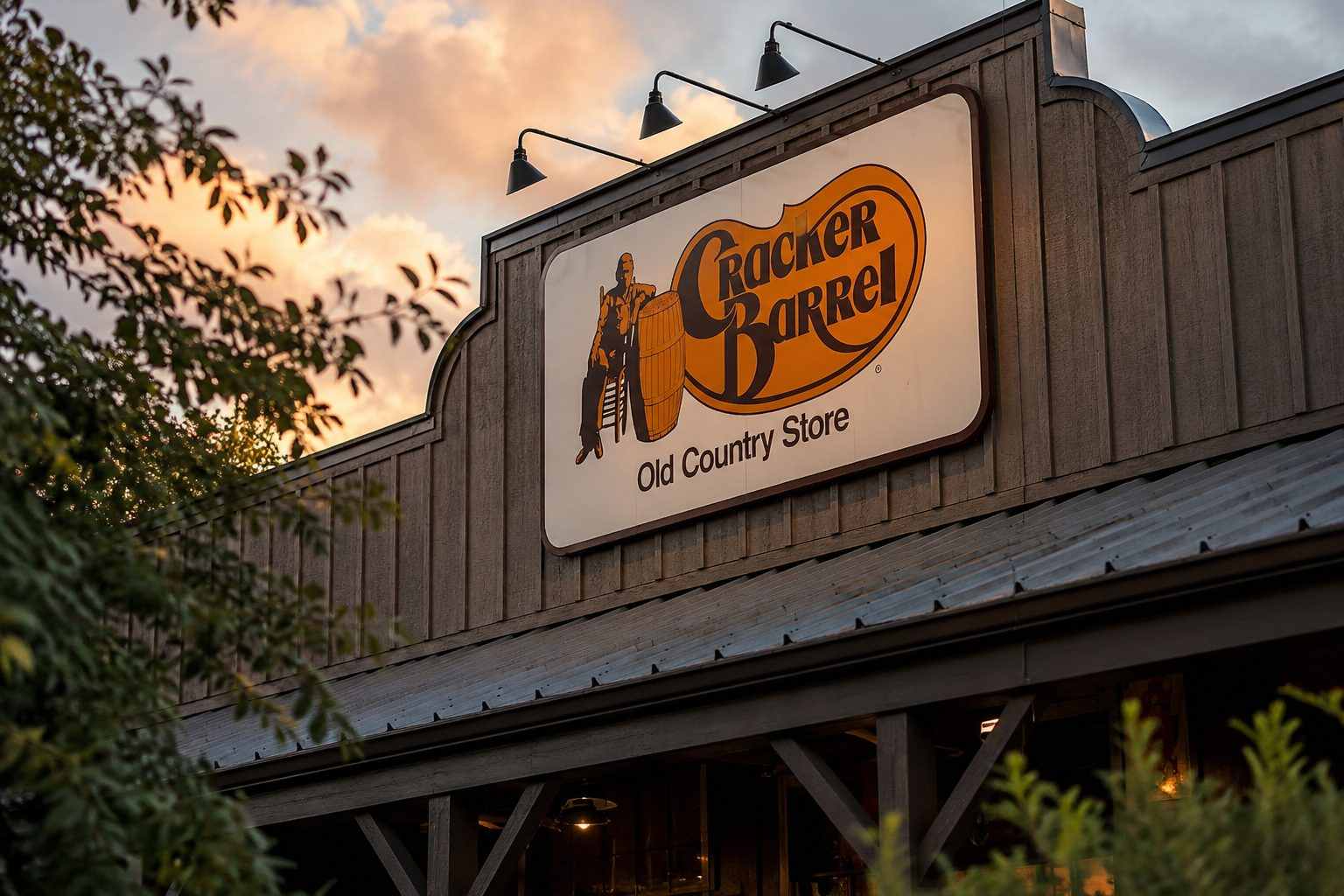

NEW YORK, July 25, 2026, 14:06 EDT — Cracker Barrel NASDAQ:CBRL stock was little changed this week after a $77 million deal resulted in a $5.7 million annual rent bill.
- Cracker Barrel ended Friday’s session at $53.71, up approximately 3.7%. Over the week, the shares added just 0.2%.
- A sale-leaseback involving 26 properties generated $77 million and resulted in $5.7 million in initial yearly rent.
- Comparable restaurant sales declined by 2.5%, but adjusted EBITDA is anticipated to surpass $125 million.
Shares of Cracker Barrel Old Country Store NASDAQ:CBRL ended Friday at $53.71, rising approximately 3.7% for the session while posting a 0.2% increase over the week. U.S. markets did not open on Saturday.
The stock jumped to $58.20 in after-hours trading following Monday’s announcement. By Friday, shares had finished 7.7% lower than that level. Most of the initial surge tied to the news was erased in the market.
The filing indicates a potential reason for investor caution. Cracker Barrel completed the sale of 26 properties, generating approximately $77 million in net proceeds. The company intends to use the funds to pay down its revolving-credit facility.
The properties now generate $5.7 million in starting yearly rent. Lease terms may last as long as 40 years with renewal options included. Rent increases every year. The leases are structured as absolute triple-net.
This results in an implied first-year rent yield of 7.4% based on the proceeds. This figure is calculated before accounting for taxes, insurance, and maintenance, which remain the responsibility of Cracker Barrel. The rental payment represents 4.6% of the previous $125 million EBITDA cap.
| Measure | Disclosed amount | Investor comparison |
|---|---|---|
| Sale-leaseback funds | $77 million | 6.4% of Friday’s market cap |
| First year’s rent | $5.7 million | 7.4% of total funds |
| Rent versus previous EBITDA limit | $5.7 million | 4.6% out of $125 million |
| Lease duration | Up to 40 years | Pre-set increases; tenant covers triple-net charges |
The comparison is based on Cracker Barrel’s Friday market value of $1.21 billion. The actual advantage hinges on how much interest can be saved by paying down debt. No specific savings amount was provided.
Cracker Barrel has divested Maple Street Biscuit assets used at 35 restaurants. The company will shutter the other 16 outlets. The brand accounted for under 2% of yearly revenue.
The exit is expected to benefit adjusted EBITDA from fiscal 2027 onward. Estimated fourth-quarter non-cash charges are between $37 million and $39 million. Anticipated cash expenses range from $6 million to $8 million.
Chief Executive Julie Masino stated, “Divesting Maple Street sharpens our focus on the core Cracker Barrel brand and is expected to improve profitability.” SEC
Core demand continues to face more pressure. Comparable restaurant sales declined around 2.5% over the first 11 weeks of the fourth quarter. Comparable retail sales increased approximately 0.5%.
Cracker Barrel projects revenue of at least $3.30 billion, with adjusted EBITDA anticipated to surpass $125 million. Previous high-end guidance pointed to an adjusted EBITDA margin close to 3.8%.
Brokers remained split in their responses. Wells Fargo NYSE:WFC increased its price target to $60. Piper Sandler NYSE:PIPR lifted its target to $51 while maintaining a Hold rating.
Citigroup NYSE:C raised its target to $42, maintaining its Sell rating. Bank of America NYSE:BAC held its Sell rating with a $40 target. The consensus target from 10 analysts stood at $44.13, representing a 17.8% discount to Friday’s closing price.
No Cracker Barrel investor events are scheduled for the upcoming week. The fiscal 2026 year concludes on Friday, July 31. Investors are set to monitor updates on debt repayment and closing sales performance.
Risks persist. Lower restaurant comparable sales may counteract benefits from cost improvements. Fixed rent escalators increase occupancy expenses, and triple-net leases keep property costs intact. Maple Street fees are provisional and subject to revision.
This week’s trading indicates that balance-sheet improvements on their own are not enough. Sustainable revaluation hinges on stronger like-for-like sales and evident cost savings following the updated rental terms.