
Published: December 12, 2025
CSL Limited stock ASX:CSL is back in the spotlight on December 12, 2025, with fresh disclosure showing the company’s on-market share buyback is still running at pace—while investors continue weighing a messy mix of catalysts: vaccine-market volatility, government scrutiny of Australia’s “sovereign manufacturing” deals, and a pipeline story that just landed in The New England Journal of Medicine.
As of today, Investing.com shows CSL trading around A$182.42, versus a previous close of A$178.81, with an intraday range of A$179.45–A$182.72 and a 52-week range of A$168.00–A$290.32.
Below is a detailed wrap of the most relevant news, forecasts, and analysis shaping CSL shares as of 12.12.2025—and why the market still can’t decide whether CSL is a “fallen quality compounder” or a company stuck in a policy-and-demand crossfire.
CSL buyback update: What the company disclosed on December 12
CSL’s headline news item today is procedural—but meaningful for the tape: a new Appendix 3C daily buy-back notification.
In the announcement dated 12/12/2025, CSL reported:
- 52,154 shares bought back on the previous day (11/12/2025)
- A$9,349,791.16 paid for that day’s repurchases
- 2,721,371 shares bought back in total before the previous day
- A$534,977,889.98 total consideration paid before the previous day CSL Limited+1
That implies an average price of about A$179.27 per share for the prior day’s repurchases (A$9.35m ÷ 52,154) and roughly A$196.58 per share across the total consideration reported so far (A$534.98m ÷ 2.72m). Those averages aren’t “valuation signals” by themselves—but they do show CSL has been materially active at prices well below the stock’s highs.
CSL also reiterated that this is an on-market buyback, run via UBS Securities Australia Limited, with a proposed end date of 30/6/2026.
The same disclosure states CSL “intends to buyback up to A$750 million” of ordinary shares under the program. CSL Limited
Based on the consideration disclosed (about A$535m), CSL has already deployed roughly 71% of that headline amount (simple ratio using the figures above). CSL Limited
Why this matters for CSL stock: in plain English, a buyback doesn’t magically fix fundamentals—but it can (1) support demand in the market day-to-day, and (2) modestly improve per-share metrics over time, especially if management is buying at prices they believe are below intrinsic value.
The big overhang: Seqirus, US vaccination demand, and a delayed spin-off
A major reason CSL shares have been volatile in 2025 is that the company’s vaccines arm, CSL Seqirus, has been caught in a demand and policy downdraft.
In late October, Reuters reported CSL cut its FY26 growth outlook and delayed plans to spin off its vaccine division, pointing to a sharper-than-expected drop in US influenza immunisation rates.
Key points from that Reuters report investors are still digesting:
- CSL cut FY26 revenue growth guidance to 2%–3% (down from 4%–5%).
- CSL cut FY26 NPATA growth guidance to 4%–7% (down from 7%–10% on a constant currency basis).
- The company said the demerger was shelved amid heightened market volatility, after warning vaccination rates were expected to fall 12% in the northern hemisphere season.
- CSL shares, on that day, fell as much as 16.6% to around A$176, described by Reuters as the lowest level since late 2018.
Back in August, Reuters had framed the Seqirus separation as part of a broader reset: CSL planned to demerge the unit, cut its workforce by up to 15%, and resume buybacks targeting A$750m in FY26, aiming for A$500m–A$550m in annualised cost savings (with a one-off restructuring charge flagged).
The market’s core question hasn’t changed since October:
Is Seqirus a cyclical/temporary drag that will normalise—making today’s CSL share price a bargain? Or is the vaccines business entering a structurally weaker era (policy + behaviour + competition), meaning the group’s growth profile has shifted down for longer?
Australia’s vaccine manufacturing push: ANAO audit adds political heat
This week, CSL has also been pulled into a separate—but sentiment-relevant—headline: scrutiny of government procurement tied to vaccine and antivenom manufacturing.
Australia’s National Audit Office (ANAO) published a performance audit on onshore vaccine manufacturing capability. In its Conclusion, the report states that while the procurements achieved the objective of establishing facilities, “The Seqirus procurement did not maximise value for money for the Australian taxpayer in the long term.” Australian National Audit Office+1
The ANAO summary further highlights structural issues around the Seqirus deal process, including:
- Limited tender/sole source approach and no overall value-for-money conclusion supported by a comparator Australian National Audit Office+1
- A value-for-money conclusion not aligned with the procurement’s original objective (which included considering novel approaches for long-term supply) Australian National Audit Office+1
For investors, this kind of report rarely changes near-term earnings directly—but it can matter because CSL operates in a world where government contracts, public health policy, and national capability programs can shape investment decisions, approvals, and reputational risk.
At the same time, CSL has continued publicly positioning its manufacturing footprint as strategic for Australia’s health resilience.
CSL Seqirus’ Melbourne facility opens: strategic asset, awkward timing
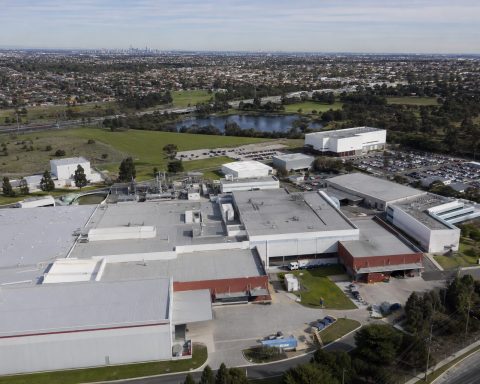
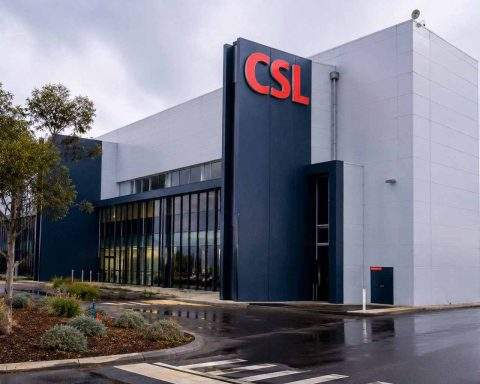
On December 2, 2025, CSL announced the opening of a A$1 billion vaccine and antivenom manufacturing facility in Melbourne, describing it as supporting Australia’s sovereign capability for pandemic influenza vaccines, antivenoms, and Q fever vaccine supply.
Victoria’s investment agency also highlighted the facility opening and described it as a major investment in cell-based vaccine manufacturing.
Industry trade coverage has noted the tension here: CSL is opening a major Seqirus facility while the future strategic shape of Seqirus (spin, sell, retain) has been uncertain after the October reset.
Investor takeaway: even if Seqirus demand is bumpy, the facility strengthens CSL’s capability story. But capability doesn’t automatically translate to margin expansion—especially if vaccine uptake is weaker than expected.
US expansion: CSL plans ~US$1.5B plasma therapy manufacturing investment
Away from vaccines, CSL’s biggest “industrial” signal in 2025 is its commitment to plasma-derived therapies capacity in the US.
Reuters reported in November that CSL plans to invest US$1.5 billion in the United States to manufacture plasma-derived therapies, expanding its footprint over the next five years. Reuters
CSL’s own newsroom release also described approximately US$1.5b of US capital investments over five years, framed around strengthening manufacturing capability and supply chain resilience.
This matters because CSL Behring—the plasma-derived therapies engine—has historically been the group’s compounding machine. When investors talk about “CSL’s quality,” they usually mean Behring’s scale, plasma network, and durable demand in rare/serious diseases (not the vaccines volatility).
Pipeline catalyst: HEMGENIX five-year data lands in NEJM
A quieter—but genuinely important—scientific catalyst hit on December 7, 2025: The New England Journal of Medicine published a final analysis of five-year follow-up data for etranacogene dezaparvovec (HEMGENIX) in hemophilia B (HOPE‑B).
CSL’s release highlights the publication as evidence of long-term durability and safety over five years. Global Newsroom | CSL
Fierce Pharma’s coverage adds more color on market-relevant endpoints, reporting that CSL’s five-year follow-up showed a large reduction in annualized bleeding rates by year five and sustained factor IX activity levels over multiple years.
Why this matters for CSL stock: gene therapy is still a complicated commercial landscape (pricing, payers, durability confidence, and real-world adoption). But long-duration follow-up in a top-tier journal is exactly the type of evidence that can strengthen the “platform” narrative—and it supports the argument that CSL is not just a plasma company, but also a developer/owner of next-generation modalities.
CSL stock forecasts: What analysts are pricing in today
There are two different “forecast layers” investors should keep separate:
1) CSL’s own FY26 outlook (company guidance)
The most market-moving official forecast remains CSL’s revised FY26 guidance from October: revenue growth of 2%–3% and NPATA growth of 4%–7% (constant currency basis referenced in that update).
That revision is a big reason the stock’s valuation debate is so intense: if FY26 becomes a “trough year,” the buyback looks smart; if FY26 is the start of a lower-growth regime, the multiple deserves to compress.
2) Street price targets and consensus positioning
Investing.com’s compiled analyst snapshot (as of Dec 12, 2025) shows:
- Average 12‑month price target: A$241.44 (about +32% implied upside from the current price shown there) Investing.com
- Target range: high ~A$291.51, low ~A$192.63 Investing.com
- The same page lists multiple broker targets/ratings and action dates clustered around the late‑October guidance reset (for example, Buy/Hold calls from major banks, with targets spanning roughly the low‑A$200s to mid‑A$200s).
How to interpret this:
Consensus targets imply analysts still see meaningful upside—but the wide dispersion is the tell. This isn’t a stock the market agrees on right now; it’s a stock the market is arguing about.
So… is CSL undervalued or still “value trapped”?
Here’s the most intellectually honest way to frame the CSL debate on December 12:
The bullish case (why investors keep coming back):
- A massive buyback is actively shrinking the share count at depressed prices.
- CSL is doubling down on the US plasma engine with major manufacturing investment.
- High-quality clinical durability data (HEMGENIX) strengthens the long-term innovation narrative.
- Consensus targets still point above current trading levels.
The bear case (why the stock got hit in 2025):
- Seqirus is exposed to vaccination behaviour and policy uncertainty, and CSL itself cut forward growth expectations.
- The Seqirus strategic plan has already shifted once (spin-off talk → shelved), which undermines confidence in “clean” forward narratives. Reuters+1
- Government scrutiny (like the ANAO report) can increase reputational and political friction around vaccine manufacturing programs.
In other words: CSL looks like a classic “quality-at-a-discount” setup—if you believe vaccines normalize and Behring keeps compounding. If you believe vaccines face a multi-year structural reset, the discount may be rational.
What CSL investors should watch next
The next signals likely to move CSL shares are practical, not philosophical:
- Buyback pace and price discipline: CSL is disclosing daily activity; investors will watch whether purchases accelerate on weakness or taper on rallies.
- Seqirus strategy clarity: any renewed timeline for separation, retention, or alternative options will be market-moving after October’s delay.
- Operational milestones for Melbourne manufacturing: the ANAO report notes timelines and approvals around commencing manufacture, which can become real-world headline risk if delayed.
- Evidence that US vaccination demand stabilizes: CSL has explicitly tied guidance pressure to vaccination rates.
- More late-stage pipeline readouts: especially anything that supports durable pricing power beyond plasma.
Related articles: ASX:CSL