
SAN FRANCISCO, May 17, 2026, 03:30 PDT
- Databricks doesn’t have a public IPO price or ticker. The most recent private valuation puts the company at $134 billion.
- The company last said it had around $5 billion in equity and roughly $2 billion available in debt capacity.
- Strong demand for last week’s AI IPO has made the market test tougher for big private tech names.
Databricks goes into the week without a set IPO price. Its $134 billion private valuation is back in play as artificial-intelligence listings got a lift last week.
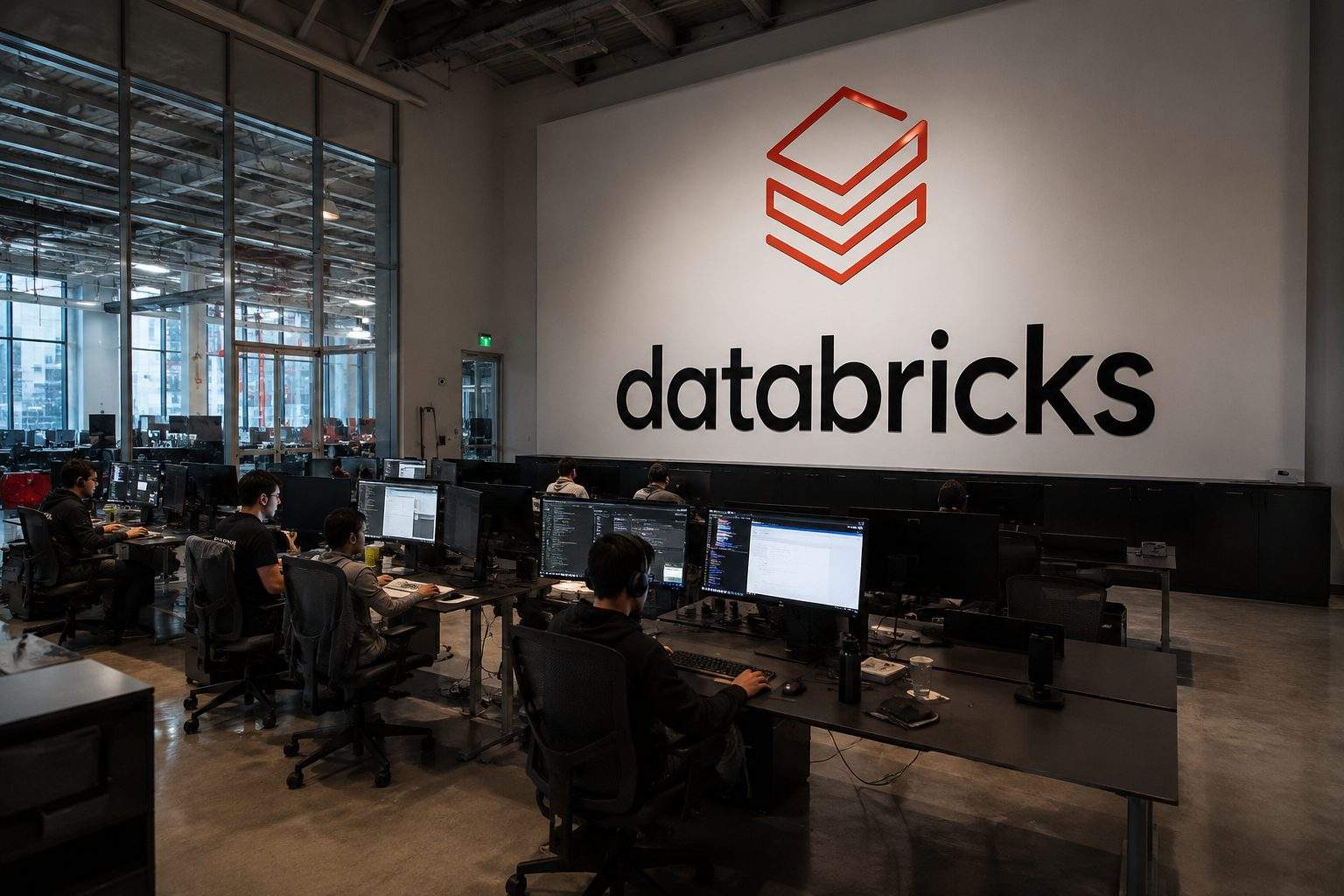
Databricks, the San Francisco data and AI software company, is still private. There isn’t a Databricks stock price on public markets and it doesn’t have a ticker. Nasdaq Private Market puts last month’s estimated share value at $200.82. There’s still no Databricks IPO price.
Public investors are back to gauging what they’ll spend for AI names. Last week Cerebras Systems set its U.S. IPO price at $185 a share, according to Reuters, pulling in $5.55 billion and putting the company at a fully diluted valuation of $56.43 billion.
Private markets remained active. The Financial Times said two days ago that Anthropic had set terms for a $30 billion raise, valuing the company at $900 billion. That’s another sign big AI firms are still getting money at high prices.
Databricks last gave a big funding update in February. The company said it raised around $5 billion in equity at a $134 billion valuation and took on about $2 billion in debt capacity. Annualized revenue run-rate climbed 65% to $5.4 billion in the fourth quarter, according to Databricks.
Databricks said its AI products have hit a $1.4 billion revenue run-rate, turned positive free cash flow in the last 12 months, and the company counts more than 800 customers booking over $1 million each in annual run-rate. Free cash flow is the cash left after the company operates and invests in the business.
Databricks CEO Ali Ghodsi told Reuters the $7 billion it raised leaves the company “really well capitalized.” He said investors view Databricks as an “AI beneficiary.” Michael Ashley Schulman, partner and CIO at Running Point Capital Advisors, told Reuters that private financing at this valuation means a company can “stay private and preserve control.” Reuters
Databricks plans to spend the cash to ramp up Lakebase, its serverless Postgres database for AI agents, and Genie, the assistant that lets users ask questions about company data in natural language. CEO Ali Ghodsi said in February that Databricks was getting “overwhelming investor interest.” Todd Combs, who runs JPMorganChase’s Strategic Investment Group, called the company “a backbone for enterprise data and AI.” Databricks
The competitive view isn’t clear-cut. Databricks is Snowflake’s direct peer in enterprise data software. Cerebras and Anthropic are better gauges for AI investor interest than direct rivals. Even so, investors look at all three when thinking about how much to pay for AI growth.
But things can change fast. If software stocks weaken or corporate AI spending slows, or if investors push back on high private valuations, Databricks might hold off on listing or end up with a lower public price than late-stage investors paid. At $134 billion, Databricks would have to show real growth, steady margins and give public buyers a reason to pay this much.
Looking to the week ahead, the clearest signal may not come from a Databricks filing but from trading in recent AI debuts or any fresh signs showing late-stage investors are still stepping in before companies go public. Databricks hasn’t set an IPO date yet. For now, the $134 billion valuation remains the marker, and what it could fetch in public markets is still up in the air.
Related articles: Artificial Intelligence