December 2025 is shaping up to be one of the most exciting skywatching months in years. As of December 1, space agencies and observatories are rolling out fresh forecasts: NASA has just published its “What’s Up: December 2025”guide, National Geographic has highlighted nine must‑see night sky events, and EarthSky has released an updated visible‑planets report for the month.National Geographic+2NASA Science+2
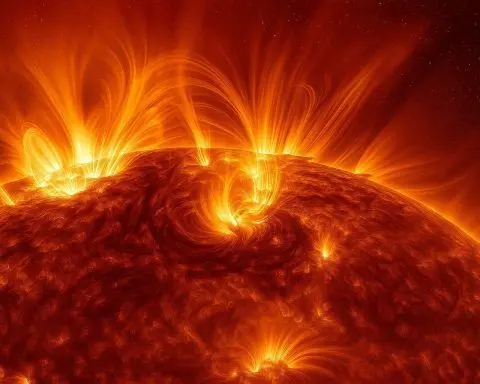
On top of that, the Sun has erupted with a powerful X‑class solar flare on November 30, 2025, adding extra intrigue for anyone hoping for auroras around the winter solstice.NASA Science
Below is a detailed, Google News–ready guide to the key December 2025 sky events described in National Geographic’s December night‑sky feature, enriched with the latest updates from NASA, EarthSky, and other recent coverage.
Key December 2025 Sky Dates at a Glance
- Dec 4 – Final supermoon of 2025 (“Cold Moon”)
- Dec 7 (morning) – Mercury at greatest elongation (best morning view of the year for many in the Northern Hemisphere)
- Dec 7 (evening) – Moon–Jupiter conjunction
- Dec 13–14 – Geminid meteor shower peak
- Dec 15 – Orion Nebula at its best viewing height
- Dec 19 – Interstellar Comet 3I/ATLAS closest to Earth
- Dec 21 – December solstice
- Dec 21–22 – Ursid meteor shower peak
- Dec 26 – Saturn–Moon conjunction
- Late December – Jupiter reaches near‑maximum brightness ahead of January 10, 2026 oppositionCosmoBC+3National Geographic+3NASA Science…
1. December 4: Final Supermoon of 2025 – the Brilliant “Cold Moon”
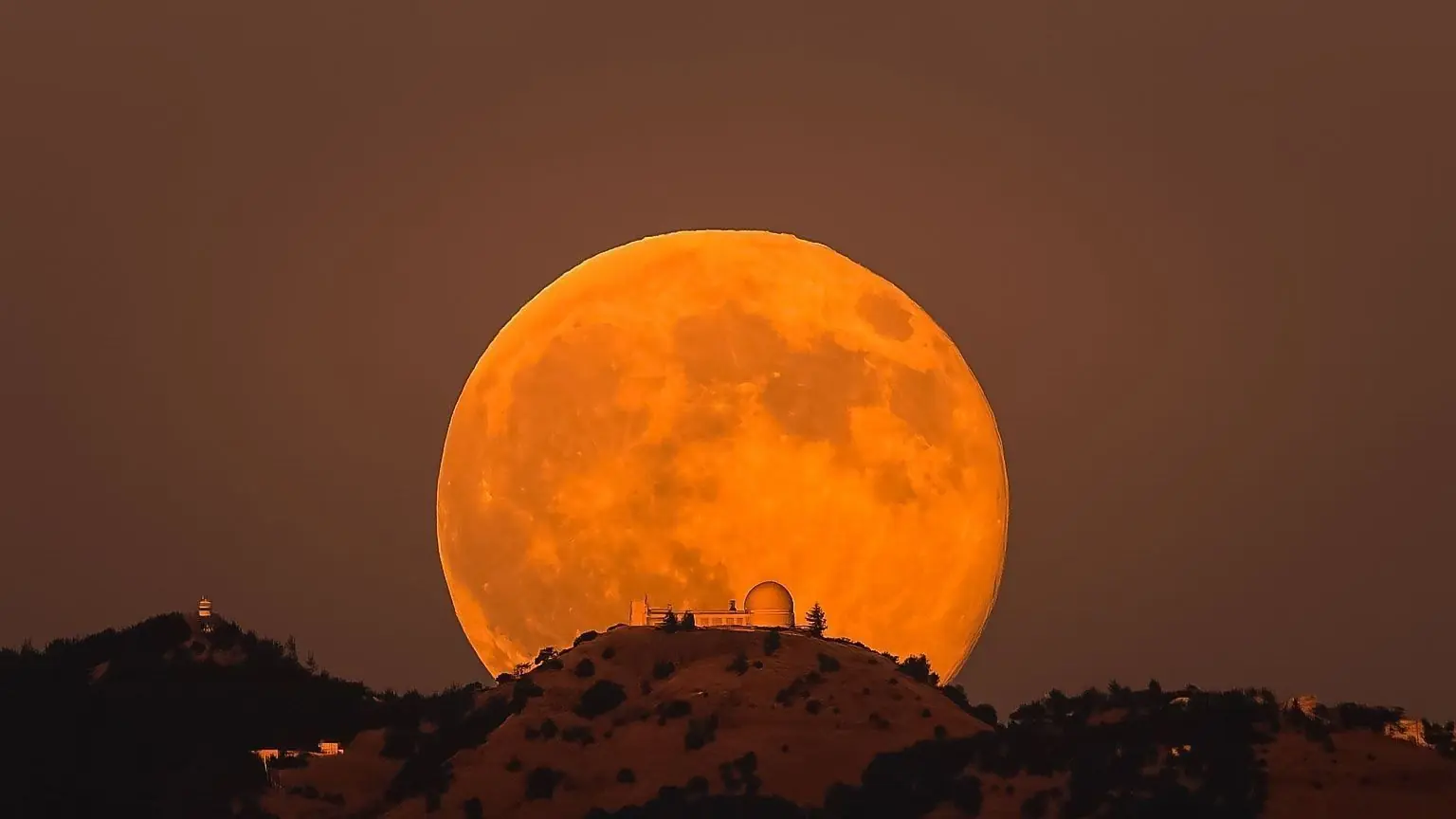
The last full moon of 2025 is also its last supermoon, rising on December 4. National Geographic notes that this “Cold Moon” is part of a rare run of three consecutive supermoons in October, November, and December 2025.National Geographic+1
A supermoon occurs when the full moon coincides with its closest point to Earth (perigee). Compared with the smallest full moons, supermoons can appear up to about 14% larger and roughly 30% brighter, though the difference is most obvious when you compare photos side‑by‑side.National Geographic+1
Recent coverage from outlets like the Associated Press and The Times of India emphasizes that this December 4 supermoon will be the brightest full moon left in the year, with especially striking views shortly after sunset when it’s low on the eastern horizon.AP News+1
How to watch
- Step outside shortly after sunset and look to the eastern horizon.
- The moon often looks biggest when it’s low in the sky, thanks to the so‑called “moon illusion”—a psychological effect that makes low‑lying objects seem larger.National Geographic
- Use binoculars or a small telescope to pick out craters, maria (“seas”), and mountain ranges along the lunar terminator (the day–night boundary).
2. December 7 Morning: Mercury at Greatest Elongation
Mercury is notoriously tricky to see because it never strays far from the Sun in our sky. But on December 7, it reaches greatest elongation, its largest apparent separation from the Sun, giving skywatchers one of the best morning views of Mercury in 2025, especially in the Northern Hemisphere.National Geographic+1
National Geographic’s December guide explains that Mercury will be visible about an hour before sunrise, low over the eastern horizon, with bright Venus rising after it.National Geographic EarthSky confirms that this is the planet’s standout morning apparition of the year, visible from roughly December 1–25.EarthSky
How to watch
- Choose a location with an unobstructed eastern horizon.
- Start scanning about 60–45 minutes before local sunrise.
- Look for a bright “star” low in the dawn glow—that’s Mercury—with Venus likely shining brighter and slightly higher later on.
3. December 7 Evening: Moon–Jupiter Conjunction
The same date brings another treat: NASA’s December “What’s Up” highlights a close pairing of the Moon and Jupiteron the evening of December 7.NASA Science
From mid‑latitudes, the Moon will rise in the east after sunset with brilliant Jupiter positioned just above and to its right. In reality they’re hundreds of millions of kilometers apart, but in our sky they’ll appear close enough to share a binocular field.
How to watch
- After sunset on December 7, look east or east‑northeast for the bright Moon.
- Jupiter will sit nearby as the brightest “star‑like” point in the area.
- Binoculars will show the Moon’s bright limb and Jupiter in the same view; a telescope at low power can reveal Jupiter’s four Galilean moons as tiny dots.
4. December 13–14: Geminid Meteor Shower – 2025’s Meteor Showstopper
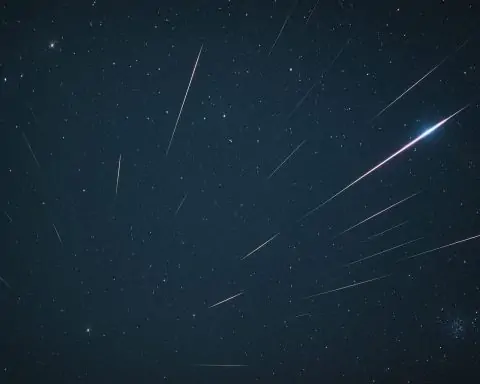
The Geminid meteor shower is widely regarded as the best annual meteor shower, and 2025’s conditions are close to ideal. National Geographic, NASA and multiple observing calendars all agree that the peak occurs on the nights of December 13–14, with potential rates of up to 120 meteors per hour under dark, moonless skies.EarthSky+3National Geographic+3NASA Scienc…
This year, the Moon is a thin waning crescent (about 20–30% illuminated) that doesn’t rise until the early morning hours, leaving long stretches of dark sky during prime meteor‑watching time.National Geographic+1
The Geminids originate from debris shed by asteroid 3200 Phaethon, not a traditional comet, and are known for their bright, often yellowish streaks and occasional fireballs.NASA Science The meteors appear to radiate from the constellation Gemini, close to Jupiter this year, but can flash anywhere in the sky.EarthSky
How to watch
- Best between late evening and pre‑dawn on December 13–14.
- Face generally up and away from streetlights; no telescope is needed.
- Give your eyes 20–30 minutes to adjust to the dark and avoid looking at phone screens.
- Under suburban skies you may see a few dozen meteors an hour; under truly dark skies, the rates can climb dramatically.
5. December 15: Orion Nebula at Its Highest
Mid‑December brings prime viewing of the Orion Nebula (Messier 42), one of the most famous stellar nurseries in the sky. National Geographic notes that December 15 is an ideal date because the nebula reaches its highest point in the sky around local midnight, minimizing atmospheric distortion.National Geographic
The Orion Nebula lies just below Orion’s Belt, appearing to the naked eye as a faint, fuzzy “star” in Orion’s sword. Observing guides such as CosmoBC list its apparent magnitude around 4.0—technically visible without tools from a truly dark site, but dramatically better through binoculars or a small telescope.CosmoBC
How to watch
- Find Orion’s Belt (three bright stars in a short row), then look just below it for the small “sword” of stars.
- The middle “star” in the sword is actually the Orion Nebula.
- Binoculars will reveal a glowing cloud; a telescope shows sculpted wisps where new stars are forming.
6. December 19: Interstellar Comet 3I/ATLAS Makes Its Closest Pass
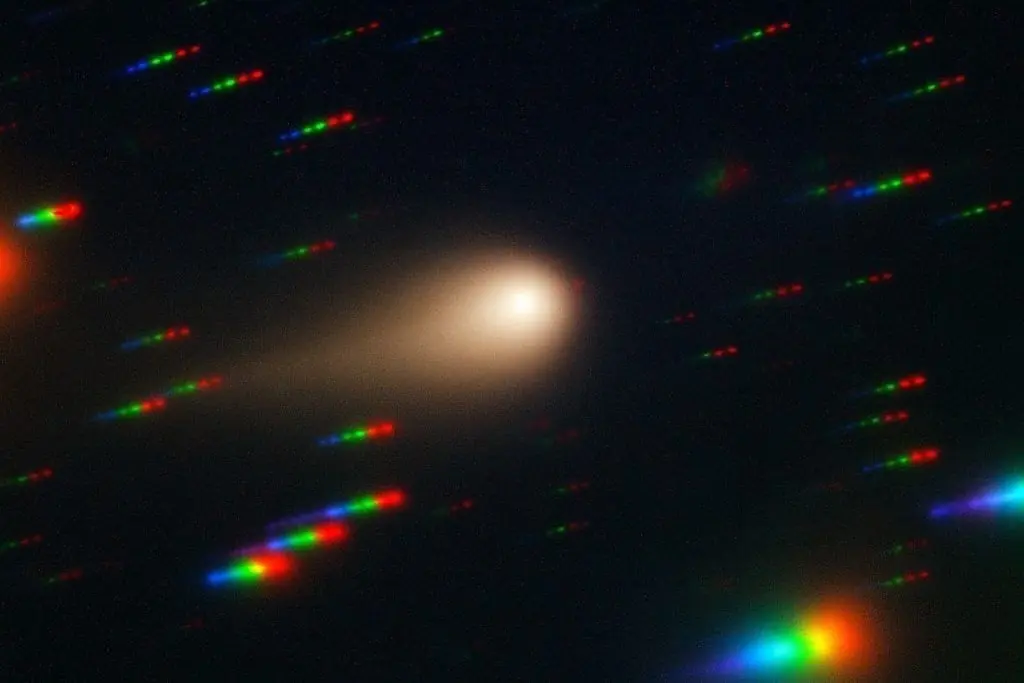
One of December 2025’s headline events is the close approach of Comet 3I/ATLAS, the third known interstellar object discovered passing through our solar system, after 1I/‘Oumuamua and 2I/Borisov.National Geographic+1
National Geographic and NASA both report that December 19 marks its closest pass to Earth, at roughly 170 million miles (over 700 times the Earth–Moon distance)—far enough that there is no threat to our planet, but close enough for serious study.National Geographic+1
NASA’s December skywatching update explains that observers with at least a 30‑centimeter (12‑inch) telescope may glimpse the comet near Regulus, the bright star marking the heart of the constellation Leo, in the early pre‑dawn hours.NASA Science
Meanwhile, recent science coverage notes that 3I/ATLAS is shedding water and gas very vigorously—“like a fire hose” in one observer’s words—offering an unprecedented look at icy material from another star system.Live Science
How to watch
- This is not a naked‑eye object; you’ll need access to a reasonably large telescope or a public observatory.
- From dark sites in mid‑northern latitudes, look east to northeast before dawn on and around December 19, near the star Regulus in Leo.NASA Science
- Local astronomy clubs and planetariums may host special observing nights as long as weather cooperates.
7. December 21: Solstice, Long Nights – and Aurora Potential
The December solstice arrives on December 21 (around 15:04 UTC), bringing the shortest day and longest night of the year in the Northern Hemisphere and the reverse in the Southern Hemisphere.CosmoBC
National Geographic points out that these extended winter nights are perfect for aurora chasers, especially as we are still near the peak of Solar Cycle 25, the Sun’s roughly 11‑year activity maximum.National Geographic
Adding to the excitement, NASA has just reported a strong X1.9‑class solar flare that peaked at 9:49 p.m. ET on November 30, 2025, captured by the Solar Dynamics Observatory.NASA Science Such flares, especially when accompanied by coronal mass ejections, can trigger geomagnetic storms that enhance auroras and potentially impact communications and power systems.
While it’s too early to promise a specific storm from this event alone, it’s a timely reminder to monitor the NOAA Space Weather Prediction Center for alerts if you live under high‑latitude skies.NASA Science
How to watch for auroras
- Check aurora forecasts from trusted sources such as spaceweather.gov and regional meteorological services.NASA Science
- If a strong geomagnetic storm is predicted, head to a dark location with a clear northern (or southern) horizon, depending on your hemisphere.
- Bring a tripod if you plan to photograph the lights; long exposures reveal colors and structures the eye may miss.
8. December 21–22: Ursid Meteor Shower
Right on the heels of the solstice comes the Ursid meteor shower, peaking overnight from December 21–22. National Geographic describes the Ursids as modest compared with the Geminids or Perseids—typically 5–10 meteors per hourunder dark skies—but a worthy target this year thanks to a dim, young crescent moon that leaves the sky mostly dark.National Geographic+1
The meteors appear to radiate from the constellation Ursa Minor (near the Little Dipper), and activity is usually best in the hours before dawn when the radiant is highest.CosmoBC
How to watch
- Try observing from late night through dawn on December 21–22.
- Face generally north, but remember meteors can streak across the entire sky.
- A reclining chair, warm clothing, and patience are your best equipment.
9. December 26: Saturn–Moon Conjunction
On the evening of December 26, look west after sunset to spot a graceful pairing of the waxing crescent Moon and Saturn. National Geographic and EarthSky both flag this conjunction as a highlight: the Moon and the ringed planet will be separated by about four degrees—roughly three finger widths at arm’s length.National Geographic+2EarthSky+2
EarthSky notes that Saturn shines as a steady golden “star” in the constellation Aquarius, setting before midnight by month’s end.EarthSky+1
How to watch
- After sunset on December 26, look toward the south‑west to west for the crescent Moon.
- Saturn will be the bright, non‑twinkling point close by.
- A small telescope will reveal Saturn’s rings—even at low magnification—as one of the great “wow” views of amateur astronomy.
10. Late December: Jupiter Dominates the Night Sky
Throughout December, Jupiter is the true show‑stopper planet. It rises soon after sunset in the eastern sky, spends the night arcing high across the south, and sets near dawn.EarthSky+1
EarthSky reports that Jupiter is positioned in Gemini, near the twin stars Castor and Pollux and not far from Procyon, forming a bright pattern easy to recognize.EarthSky The planet is marching toward opposition on January 10, 2026, when Earth will pass directly between Jupiter and the Sun, making it appear at its biggest and brightest.EarthSky+1
A recent article in The Times underscores just how dominant Jupiter will look this month, outshining all stars and offering stunning telescopic views of its bands and four large moons.The Times
How to watch
- Look east after sunset to find the brightest “star” low in the sky—that’s Jupiter.
- Binoculars will show its Galilean moons lined up like tiny points of light.
- Even a small telescope reveals cloud bands and sometimes the Great Red Spot, depending on timing.
11. Don’t Forget the “Supporting Cast”
While National Geographic’s December list focuses on nine marquee events, other sky highlights round out the month:
- Minor meteor showers such as the Monocerotids, σ‑Hydrids, Comae Berenicids, and December Leonis Minorids all have modest peaks during the month, typically a few meteors per hour but sometimes rewarding dedicated observers.CosmoBC
- Deep‑sky showpieces like the Rosette Nebula and the Large Magellanic Cloud (visible from southern latitudes) reach favorable positions in the late December sky, according to stargazing calendars.CosmoBC
If you’re just starting out, focus on the big‑ticket events—the supermoon, Geminids, 3I/ATLAS, and the bright planets—but know there’s something happening almost every clear night.
12. Practical Tips for December 2025 Skywatching
To make the most of this crowded celestial calendar:
- Find dark skies: Light pollution dramatically reduces what you can see. Resources like EarthSky’s “Best Places to Stargaze” can help you locate dark‑sky parks and observatories.EarthSky
- Check the weather: High clouds can ruin meteor showers and comet hunts even when forecasts say “clear.”
- Dress for the cold: Long, winter nights can be brutally chilly. Layers, blankets, and a warm drink make the difference between magic and misery.
- Bring the right gear:
- Naked eye for meteors and supermoon.
- Binoculars for the Moon, Orion Nebula, and Jupiter’s moons.
- Telescope or observatory access for Comet 3I/ATLAS and finer planetary details.
- Use red light: A red‑filtered flashlight preserves your night vision better than a bright white beam.
December 2025 Night Sky FAQ
When is the December 2025 supermoon?
The final supermoon of 2025—December’s “Cold Moon”—occurs on December 4, and it will appear larger and brighter than an average full moon because it coincides with the Moon’s closest approach to Earth.National Geographic+2National Geographic+2
When do the Geminids peak in 2025?
The Geminid meteor shower peaks on the nights of December 13–14, with potential rates of up to about 120 meteors per hour under excellent conditions and a faint waning crescent Moon.National Geographic+2NASA Science+2
What is Comet 3I/ATLAS, and can I see it?
3I/ATLAS is the third confirmed interstellar object detected in our solar system. On December 19 it comes closest to Earth, still a very safe ~170 million miles away. It will likely not be visible to the naked eye; observers will need a decent‑sized telescope or access to a public observatory to try to spot it near Regulus in Leo before dawn.National Geographic+2NASA Science+2
Will the recent solar flare cause auroras around the solstice?
NASA reports an X1.9‑class solar flare from November 30, 2025, which is strong enough to affect space weather and potentially boost auroras if associated eruptions are directed toward Earth. Whether it leads to visible auroras depends on the evolution of the solar storm, so check the NOAA Space Weather Prediction Center for updated forecasts, especially close to December 21.NASA Science+1
What’s the best single night to go out if I’m busy?
If you can only choose one, many observers would pick the Geminid peak night (Dec 13–14), thanks to its high meteor rates and cooperative Moon phase. A close second would be Dec 4 for the supermoon or Dec 7 for the Mercury plus Moon–Jupiter double feature.
If skies cooperate, December 2025 offers something for every level of skywatcher—from casual supermoon photographers to comet hunters chasing an interstellar visitor. Mark your calendar, dress warmly, and look up.