Updated: December 6, 2025 – Not investment advice.
Delta Air Lines stock at a glance
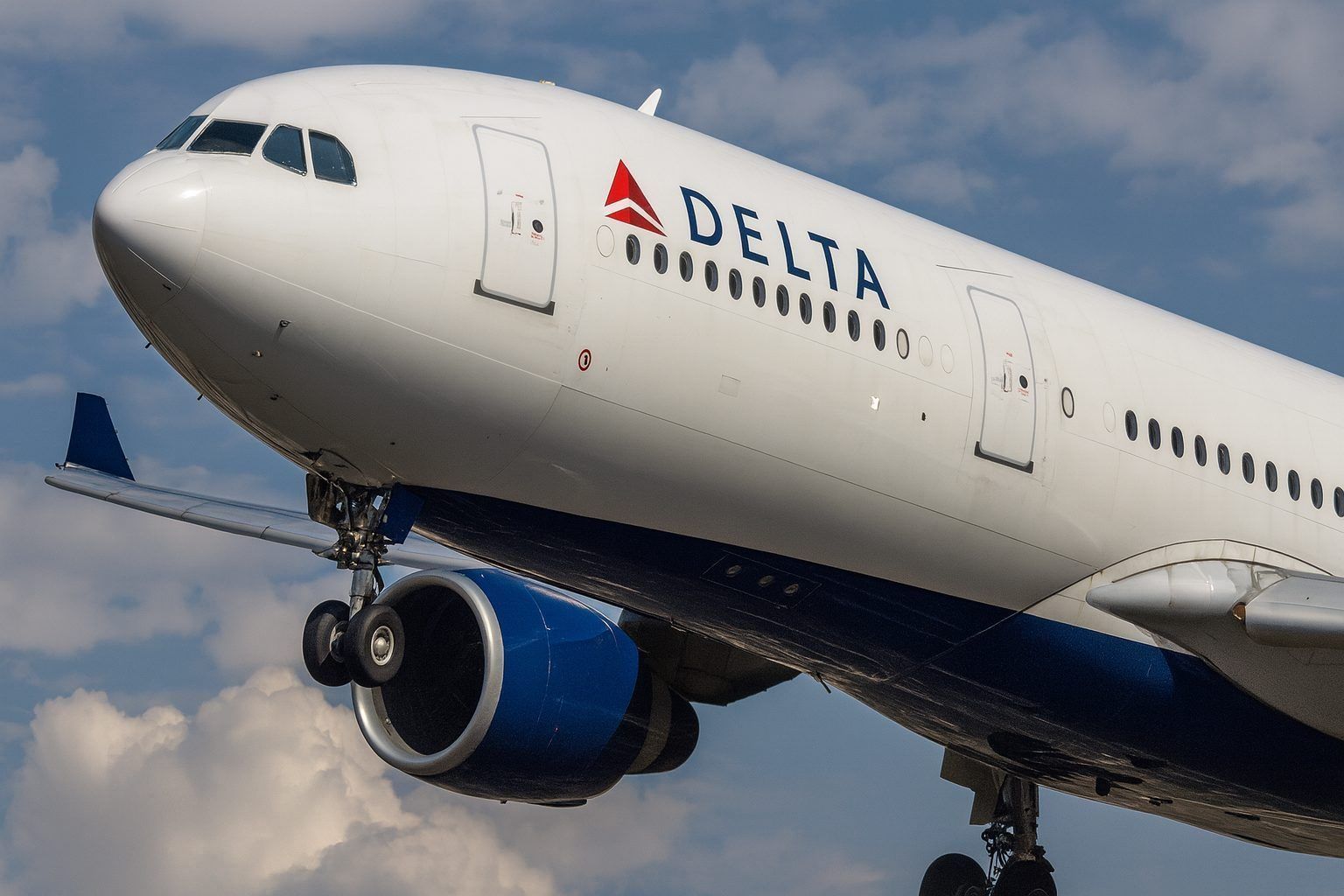
Delta Air Lines Inc. (NYSE: DAL) is trading around $67 per share as of December 6, 2025, leaving the stock just below its 52‑week high of about $70 and well above its 52‑week low near $35. MarketBeat+1
Over the past year, Delta’s share price is up high single digits, trailing the S&P 500’s roughly mid‑teens 52‑week gain, but the airline has delivered low double‑digit returns year‑to‑date and almost 40% over the past six months, reflecting a strong rebound from earlier 2025 weakness. Yahoo Finance+1
From a valuation standpoint, DAL trades on a price‑to‑earnings ratio of roughly 9–10x, with a market capitalization around $44 billion, a beta of about 1.4 (more volatile than the broader market) and a debt‑to‑equity ratio below 0.7, indicating a still‑leveraged but improving balance sheet. MarketBeat
Those numbers matter because they frame the latest headlines: a $200 million profit hit from the record U.S. government shutdown and a technical meltdown at Detroit, versus continued strong travel demand, premium revenue growth and rising analyst price targets.
The very latest headlines moving DAL
1. Government shutdown wipes $200 million from Q4 profit – but demand holds up
On December 3, Delta told investors that the 43‑day U.S. government shutdown from October 1 to November 12 will cut fourth‑quarter 2025 pre‑tax profit by about $200 million, or roughly $0.25 per share. Stock Titan+3Reuters+3AP News+3
Key points from that update:
- The shutdown forced the FAA to curtail domestic flights by up to 6%, causing widespread cancellations and delays industry‑wide. AP News+1
- Delta saw slower bookings and higher refunds during the shutdown period, particularly in the run‑up to Thanksgiving. AP News+1
- Management stressed that bookings have already rebounded to expected levels, and that December‑quarter demand and early‑2026 trends remain strong. Reuters+2GuruFocus+2
Despite the hit, Delta still expects to generate around $5 billion in profit for 2025, according to reporting on management’s latest comments – suggesting the shutdown is painful but not thesis‑breaking for the year. Bloomberg
This combination of a one‑off profit drag and resilient demand is exactly what recent analyst reports have been trying to price in.
2. Detroit (DTW) tech outage: 36 cancellations, 97 delays and a travel waiver
On December 5, Delta was forced to halt all departures at Detroit Metropolitan Wayne County Airport (DTW) due to a technical connectivity issue. Operations have since resumed, but not before: Reuters+2Delta News Hub+2
- 36 flights were canceled and 97 delayed, according to FlightAware data cited in multiple reports.
- Delta issued a travel waiver for customers traveling to, from or through DTW on December 5 and 6, allowing changes without typical penalties.
- The airline said the issue was isolated to Delta systems and apologized for the disruption.
DTW is a major hub for the carrier, with service to more than 100 destinations, so any operational stumble there matters. But investors so far view this as a short‑term operational hiccup, not a structural problem, especially given Delta’s strong on‑time and reliability metrics over 2025. Delta Air Lines+1
3. Fresh commentary: demand still “healthy” into 2026
At the Morgan Stanley Global Consumer & Retail Conference on December 3, Delta reiterated that: Stock Titan+3Delta Air Lines+3Seeking Alph…
- Underlying demand remains healthy for the December quarter.
- Early 2026 bookings trends are “promising”, with travel demand normalizing after the shutdown‑related wobble in November.
- Bookings have returned to initial expectations now that federal operations have resumed.
A separate analysis summarizing the event described Delta’s story as driven by premium cabin growth, operational resilience and strong free cash flow, supported by its loyalty ecosystem and American Express co‑brand partnership. Delta Air Lines+3TradingView+3Investopedia…
For investors, the takeaway is that management is not backing away from its medium‑term profitability and cash generation goals, even after absorbing the shutdown shock.
4. New analyst upgrades and fresh “Buy” initiations
In the last few days, several major Wall Street banks have updated their views on Delta:
- TD Cowen raised its price target from $72 to $77 on December 4, keeping a “Buy” rating. The firm now sees about 14% upside from recent prices and notes that Delta’s quantified shutdown hit ($0.25 EPS) was smaller than the $0.52 drag they had modeled. MarketBeat+2MarketScreener+2
- Citigroup just initiated coverage with a “Buy” rating and a $77 target, highlighting Delta’s premium strategy and its partnership with American Express as key profit drivers. Nasdaq+2GuruFocus+2
- A recent TipRanks write‑up emphasized Delta’s “resilience and strong market position amidst challenges”, citing the shutdown and Detroit disruptions as manageable against a backdrop of solid demand and premium growth. TipRanks+2TradingView+2
At the same time, Yahoo Finance reported that the consensus analyst price target has dipped only slightly, from about $71.75 to $71.60, despite the shutdown headlines – a sign that most analysts view the hit as temporary, not structural. Yahoo Finance
5. “Potentially undervalued?” — valuation articles spotlight DAL
Several recent pieces aimed at retail investors have framed Delta as possibly undervalued after a strong multi‑month rally:
- A Yahoo Finance analysis published today asks whether Delta Air Lines (NYSE: DAL) is potentially undervalued, noting the stock has been among the stronger gainers on the NYSE in recent weeks while still trading at a single‑digit earnings multiple. Yahoo Finance+1
- Simply Wall St argued this week that Delta’s earnings beat and upgraded outlook put its valuation in a new light, as investors reassess how a premium‑focused strategy and Amex partnership could support higher, more stable earnings over the cycle. Simply Wall St+2Delta Air Lines+2
These articles echo what many institutional analysts are saying: relative to its earnings power and free cash flow guidance, DAL still trades at a discount to its own history and to parts of the broader market.
How Delta is actually performing: 2025 earnings snapshot
Record June and September quarters
Delta’s 2025 financial performance has been robust even before adjusting for the shutdown hit:
- In the June quarter 2025, Delta delivered: Delta Air Lines
- GAAP operating revenue of $16.6 billion and non‑GAAP revenue of $15.5 billion
- Non‑GAAP operating margin around 13%
- Non‑GAAP EPS of $2.10 (GAAP EPS $3.27)
- Free cash flow between $0.7–1.0 billion for the quarter and $2 billion in the first half of 2025
- A 25% increase to the quarterly dividend starting in the September quarter
- Updated full‑year EPS guidance of $5.25–$6.25 and free cash flow of $3–4 billion
- In the September quarter 2025, Delta reported: Yahoo Finance+3Delta Air Lines+3Investing.…
- Record GAAP operating revenue of $16.7 billion and non‑GAAP revenue of $15.2 billion, up about 4% year‑on‑year
- Non‑GAAP operating margin of 11.2% and pre‑tax margin near 10%
- Non‑GAAP EPS of $1.71, beating consensus estimates
- Premium revenue up about 9% versus the prior year
- Loyalty revenue up roughly 9%, with American Express remuneration around $2 billion, growing double digits
- Domestic passenger revenue up about 5%, helped by stronger corporate and premium cabin demand
Alongside the Q3 results, Delta tightened full‑year 2025 guidance to around $6 in EPS, free cash flow of $3.5–$4 billion, and gross leverage below 2.5x, while forecasting: Delta Air Lines
- Q4 2025 revenue growth of 2–4% year‑on‑year
- Q4 operating margin between 10.5% and 12%
- Q4 EPS in a range of $1.60–$1.90 (before incorporating the shutdown hit, which is now quantified at $0.25 EPS)
Even after subtracting the shutdown impact from the high end of that range, Delta still points to double‑digit margins and multi‑billion‑dollar full‑year free cash flow – stronger than typical pre‑pandemic norms for many airlines.
Industry backdrop: strong demand, constrained capacity
Delta’s story is also tightly linked to the broader airline cycle.
- The International Air Transport Association (IATA) expects global passenger traffic growth to slow to around 5.8% in 2025, down from 10.6% in 2024, but still at levels consistent with record industry profits. IATA+1
- IATA’s latest traffic data show October 2025 air passenger demand up 6.6% year‑on‑year, signalling that demand remains strong despite supply and infrastructure constraints. IATA+1
- An industry outlook from J.P. Morgan Research notes that airline revenue and passenger numbers in 2025 are widely expected to surpass pre‑pandemic levels, particularly benefiting full‑service network carriers like Delta. JPMorgan Chase
- Capacity isn’t exploding: an analysis from Cirium suggests global seat capacity may grow only about 3–4% in 2026, helping support pricing power if demand remains firm. Cirium
The Air Line Pilots Association (ALPA) has highlighted Delta as a beneficiary of this environment, noting that heading into 2025 the airline expected the year to potentially be its most profitable on record, in a global backdrop of record airline profits with North American carriers providing roughly 40% of the total. alpa.org+2Delta Air Lines+2
For DAL shareholders, this backdrop matters because:
- It supports premium cabin pricing and loyalty economics.
- It allows Delta to generate cash while still investing in fleet, tech and people.
- Moderate capacity growth reduces the risk of a destructive fare war (though not eliminating it).
Wall Street’s DAL forecast: consensus points to single‑digit upside – with a $90 bull case
Different data providers publish slightly different numbers, but the message is broadly consistent:
- MarketBeat: an average 12‑month price target around $72–73 from about 22 analysts, with targets ranging from $60 to $90 and a consensus “Buy” rating. That implies around 7–8% upside from the recent ~$67 share price. MarketBeat+2MarketBeat+2
- Investing.com: a “Strong Buy” consensus, with 22 analysts putting the average target near $72, a high of $90, and only one outlier with a low target in the low‑30s. Investing.com
- StockAnalysis.com: based on 14 analysts, calls DAL a “Strong Buy”, with an average target of $74, implying a roughly 10% upside from current levels; the target range runs from $65 to $90. StockAnalysis
- Public.com likewise reports a Buy consensus from 13 analysts, with an average DAL price prediction in the low‑to‑mid $70s for the next 12 months. Public
Layered on top of this consensus are the fresh TD Cowen and Citigroup $77 targets, plus earlier target hikes from other banks like UBS, which collectively show the distribution of price targets drifting higher in recent months rather than lower. GuruFocus+3MarketBeat+3MarketScreener+3
In short, Wall Street as a group still sees DAL as a Buy, with mid‑single to low‑double‑digit upside over the next year, and a $90 bull case if everything goes right on earnings and the macro environment.
Strategic drivers: premiumization, loyalty, tech and network
Several themes keep coming up across earnings calls, investor presentations and third‑party analyses:
- Premium and loyalty revenue mix
Premium cabins, extra‑legroom seats and other “above‑main‑cabin” offerings have grown faster than main cabin revenue, with Delta reporting premium revenue up around 9% year‑on‑year in Q3 and loyalty revenue also up about 9%. Delta Air Lines+1- The Amex partnership continues to be a standout, delivering $2 billion in quarterly remuneration, up double digits, and providing a high‑margin revenue stream less exposed to fuel prices or day‑to‑day operational disruptions. Delta Air Lines
- Operational reliability and brand
Despite the Detroit incident, Delta has repeatedly topped rankings for on‑time performance and has been recognized as the best U.S. airline by multiple third‑party evaluators, which supports pricing power and loyalty. Delta Air Lines - Technology and infrastructure investment
Recent Delta features highlight investments in AI and automation for baggage handling at Atlanta and continued roll‑out of fast, free Wi‑Fi on most of the mainline fleet, aimed at reinforcing a premium customer experience. Delta News Hub+1 - Global network expansion
Delta is gearing up for its largest ever transatlantic schedule in summer 2026, adding routes and capacity to European destinations, and continues to deepen partnerships with WestJet, IndiGo, Air France‑KLM, Virgin Atlantic and LATAM. Delta Air Lines+1 - Balance sheet repair and capital returns
The company has been using strong free cash flow to pay down billions in debt, maintain leverage targets below 2.5x and raise the dividend, while retaining flexibility for fleet renewal and technology spend. Delta Air Lines+2Delta Air Lines+2
These strategic levers are central to the bull case: that Delta can sustain double‑digit margins, strong free cash flow and growing shareholder returns, even in a slower‑growth demand environment.
Key risks to watch
No airline stock is ever low‑risk. For DAL, investors should keep an eye on:
- Macroeconomic and political shocks
The recent shutdown underscores how policy decisions can directly hit airline profitability, even when underlying demand is healthy. Proposals for stronger passenger compensation rules or additional regulatory burdens could also impact costs. Financial Times+2MarketScreener+2 - Operational disruptions and tech reliability
The Detroit outage shows that even highly regarded operators are vulnerable to technology failures that can cause costly cancellations, reputation damage and compensation payments. Reuters+2Delta News Hub+2 - Fuel, labor and infrastructure costs
Delta has benefited from lower fuel prices and disciplined non‑fuel cost growth, but higher oil prices, wage inflation or airport congestion could pressure margins. Management itself lists fuel and labor among top risk factors in its earnings releases. Delta Air Lines+1 - Cyclicality and volatility
Over the last decade, DAL has returned about 4–4.5% annually, lagging the S&P 500’s low‑teens annualized return, and the stock’s day‑to‑day volatility is roughly triple that of the S&P 500 ETF (SPY). PortfoliosLab+1 - Institutional positioning
Recent 13F‑style disclosures show some large investors trimming stakes (for example, Invesco and Mirabella Financial Services reducing DAL holdings), suggesting that while sentiment is positive, not all big money is simply adding to positions at current levels. MarketBeat+1
These risks don’t negate the investment case, but they help explain why Delta trades at a discount to the broader market despite strong fundamentals.
So, is Delta Air Lines stock a buy right now?
From today’s vantage point (December 6, 2025), the setup for Delta Air Lines Inc. (DAL) looks like this:
- Near‑term negatives
- A $200 million, ~$0.25 EPS hit in Q4 from the U.S. government shutdown
- A high‑profile tech outage in Detroit with cancellations and delays
- Ongoing exposure to policy shocks, fuel prices and economic cycles Delta Air Lines+3Reuters+3Reuters+3
- Offsetting positives
- Record revenue and double‑digit operating margins across recent quarters
- Strong premium and loyalty revenue growth, supported by the Amex partnership
- Robust free cash flow and a clear capital allocation plan (debt reduction + higher dividends)
- Healthy demand into 2026 and a favorable capacity backdrop
- A single‑digit P/E multiple and a broad “Buy/Strong Buy” analyst consensus with mid‑single to low‑double‑digit upside baked into 12‑month price targets MarketBeat+4Delta Air Lines+4Delta Air Lin…
Put simply, Wall Street believes DAL can absorb the shutdown and Detroit shocks and still grow earnings and cash flow, but the stock’s volatility, cyclicality and exposure to political risk mean it’s not for the faint‑hearted.
For long‑term, risk‑tolerant investors who believe:
- air travel demand will remain structurally strong,
- full‑service carriers with premium and loyalty engines will keep taking share, and
- management can execute on its margin and free‑cash‑flow framework,
Delta remains one of the flagship ways to play the airline recovery and premium travel trend.
For more cautious investors, the combination of headline risk and cyclicality may warrant waiting for either a better entry price or more clarity on post‑shutdown traffic trends and 2026 guidance.
Disclaimer: This article is for informational purposes only and does not constitute financial advice, investment recommendation, or an offer to buy or sell any security. Always do your own research and consider consulting a licensed financial adviser before making investment decisions.