
New York, May 4, 2026, 19:01 (EDT)
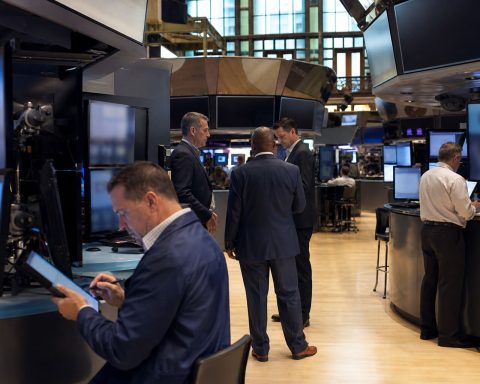
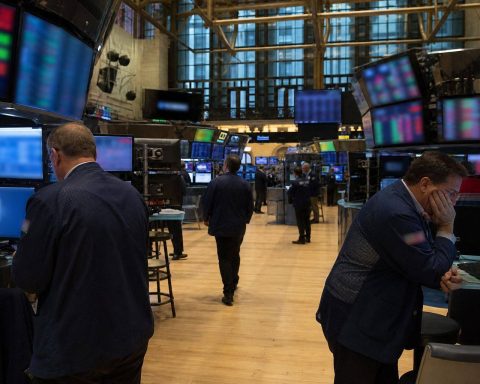
Wall Street ended Monday in the red, with a renewed oil shock linked to the Strait of Hormuz knocking the S&P 500 off its record and pushing the Dow down by more than 550 points. The Dow Jones Industrial Average dropped 1.13% to 48,941.90, according to LSEG. The S&P 500 retreated 0.41% to 7,200.75, while the Nasdaq Composite slipped 0.19% to 25,067.80.
This one landed hard on a market with almost no buffer. The S&P 500 and Nasdaq were coming off all-time highs Friday—lifted by upbeat earnings and falling oil. Analysts, for their part, had just bumped up their Q1 profit growth forecast for S&P 500 companies to 27.8%, according to LSEG I/B/E/S data cited by Reuters.
Things flipped quickly. Brent crude surged 5.8%, closing at $114.44 per barrel. U.S. West Texas Intermediate added 4.4% to finish at $106.42, after reports hit about Iranian strikes on vessels and a UAE port. The jump in oil prices throws more fuel on inflation—potentially squeezing companies and consumers—just as investors weigh whether the Federal Reserve will be able to cut rates this year.
Ross Mayfield, investment strategist at Baird Private Wealth Management, pointed out that with stocks sitting at highs, “not a lot of room for error” remains, and risk continues to lean “to the downside.” Reuters noted that out of the 11 S&P 500 sector indexes, ten ended lower—materials and industrials dragged the most—while energy managed to notch a gain. Reuters
Pressure intensified in bonds as the 10-year Treasury yield crept up to roughly 4.44%, keeping mortgages and corporate loans on edge. Barclays fell in line with peers, now seeing no Fed rate cuts this year. Brock Weimer at Edward Jones noted that oil staying above $100 would flip last year’s tax cut-driven stimulus into more of a “shock absorber.” Reuters
Palantir stepped up as the headline earnings mover after the bell. The data-analytics group bumped its 2026 revenue target up to $7.65 billion–$7.66 billion, higher than the earlier $7.18 billion–$7.20 billion range. First-quarter revenue surged 85% to $1.63 billion, beating the $1.54 billion consensus. CEO Alex Karp described the U.S. business as “erupting” in a message to shareholders, but even so, shares slipped in after-hours trade. Reuters
Palantir slid 2.69% after hours as of 18:55 EDT, according to Investing.com, ranking it among the session’s busiest U.S. stocks. Apple hovered near flat. Nvidia dipped 0.34%; Alphabet gave up 0.18%. Microsoft ticked down 0.20%, while Amazon managed a 0.10% uptick. Megacap tech mostly drifted lower, though losses were contained.
Amazon took a separate route in Monday’s session. The company announced plans to let outside businesses tap into its logistics network via Amazon Supply Chain Services—a shakeup Reuters notes is aimed squarely at UPS and FedEx, who’ve held sway over the sector for years. Both UPS and FedEx shares slid more than 9%. Analysts at Evercore ISI didn’t mince words, calling Amazon’s move “a direct competitive blow” to parcel companies. Reuters
GameStop tossed something volatile into the mix. Its $56 billion cash-and-stock offer for eBay raised eyebrows—investors balked, pointing out GameStop’s much smaller size and the massive financing it would need. Shares of GameStop dropped, eBay climbed. That move made it clear: the market isn’t buying this deal yet.
Tuesday’s setup isn’t symmetrical: the risk goes both ways, but not evenly. If crude slips or there’s confirmation that vessels are moving safely through Hormuz, it shifts focus back to earnings. But as long as oil holds up, the market faces stickier inflation, yields pushing higher, and a Fed that could keep rates unchanged longer than some investors are betting.