
New York, April 30, 2026, 06:03 EDT
U.S. stock futures showed a mixed picture early Thursday. Dow contracts slipped, while Nasdaq 100 futures managed a slight gain. The recent pop in oil prices put pressure on what had been a boost from strong numbers at Alphabet and Amazon. According to Barron’s, Dow Jones Industrial Average futures fell 269 points, or 0.6%. S&P 500 futures were off by 0.1%. Nasdaq 100 futures inched up 0.1%. Reuters had shown the same general pattern in premarket action.
Investors suddenly find themselves juggling three big variables: surging artificial intelligence outlays from the tech giants, a Federal Reserve that just delivered a split decision on rates, and oil prices high enough to reignite inflation jitters. The Fed, citing stubbornly high inflation in part due to rising global energy costs, left its target range at 3.5% to 3.75%.
Wall Street kicked off the session following a volatile Wednesday. The Dow dropped 280.12 points, or 0.57%. S&P 500 dipped just 0.04%. Nasdaq Composite eked out a 0.04% gain. Investors digested the latest Fed decision, watched oil prices, and looked ahead to Big Tech earnings that landed after the bell.
Brent crude climbed as traders eyed the potential for extended supply snarls, with word circulating that President Donald Trump would get briefed on possible military strikes against Iran. “The oil market has moved from over-optimism to the reality of the supply disruption,” ING Economics commodities chief Warren Patterson said. Oil was, for now, the cleaner fear trade. Reuters
Alphabet’s results landed with a jolt. The Google parent’s first-quarter revenue climbed 22% to $109.9 billion. Google Cloud notched a 63% surge, reaching $20.0 billion. CEO Sundar Pichai credited AI investments, saying they’re “lighting up every part of the business.” SEC
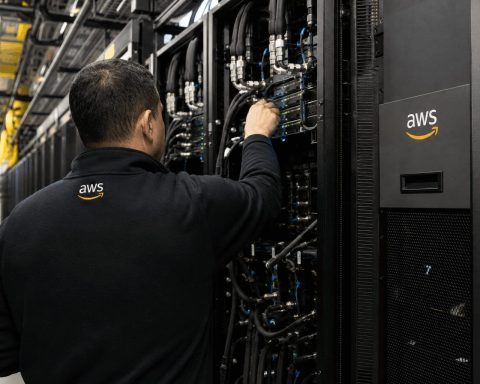
Amazon surpassed expectations in the key areas investors had been tracking. Net sales climbed 17% to $181.5 billion, and Amazon Web Services revenue jumped 28% to $37.6 billion. CEO Andy Jassy noted AWS is expanding at its quickest rate in 15 quarters.
Microsoft delivered an 18% revenue jump to $82.9 billion, and Azure plus cloud services posted a 40% gain. CEO Satya Nadella also pointed to Microsoft’s AI segment hitting a $37 billion annual run rate. Still, the stock struggled to find much traction.
Meta stirred things up this time. The parent of Facebook and Instagram reported a 33% jump in revenue, reaching $56.31 billion. But it bumped its 2026 capital expenditure outlook sharply higher—to a new range of $125 billion to $145 billion, up from $115 billion to $135 billion. Capital expenditure, or capex, covers longer-term investments like chips, network gear, and data centers.
The company flagged the risk of a “material loss” tied to youth-safety investigations and lawsuits in the U.S. Meta CFO Susan Li, speaking on the call, said, “We don’t really know what the optimal size of a company will be in the future,” with the firm leaning harder into AI—and bracing for additional job cuts. Reuters
Not all AI-related spending is getting the same reception. Jesse Cohen at Investing.com singled out Amazon’s AWS reacceleration as “the standout story.” D.A. Davidson’s Gil Luria, for his part, said Meta did what was expected but “failed to impress investors,” especially when stacked against Google’s stronger performance. Reuters
The Fed’s tone has turned notably less dovish compared to just weeks back. Morgan Stanley, reacting to Wednesday’s announcement, scrapped its forecast for 2026 rate cuts, saying “the bar for cuts is higher and the Fed seems prepared to wait.” Traders, for their part, have started betting more heavily on a possible rate hike down the line. Reuters
The market might be playing down just how much pressure oil could add. Persistent strength in crude pushes up transport costs, wages, and stokes inflation expectations—potentially tying the Fed’s hands on rates, even if earnings don’t crack. Mike Dolan at Reuters flagged U.S. headline and core inflation creeping above 3% again, putting a spotlight on Thursday’s PCE numbers.
Not much time to catch a breath before the next round: first-quarter GDP and personal consumption expenditures drop on Thursday, with Apple reporting after the bell. Trading action remains lopsided—cloud names keep pulling in demand, yet oil, rates, and the hefty price tag of AI expansion are calling the shots.
Related articles: NASDAQ:AMZN