New York, January 20, 2026, 13:40 EST — Regular session
- The Dow dropped over 500 points after tariff news reignited fears of a trade war.
- Heavy hitters in industry dragged down the price-weighted index as volatility edged up.
- Investors are shifting focus to a busy slate of U.S. data, earnings reports, and the upcoming Fed meeting.
The Dow Jones Industrial Average dropped over 500 points Tuesday after President Donald Trump warned of fresh tariffs targeting imports from eight NATO allies, sparking a widespread selloff in U.S. equities. The S&P 500 and Nasdaq slid as well, with declines hitting tech, banking, and industrial sectors. AP News
The threat emerged just as Wall Street reopened following the Martin Luther King Jr. Day holiday, with investors reacting to a global market sell-off that took place in other regions on Monday. U.S. stock-index futures were already down over 1% during holiday trading, and Europe’s STOXX 600 slid around 1% amid the same tariff concerns. Reuters
Trump announced the U.S. would slap an extra 10% tariff starting Feb. 1 on imports from Denmark, Finland, France, Germany, Sweden, and the Netherlands, along with Britain and Norway. That rate would jump to 25% on June 1 if talks over Greenland fail. Ursula von der Leyen, European Commission President, slammed the proposed tariffs as a mistake. Reuters
By 11:18 a.m. ET, the Dow had dropped 582.97 points, or 1.16%, landing at 48,785.03. Jeff Buchbinder, chief equity strategist at LPL Financial, noted investors would “settle down and realize this is just a negotiation tool,” even though the tariff threat “got investors a little bit rattled.” The Nasdaq slipped below its 50-day moving average, a key chart marker traders often see as the dividing line between rising and falling trends. Reuters
The stock selloff tracked similar moves overseas, with U.S. Treasuries jittery and yields climbing—a reaction traders said was heightened by Monday’s holiday pause in the cash bond market. Wasif Latif, chief investment officer at Sarmaya Partners, flagged “geopolitical risks re-emerging” and described it as a “significant risk off day,” though he noted policy talk could still shift. European leaders plan to address the issue at an emergency summit in Brussels on Thursday. Reuters
Within the Dow, sharp point swings stemmed mainly from a few pricey names, since the 30-stock index is price-weighted, not value-weighted. MarketWatch found that declines in 3M and IBM alone cut about 148 points off the Dow. Each $1 move in a Dow stock moves the index roughly 6.16 points. MarketWatch
Volatility surged amid the selloff. The Cboe Volatility Index, or VIX — which measures expected moves in the S&P 500 through options — spiked to an eight-week peak just below 20.7 before pulling back. “This is what you do in geopolitical turmoil: take equity risk off the table and buy gold and cash,” said Alex Morris, CEO and CIO at F/m Investments. He added that the VIX would need to reach 30 before panic sets in. Reuters
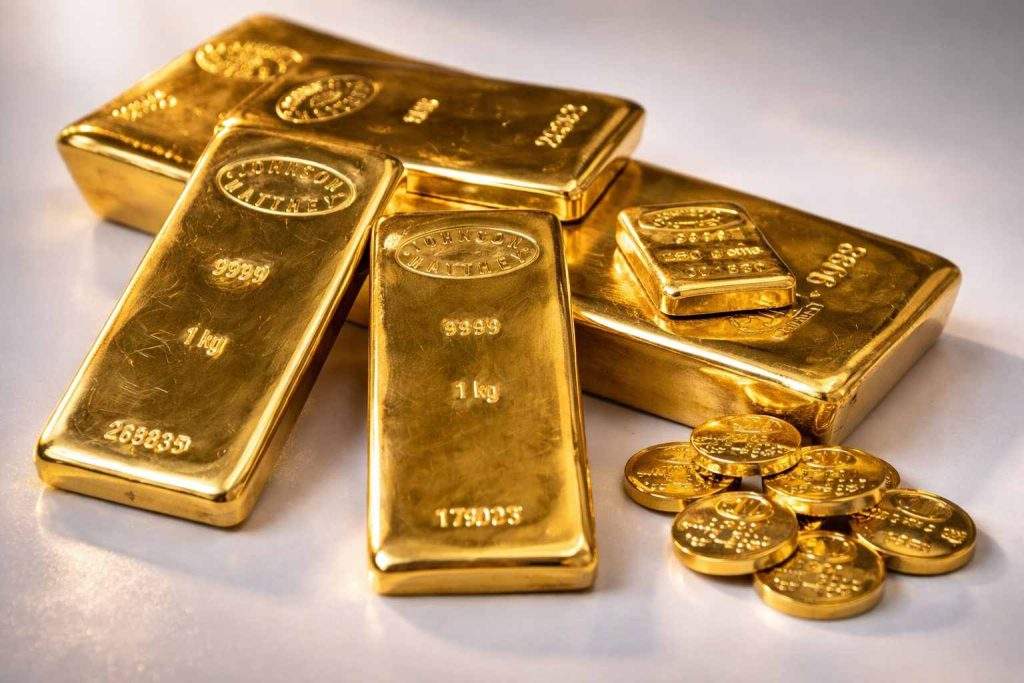
Funds poured into safe havens as gold pushed past $4,700 an ounce, hitting a fresh record near $4,761 in early afternoon deals. “Gold has surged deeper into uncharted territory as investors hedge against rising political risk,” noted Fawad Razaqzada, market analyst at City Index and FOREX.com. Reuters
Traders confront a packed U.S. schedule, featuring housing starts, GDP figures, and jobless claims. Personal income and outlays data are also on tap, including the PCE price index—the Fed’s favored inflation measure. A flash PMI reading, giving an early look at business activity, is set to drop, too. Add in multiple Treasury auctions, which might draw attention following the recent bond selloff. us.econoday.com
At Davos, U.S. Commerce Secretary Howard Lutnick called current rates “too high” and predicted U.S. first-quarter GDP growth would top 5%, though he stressed this was his personal view. He also cautioned the European Union against retaliation, warning that any response could spark a renewed cycle of tit-for-tat tariff hikes. Reuters
The risk for stocks lies in markets brushing off the tariff threat as routine brinkmanship, despite it stemming from a territorial dispute with scant chance for easy resolution. Reuters columnist Mike Dolan pointed to potential EU countermeasures, including the bloc’s Anti-Coercion Instrument. Deutsche Bank strategist George Saravelos cautioned that the “weaponization of capital rather than trade flows” might cause the biggest disruption. Reuters
Investors have their sights set on the Federal Reserve’s policy meeting scheduled for Jan. 27-28, scanning for clues about rate moves and inflation concerns. Until that date, expect tariff updates and Greenland news to dominate the headlines. federalreserve.gov