
NEW YORK, March 28, 2026, 16:09 EDT
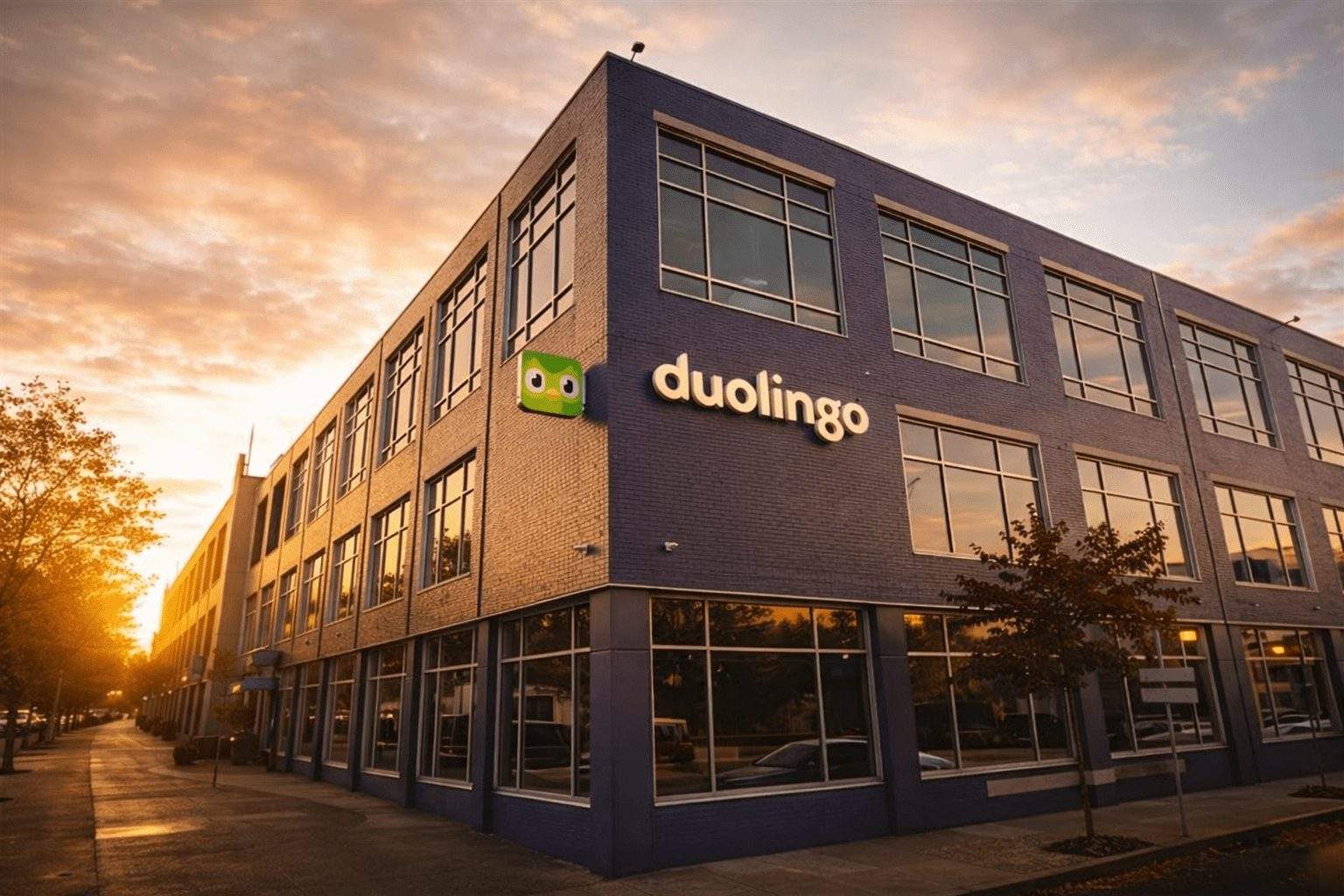
Duolingo shares slipped 2.8% Friday, ending at $95.35 after hitting an intraday low of $91.69. Losses built on the previous selloff triggered by the company’s downbeat 2026 guidance. A tough day for growth names—Nasdaq lost 2.15%—kept Duolingo under pressure.
Shares are still finding new levels after Duolingo told investors to brace for softer booking growth now—bookings being customer dollars committed before they land as revenue—in hopes of juicing user numbers down the line. The shift is more abrupt than many had priced in, especially after years of Duolingo squeezing more cash per user with ads and subscription nudges.
Duolingo in February projected 2026 bookings of $1.274 billion to $1.298 billion, a 10% to 12% increase. The company expects adjusted EBITDA margin—an operating profit gauge—to slip to roughly 25%. For 2025, total bookings climbed 33% to $1.158 billion, with adjusted EBITDA margin coming in at 29.5%.
Management didn’t sugarcoat it. Duolingo will shift its AI-based “Video Call with Lily” to the less expensive Super tier, roll out more AI speaking features—some free, some still paid—and dial back on ads and those relentless subscription nudges that had helped boost revenue. The company expects that decision to cost it over $50 million in bookings this year as it pushes toward 100 million daily active users by 2028. Duolingo, Inc.
Chief Executive Luis von Ahn wants the results to speak for themselves: judge the gamble by usage. He told Reuters that if user growth tops the roughly 20% Duolingo is projecting for 2026, then the strategy counts as a win. The AI video-call feature, he added, already costs less than a tenth of what it did at launch.
Wall Street’s tone has shifted, with BofA Securities moving Duolingo down to Neutral from Buy and sticking a $100 price target on the stock. Analyst Omar Dessouky, according to public summaries, flagged Duolingo’s slow progress in performance marketing—the kind of targeted ad spending and user-acquisition push that’s become standard for consumer internet firms trying to grow fast.
That hardly spells failure for the strategy. Duolingo wrapped up 2025 holding $1.04 billion in cash, zero debt, and a $400 million buyback program still in its pocket—plenty of cushion for a softer patch. Still, investors are zeroing in on a familiar risk: if easier-to-use AI tools don’t pull in new users quickly enough, bookings growth could stay sluggish and margins might remain squeezed.
Friday’s Form 4 shows CFO Gillian Munson picked up 133,753 restricted stock units back on March 25, set to vest starting in 2027. The move—an equity grant, not an open-market buy—didn’t shift sentiment much. Investors remain focused on whether Duolingo’s push for higher growth can really translate into more engaged learners, and eventually, more conversions to paid subscriptions.
Related articles: Artificial Intelligence