
NEW YORK, June 4, 2026, 13:02 EDT
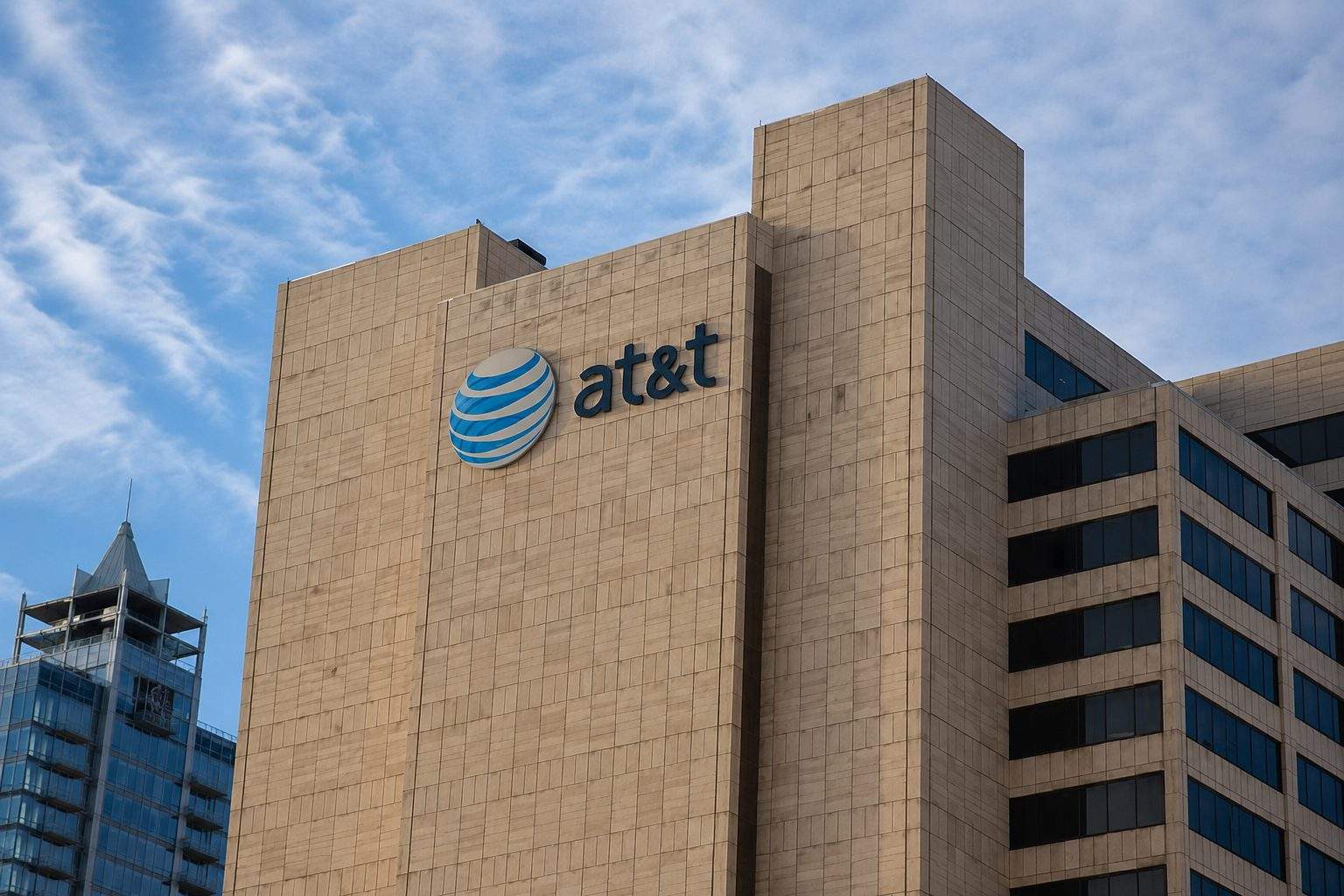
AT&T Inc. shares extended losses Thursday, slipping 3.7% to $22.69 by 12:47 p.m. EDT. Investors moved out of the telecom after a new SpaceX-related warning brought fresh worries over broadband competition. AT&T traded close to its session low and the company’s market cap stood near $159 billion.
AT&T’s timing isn’t great. SpaceX is lining up a public listing this month. That’s set to give investors a clearer read on the value of Starlink, which delivers broadband via satellite, as compared to legacy fiber and wireless systems still valued for steady dividends. Oppenheimer said SpaceX could shake up the $1.6 trillion U.S. communications market. AT&T, along with Verizon and T-Mobile, could face faster drops in subscribers and revenue if Starlink catches on.
Oppenheimer’s Timothy Horan downgraded AT&T to Perform from Outperform and dropped his $32 price target, Barron’s said. Horan said both broadband subscriber growth and later mobile could be at risk as low-Earth-orbit satellite networks step up. These satellites are closer to Earth and can provide lower-latency internet compared to older systems.
AT&T is making changes to its fiber internet business. The company said Wednesday it will roll out simpler home internet plans starting June 7. Customers will get four speed options and can save up to $420 a year by bundling wireless and home internet. “These plans are straightforward,” said Jenifer Robertson, executive vice president and general manager of AT&T Consumer, adding they are “packed with value.” AT&T Newsroom
AT&T shares fell despite gains in the Dow, which closed at a record, and a small move up for the S&P 500. The Nasdaq dipped as chip stocks stumbled. Investors moved into non-tech areas, but AT&T still dropped.
Regulators saw a win today. The U.S. Supreme Court sided with the Federal Communications Commission against AT&T and Verizon, who tried to overturn the FCC’s internal fine system. Justices rejected the carriers’ challenge, 8-1. The dispute came after the FCC hit AT&T with $57 million and Verizon with $47 million in fines related to location-data disclosures.
AT&T stuck with its execution story in the first quarter. The company reported revenue up 2.9% to $31.5 billion. Fiber net adds came in at 292,000, while fixed wireless brought in another 292,000 home internet customers. The forecast for more than $18 billion in free cash flow for 2026 was unchanged, which measures cash left after capex and vendor-financing.
AT&T CEO John Stankey told investors at a J.P. Morgan conference in May that the company’s “guidance is sound.” He flagged new EchoStar spectrum and wireless-network upgrades as creating more spots for AT&T to sell its converged service — the bundle of home internet and mobile plans. AT&T Investors
FCC clears EchoStar’s $40 billion spectrum sale to SpaceX, AT&T
The FCC signed off on EchoStar’s roughly $40 billion sale of spectrum split between SpaceX and AT&T. AT&T paid about $23 billion for 50 MHz as it moves to boost 5G. SpaceX picked up 65 MHz, which goes to Starlink services. AT&T gets added network room, but SpaceX ends up deeper in the connectivity space that’s attracting investor attention now.
The bearish view isn’t without its own risks. Satellite could still find a role as a rural or backup option rather than taking share in dense markets. AT&T might also help the stock by boosting penetration with cheaper bundles. There’s a tougher bear case if Starlink drops prices more than forecast, AT&T’s fiber numbers lag, and the dividend looks less like a buffer and more like a payout for a company running out of growth.
AT&T has a June 9 slot for CFO Pascal Desroches at the Mizuho Technology Conference, with Q2 earnings out July 22. Before then, action in the stock could depend less on new phone net adds and more on the larger question: does Wall Street view satellite as just a telecom add-on, or as a lower-cost alternative to the networks? AT&T Investors
Related articles: NYSE:VZ