
NEW YORK, July 2, 2026, 05:06 EDT
- AT&T Inc. NYSE:T was recently seen at $20.48 ahead of the New York cash open, off around 1.0%. The company’s market cap was close to $143.9 billion.
- The NYSE will open on Thursday but close on Friday, July 3, for the Independence Day observed holiday.
- The $15.74 billion drop in AT&T’s market cap is roughly 35% of the $45 billion or more it expects to give back to shareholders from 2026 to 2028.
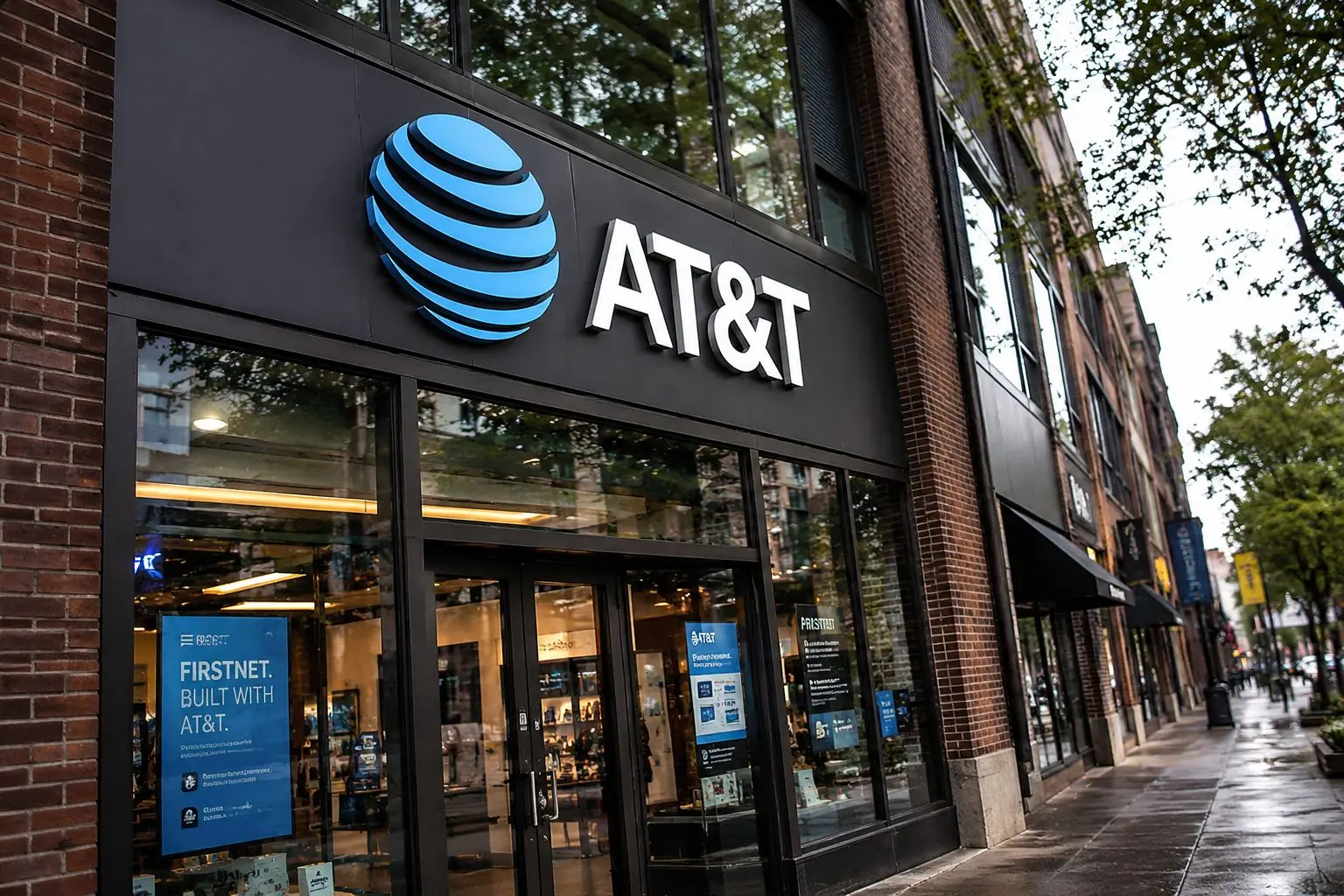
AT&T Inc. NYSE:T traded lower before Thursday’s open, with shares at $20.48, down $0.205, or 1.0%, in premarket action. The move comes as SpaceX’s push has investors reassessing U.S. telecom risk. The core NYSE session will run from 9:30 a.m. to 4:00 p.m. ET on regular trading days, though July 3 is counted as the Independence Day observed holiday.
Investors are pulling out their calculators after the “Big Three” telecom stocks tanked again, with Barron’s saying $15.74 billion got wiped off AT&T’s market cap. That drop is part of a $46 billion combined slide for AT&T, Verizon Communications Inc. NYSE:VZ, and T-Mobile US Inc. NASDAQ:TMUS. For AT&T, losing that much in market value is about the same as two full years of 2026 buybacks at the pace the company mapped out, or about 35% of the $45 billion-plus AT&T wants to hand back in dividends and buybacks between 2026 and 2028. Barron’s
The latest marks showed a divide in communications stocks and related assets:
| Security | Google Finance ticker | Latest mark | Move from prior close | Market value / fund value where available |
|---|---|---|---|---|
| AT&T | NYSE:T | $20.48 | down $0.205, off 1.0% | $143.9 bln |
| Verizon | NYSE:VZ | $41.99 | down $0.33, losing 0.8% | $176.8 bln |
| T-Mobile US | NASDAQ:TMUS | $173.06 | up $5.35, up 3.2% | $190.7 bln |
| Charter Communications Inc. | NASDAQ:CHTR | $139.84 | off $2.26, down 1.6% | $17.7 bln |
| Space Exploration Technologies Corp. | NASDAQ:SPCX | $157.54 | slid $13.16, dropped 7.7% | — |
| Communication Services Select Sector SPDR Fund | NYSEARCA:XLC | $109.74 | added $2.62, up 2.4% | — |
| SPDR S&P 500 ETF Trust | NYSEARCA:SPY | $745.76 | fell $0.91, down 0.1% | $660.4 bln |
AT&T and Verizon stayed in the red, while T-Mobile moved up. SpaceX stock also dropped hard. AT&T is trailing not only growth names, but also a sector ETF that finished higher on the session, according to the latest data.
Pressure started after SpaceX and Charter talks. Reuters said last week the two firms held high-level discussions about launching a U.S. consumer mobile service. Charter might handle some SpaceX phone traffic on its internet lines, and SpaceX has told investors it’s planning a Starlink mobile product aimed at rivals like Verizon, AT&T and T-Mobile.
BNP Paribas senior analyst Sam McHugh said Charter’s hotspots and small cells might let Starlink Mobile close some of its coverage gap, though he said “Charter can’t offer a solution that entirely closes the gap.” He added there’s “no way” a Charter-SpaceX deal could take terrestrial cellular networks out of the U.S. connectivity market. Fierce Network
The bear case goes beyond just one deal. Oppenheimer’s Timothy Horan told MarketWatch: “SpaceX will disrupt the $1.6 [trillion] communications industry, in our view.” A call like that can move the risk premium for a dividend stock quickly. MarketWatch
The selloff stands out more when compared to the company’s recent spectrum buys:
| AT&T reference point | Figure | Read-through |
|---|---|---|
| Market value lost as telecom stocks dropped | $15.74 bln | That’s around 10.9% of what AT&T is worth now |
| Current market value for AT&T | $143.9 bln | From the latest market quote |
| AT&T’s total outlay in Auction 113 | About $121 mln | The recent drop is about 130x that spend |
| Share buybacks planned for 2026 | About $8 bln | The selloff is roughly twice this repurchase target |
| Expected shareholder returns between 2026-2028 | $45 bln-plus | The value lost is about 35% of the total return plan for those years |
FCC Auction 113 wrapped up this week at $3.57 billion in gross proceeds. Verizon led spending with around $3.2 billion. T-Mobile came in at $278 million, while AT&T spent near $121 million on 10 licenses. SpaceX was in for $8.5 million and picked up two licenses, FCC auction data and industry reports show.
That’s the trade on AT&T. The stock sold off more than the cash it spent to buy new spectrum. Investors are pricing in the risks from Starlink Mobile, cable wireless, what wholesale looks like, and the real strength of AT&T’s network lead.
AT&T is sticking to its cash flow and convergence story. CEO John Stankey told investors in April, “We saw our best first quarter ever for Advanced Connectivity internet customer net additions.” For the first quarter, AT&T posted $31.5 billion in revenue, $2.5 billion in free cash flow, 294,000 postpaid phone net adds, and 584,000 advanced connectivity internet net adds. AT&T Newsroom
AT&T told investors in June it was still looking for second-quarter free cash flow between $4.0 billion and $4.5 billion and reaffirmed both its 2026 and multi-year guidance. The company is targeting 2026 free cash flow above $18 billion, capital investment of $23 billion-$24 billion, an annualized common dividend of $1.11 a share and around $8 billion in buybacks.
AT&T’s board set a quarterly common dividend at $0.2775 per share, with payment on Aug. 3 to shareholders of record as of July 10. At the last price of $20.48, this puts the annual yield at roughly 5.4%. The dividend is now part of how investors look at the valuation.
AT&T’s next stock driver is its Q2 report due out before the NYSE opens July 22, with the call at 8:30 a.m. ET. Until then, shares have to sit through a three-day U.S. market break while SpaceX keeps moving the sector.
Related articles: NYSE:VZ