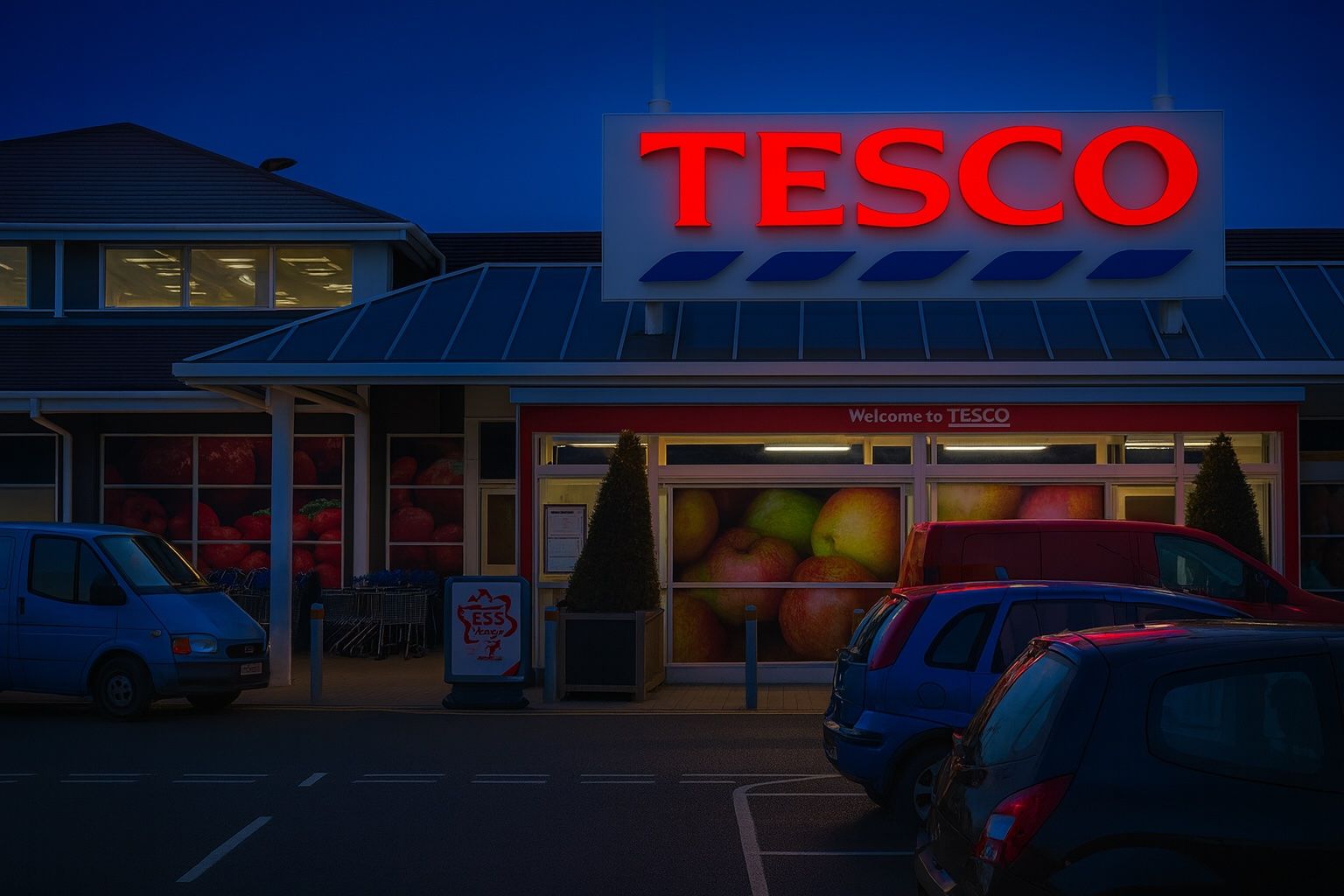

- Strong Half‑Year Results: Tesco’s interim results for the 2025/26 financial year showed group sales up 5.1% to £33 billion, adjusted operating profit up 1.5% to £1.67 billion and free cash flow up 2.9% to £1.3 billion directorstalkinterviews.com. Net debt fell 3.8% to £9.9 billion and adjusted diluted earnings per share rose 6.8% directorstalkinterviews.com.
- Dividend Boost: The board lifted the interim dividend per share by 12.9%, from 4.25p to 4.8p, maintaining its policy of paying around 35% of the prior year’s dividend directorstalkinterviews.com. The dividend will be paid on 21 November 2025 to shareholders on the register by 10 October directorstalkinterviews.com.
- Upgraded Profit Guidance: Tesco raised full‑year adjusted operating profit guidance to £2.9–3.1 billion, up from £2.7–3.0 billion, reflecting confidence in strong Christmas trading reuters.com.
- Market‑Share Gains: UK like‑for‑like sales grew 4.9% and market share increased 77 basis points to 28.4%, with sales up across all business units directorstalkinterviews.com. The company credits its price‑matching policy, loyalty‐card analytics and investment in service quality for the gains directorstalkinterviews.com.
- Share‑Price Momentum: Tesco’s London‑listed shares rose roughly 20% year‑to‑date and gained about 3% following the results announcement reuters.com. Zacks analysts noted the U.S.‑listed ADR (TSCDY) delivered a 26.5% return over the last year, beating the S&P 500, and highlighted the stock’s strong momentum score and rising earnings estimates nasdaq.com.
- Analysts’ Upgrades: JP Morgan raised its price target to 450 pence and Citigroup lifted theirs to 460 pence, implying limited but positive upside. MarketBeat reported that the stock traded around 432 pence with a 12‑month range of 310–435 pence and an average analyst rating of “Buy” marketbeat.com.
Tesco’s Winning Strategy: Value, Loyalty and Efficiency
Tesco’s half‑year results highlight how the UK’s largest grocer continues to grow despite intense competition from German discounters Aldi and Lidl. Group sales climbed 5.1% to £33 billion while adjusted operating profit edged up 1.5% directorstalkinterviews.com. Chief executive Ken Murphy said the business grew sales in each of its divisions and achieved market‑share gains by “investing significantly in value, quality and service” and through “early, disciplined and targeted” savings to offset cost inflation directorstalkinterviews.com.
Price perception is a critical battleground in UK grocery. Tesco’s “Aldi Price Match” and Clubcard Prices schemes allowed it to sharpen pricing while retaining margins. Its loyalty‑card analytics have become a powerful tool: the Clubcard program is used by around 21 million UK households and provides personalised offers that drive repeat shopping. Murphy highlighted that Tesco’s price position versus the market is now more than 300 basis points better than two years ago directorstalkinterviews.com, while customer satisfaction scores and brand perception have improved. These metrics illustrate how investment in data‑driven promotions can yield market‑share gains even in a low‑growth environment.
The efficiency side is equally important. Tesco’s “Save to Invest” programme delivered cost savings that partially offset wage and energy inflation and allowed the group to fund price cuts. Free cash flow rose 2.9% to £1.3 billion and net debt fell 3.8% to under £10 billion directorstalkinterviews.com, giving the board flexibility to return cash to shareholders while maintaining investment in stores and online capacity. The company opened a new dot‑com fulfilment centre in Redsur, boosting e‑commerce capacity and leading to double‑digit growth in online grocery orders directorstalkinterviews.com.
Dividend Delivers Double‑Digit Growth
The headline grabber for many investors is Tesco’s 12.9% increase in the interim dividend to 4.8p per share directorstalkinterviews.com. The payout is equal to 35% of last year’s full‑year dividend and reflects management’s confidence in free cash flow generation. The dividend will be paid on 21 November 2025 with a record date of 10 October directorstalkinterviews.com. Based on the full‑year dividend for 2024/25 (13.05p), analysts at The Motley Fool estimate a prospective yield near 3.6% if the full‑year dividend is raised by a similar percentage fool.co.uk. Tesco’s dividend growth has been impressive: last year the full‑year dividend rose 13.2%, and analysts expect similar increases over the next few years.
Tesco’s share buyback programme supplements the dividend. While the company completed a £750 million buyback in early 2025, the board still has authority to repurchase more stock as cash flows allow. Buybacks can enhance per‑share earnings and support the share price, although management reiterated that dividends remain the primary method of returning capital.
Upgraded Guidance Signals Optimism Amid Macro Headwinds
Tesco lifted its adjusted operating profit guidance to £2.9–3.1 billion, up from £2.7–3.0 billion reuters.com, despite the cost‑of‑living crisis squeezing consumer budgets. The upgrade reflects momentum in the first half and management’s belief that inflation has peaked. UK like‑for‑like sales grew 4.9% and CEO Murphy said the company was “betting on a good Christmas” reuters.com. He expects the combination of competitive pricing, improved product range and robust e‑commerce to drive strong festive trading.
That said, Tesco recognises the environment remains challenging. Analysts surveyed by Reuters noted in September that while sales were booming, the board might be cautious given the risk of a weaker labour market, potential tax rises and discount rivals’ aggression reuters.com. Even after the upgrade, guidance remains below last year’s actual profit of £3.13 billion reuters.com, signalling a degree of conservatism.
Market Reaction and Analysts’ Views
Investors responded positively to the results and dividend hike. Tesco’s London‑listed shares climbed roughly 3% on the day and are up about 20% year‑to‑date reuters.com. On Wall Street, Tesco’s ADR (TSCDY) delivered a 26.51% one‑year return and a Zacks Momentum Style Score of A, meaning it outperformed both the retail supermarkets industry and the broader S&P 500 nasdaq.com. Zacks also noted that analysts have been revising earnings estimates higher, reflecting confidence in future profitability nasdaq.com.
Brokerage upgrades further supported the rally. According to MarketBeat, JP Morgan raised its price target from 400 to 450 pence, while Citigroup increased its target from 395 to 460 pence, maintaining buy ratings marketbeat.com. These targets imply modest upside from current levels (~432 pence), suggesting analysts believe much of the good news is priced in. The stock’s 50‑day moving average sits around 418 pence and its 12‑month high is 435 pence marketbeat.com, indicating the shares are trading near technical resistance.
Risks: Competition, Inflation and Execution
Even with upbeat results and an upgraded outlook, Tesco faces risks. The UK grocery market remains fiercely competitive. Discounter Aldi continues to open new stores and has narrowed the price gap with Tesco despite the latter’s price‑match scheme. If Tesco cannot sustain its price perception, market‑share gains could reverse. The company must also manage wage and energy inflation; while its Save to Invest programme delivered significant cost savings this year, savings may be harder to achieve as inflationary pressures persist.
Another risk is consumer behaviour. With interest rates high and real wage growth modest, shoppers may trade down or reduce discretionary spending, impacting higher‑margin categories. Tesco has responded by expanding its value‑range products and improving the quality of own‑label lines. Supply‑chain disruption is another threat; Brexit‑related border delays and ongoing geopolitical tensions could affect imports. Tesco has invested in domestic suppliers and stock resilience to mitigate this risk but cannot eliminate it.
Conclusion: A Defensive Play With Growth Potential
Tesco’s double‑digit dividend increase and upgraded profit guidance underline the company’s confidence in its strategy of combining low prices with loyalty‑driven promotion and cost efficiency. The grocer’s market‑share gains and strong free cash flow support a growing dividend, which yields around 3–4% and may continue to rise if earnings hold up fool.co.uk. Analysts’ upgrades suggest limited upside in the short term after a 20% rally, yet Tesco remains a core holding for income investors seeking exposure to a resilient, cash‑generative business.
Investors should weigh the defensive qualities of Tesco’s business against the competitive and macroeconomic risks. The supermarket giant has demonstrated that scale, data analytics and a clear value proposition can deliver growth even in a cost‑of‑living crisis. With a healthy balance sheet, improving profitability and a progressive dividend policy, Tesco appears well positioned to weather economic headwinds while rewarding shareholders.
In summary, Tesco’s solid first-half performance—marked by a 5.1% jump in group sales, rising profits and robust free cash flow—has allowed the UK supermarket giant to deliver a 12.9% dividend hike directorstalkinterviews.com. The company also upgraded its full-year profit guidance to £2.9–3.1 billion, signalling confidence in its market-share gains and ability to outpace inflation and fierce discount competition reuters.com. These results underscore Tesco’s successful strategy of blending price competitiveness with loyalty-driven promotion and cost efficiencies, while cash returns to shareholders enhance its appeal to income-focused investors.
I note that analysts have raised their price targets and the shares have rallied about 20% year-to-date, yet risks remain from discounter pressure, inflation and macroeconomic uncertainty marketbeat.com. Nonetheless, with a healthy balance sheet, improving margins and a progressive dividend policy, Tesco appears well positioned to weather headwinds and sustain shareholder rewards nasdaq.com. This makes the stock an attractive defensive play with growth potential in a challenging retail environment.
Related articles: Dividends