
WELLINGTON, August 24, 2026, 10:45 NZST
- Chorus increased its FY26 net profit to NZ$37 million, up from NZ$4 million.
- The minimum dividend of 62 cents for FY27 indicates a cash yield of 6.49%.
- EBITDA forecast for FY27 is between NZ$730 million and NZ$760 million.
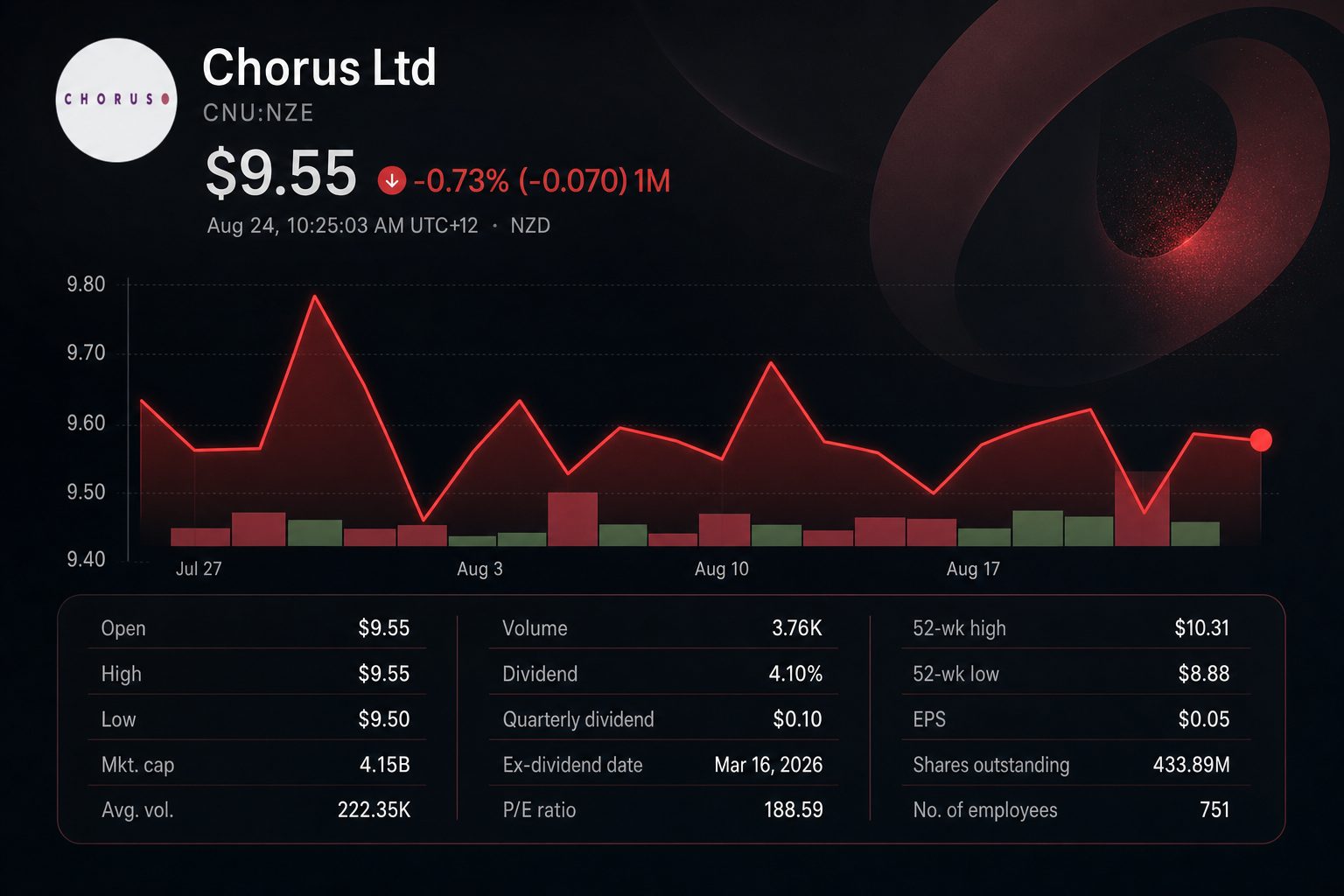
- The stock began trading close to NZ$9.55, just above analysts’ average target.
Chorus Limited NZX:CNU increased its minimum dividend following a more than ninefold rise in annual profit. The New Zealand fibre provider stated its FY27 dividend would be no less than 62 cents per share unless there is a material negative event. Based on Monday’s opening price of NZ$9.55, that equates to a 6.49% projected cash yield.
The yield stands out as the most straightforward short-term investment argument. Chorus produced NZ$368 million in free cash flow available for deployment. However, shares began trading roughly 1% above the consensus analyst target, indicating limited potential for price gains.
The outcome revealed a stronger fibre network performance and reduced expenses. Revenue grew by 1% to reach NZ$1.029 billion. EBITDA was up 3% to NZ$726 million, with operating costs down by NZ$6 million.
| NZ$ million | FY26 | FY25 | Change |
|---|---|---|---|
| Operating revenue | 1,029 | 1,014 | +1% |
| Operating expenses | 303 | 309 | -2% |
| EBITDA | 726 | 705 | +3% |
| Net profit after tax | 37 | 4 | +825% |
| Operating cash flow | 740 | 709 | +4% |
| Gross capital expenditure | 375 | 415 | -10% |
Fibre connections make up 96% of Chorus’s total. Fibre revenue increased by 6%, driven by stronger uptake and pricing. In June, households used an average of 731 gigabytes of data monthly, a 9% rise year-on-year.
| Operating measure | FY26 | Year-on-year signal |
|---|---|---|
| Fibre connections | 1.147 million | Increase of about 32,000 |
| Fibre uptake | 75.9% | Up |
| Fibre ARPU | NZ$59.51 | Up from NZ$58.28 |
| Monthly data use | 731 GB | Rising 9% |
| Copper connections | Down 48,000 | Ongoing migration |
Chief Executive Mark Aue stated Chorus is “building momentum towards a simpler, more focused business.” The company accelerated its scheduled nationwide copper withdrawal to 2028. Under 1,000 lines within fibre regions are still to be migrated.
The dividend is increasing at a greater rate than EBITDA. Chorus announced a final dividend of 36 cents, bringing full-year FY26 payouts to 60 cents, up from 57.5 cents previously. The last distribution will be paid on October 6 to shareholders recorded as of September 15.
| Capital measure | FY26 / current | Comparison |
|---|---|---|
| Total dividend | NZ$0.60 | NZ$0.575 for FY25 |
| FY27 minimum dividend | NZ$0.62 | Up 3.3% from FY26 |
| Forward cash yield at NZ$9.55 | 6.49% | Derived |
| Capital-allocation free cash flow | NZ$368 million | NZ$354 million for FY25 |
| Net debt | NZ$3.174 billion | NZ$3.102 billion for FY25 |
| Net debt / EBITDA | 4.37x | 4.40x for FY25 |
The company forecasts EBITDA between NZ$730 million and NZ$760 million for FY27. Planned gross capital expenditure is set at NZ$375 million to NZ$415 million. The midpoint points to steady, moderate growth in EBITDA rather than a significant surge in earnings.
The stock’s performance seems to align with this profile. Chorus was trading at NZ$9.55 as of 09:59:39 NZST, just 0.1% under its Friday close of NZ$9.56. Over the last five sessions, the shares rose by about 1%.
| Analyst measure | Count / price | Reading |
|---|---|---|
| Buy | 1 analyst | 20% |
| Hold | 3 analysts | 60% |
| Sell | 1 analyst | 20% |
| Average target | NZ$9.46 | 0.94% under NZ$9.55 |
| Target range | NZ$8.43–NZ$10.26 | Broad spread |
Investors are set to assess if fibre revenue increases can support the higher dividend without putting pressure on finances. The shutdown of copper operations is expected to cut costs. Growing data centre and artificial intelligence workload needs present a longer-term growth opportunity for Chorus’s 200,000-kilometre fibre network.
Risks: Net debt remains at 4.37 times EBITDA. Increased interest expenses, softer fibre prices or greater capital expenditures might reduce dividend coverage. Changes in regulations could impact allowed returns.
At present, income is supported more than rerating by the figures. The dividend is both cash-supported and clearly defined. Meanwhile, the share price remains close to the upper end of the current consensus range.
Related articles: Dividends