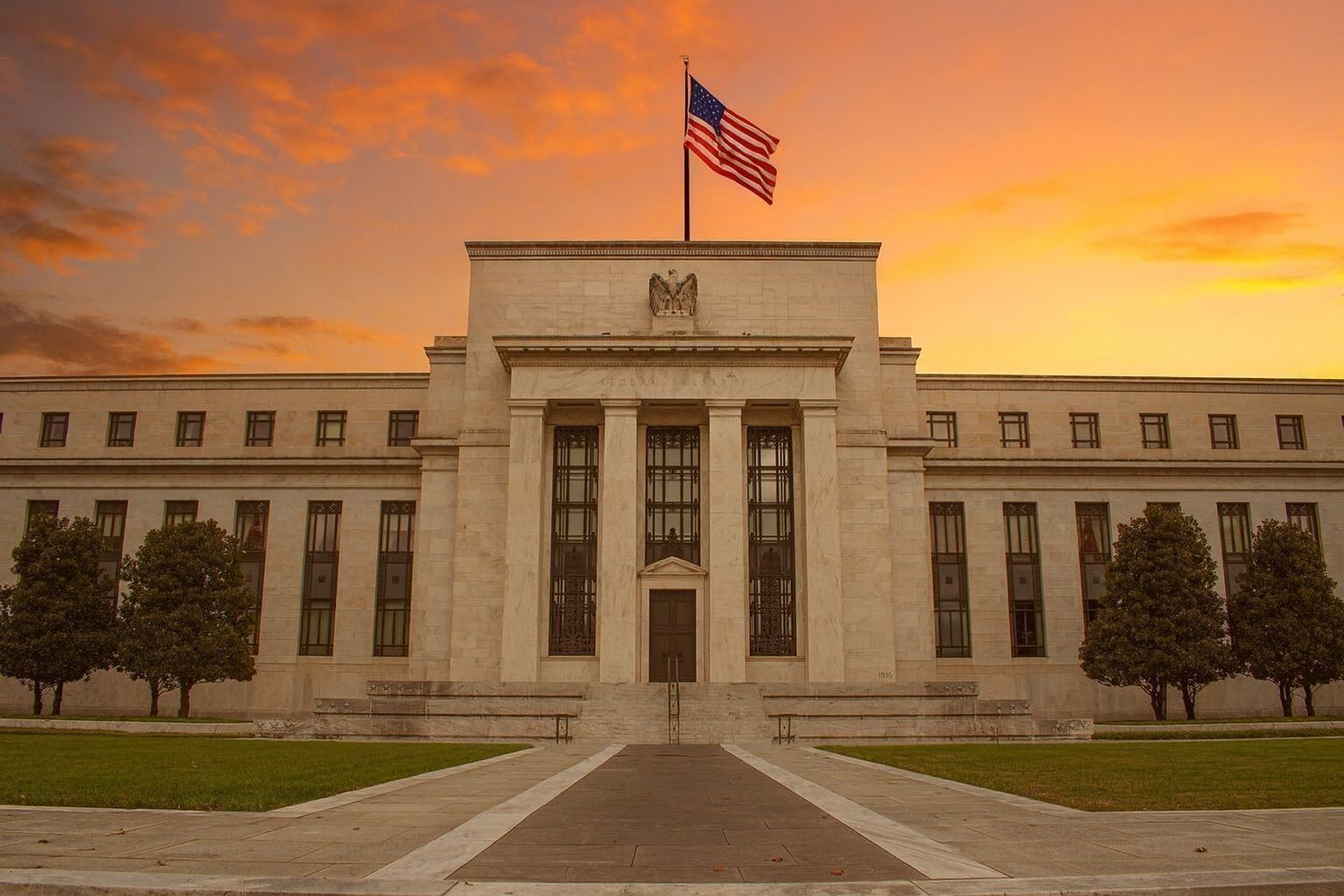
The Federal Reserve has delivered its third consecutive interest-rate cut of 2025, lowering the federal funds target range by 25 basis points to 3.50%–3.75% at its December 10 FOMC meeting.Federal Reserve+1
The move was widely expected but came with an unusually divided vote, a cautious message about inflation, and new projections that point to only one rate cut in 2026. Markets reacted with a modest risk-on move: U.S. stocks edged higher, Treasury yields slipped from intraday highs, and the dollar weakened.Reuters+2Investopedia+2
Below is a full breakdown of what the Fed did, why it matters, and how markets around the world are responding today.
1. What the December 2025 FOMC Actually Decided
The Federal Open Market Committee (FOMC) voted to:
- Cut the federal funds rate by 0.25 percentage points
- Set a new target range of 3.5%–3.75%, down from 3.75%–4.0%
- Deliver its third straight cut following similar moves in September and OctoberFederal Reserve+2Fox Business+2
In its official statement, the Fed described:
- Economic activity: still “expanding at a moderate pace”
- Labor market: job gains have slowed this year and unemployment has “edged up” through September
- Inflation: has “moved up” and remains “somewhat elevated”
- Risk balance: downside risks to employment have risen, prompting a shift in the Fed’s risk assessmentFederal Reserve
Crucially, the statement says the Committee “decided to lower the target range for the federal funds rate by 1/4 percentage point” in light of this shift in risks, but future moves will depend on incoming data and the evolving outlook.Federal Reserve
New projections: higher-for-longer, but no hard landing (for now)
The Fed’s updated Summary of Economic Projections (the “dot plot”) shows:Reuters+1
- 2026 policy rate: median projection of just one additional 25 bps cut
- Growth: real GDP seen rising about 2.3% in 2026, above the Fed’s estimate of trend growth
- Inflation: projected to slow to roughly 2.4% by end-2026, still above the 2% target but moving closer
- Unemployment: expected around 4.4%, a moderate level by historical standards
That combination – slightly higher-for-longer rates, improving growth, and gradually easing inflation – amounts to a soft-landing baseline in Fed models, even though the data are noisy and incomplete due to this autumn’s government shutdown.Reuters+1
2. Why the Fed Is Cutting Again Despite Elevated Inflation
At first glance, cutting rates into rising inflation looks counterintuitive. But several overlapping forces explain today’s decision:
- Tariff-driven price pressure
Fed officials have pointed to new and higher tariffs as a key reason inflation has run above the 2% goal this year, even as the broader economy has cooled.Fox Business+1 - A clearly softening labor market
Job gains have slowed, the unemployment rate has drifted higher, and private indicators suggest parts of the labor market are already in a “rolling recession”, with different sectors weakening at different times rather than all at once.Federal Reserve+2Investopedia+2 - Dual mandate trade-off
Analysts note the Fed is increasingly concerned about a stagflation-like mix: weaker growth + sticky inflation. Cutting rates prioritizes shoring up employment while accepting somewhat elevated inflation in the near term.Investopedia+1 - Data gaps after a 43‑day government shutdown
A historic federal government shutdown in October–November delayed key inflation and jobs reports, forcing policymakers to lean on “available indicators” and private data rather than the usual full slate of official statistics.Fox Business+2Reuters+2
In his press conference, Chair Jerome Powell framed the move as a “balanced” response to a difficult setup: inflation risks still tilted upward, employment risks shifting downward, and no risk-free path for policy.Fox Business+1
3. A Deeply Divided FOMC and a Classic “Hawkish Cut”
Today’s decision wasn’t just about the level of rates – it exposed an unusually wide split inside the Fed.
- The vote was 9–3
- Chicago Fed President Austan Goolsbee and Kansas City Fed President Jeffrey Schmid wanted to hold rates steady
- Fed Governor Stephen Miran argued for a larger 50 bps cutFederal Reserve+2Fox Business+2
Market strategists quickly dubbed the move a “hawkish cut.” Reuters notes that six policymakers placed their dot-plot projections at the pre‑meeting rate level (3.9%), effectively signaling that they didn’t think a cut was appropriate at all, even if they ultimately went along with the consensus.Reuters+1
Commentary from Wall Street highlights:
- The Fed is not embarking on an aggressive easing cycle
- The bar has been raised for additional cuts next year
- The dot plot is more hawkish than market pricing, which still implies two cuts in 2026 rather than the single move signaled by the median Fed projectionReuters+1
In other words, the Fed is easing at the margin but pushing back against hopes for a rapid slide toward near-zero rates.
4. Wall Street’s First Reaction: Stocks Up, Yields Down, Dollar Softer
U.S. equities
As Powell spoke, major U.S. stock benchmarks traded modestly higher:Investopedia+2Bloomberg+2
- Dow Jones Industrial Average: up around 0.9%
- S&P 500: up roughly 0.2%–0.3%
- Nasdaq: near flat to slightly positive after erasing earlier losses
The tone is one of relief rather than euphoria. The cut was fully priced in; what lifted stocks was the confirmation that:
- The Fed is not turning outright hawkish in response to higher inflation
- Policymakers still see growth and earnings holding up into 2026
Bonds and the strange behavior of the 10‑year yield
Bond markets are telling a slightly more complicated story.
- Immediately after the decision, the 10‑year Treasury yield slipped to around 4.17%–4.19%, down a few basis points from just before the announcement.Investopedia+1
- Yet earlier in the day, the same yield had touched roughly 4.21%, its highest level since early September, despite markets being almost certain a cut was coming.Investopedia+1
Investopedia notes that this disconnect – Fed cuts vs. higher long-term yields – likely reflects a mix of:Investopedia
- Concerns about U.S. fiscal deficits and heavy Treasury issuance
- Uncertainty about the economic outlook
- Questions around the Fed’s political independence amid pressure for deeper cuts
For investors, the takeaway is that short-term rates are falling as the Fed cuts, but longer‑term borrowing costs (like 10‑year–linked mortgage rates) may not move in lockstep.
Dollar, gold, oil and crypto
Cross-asset moves around the decision included:Investopedia+1
- Dollar index: down about 0.3%–0.4%, reflecting slightly looser U.S. policy
- Gold: fractionally lower, suggesting markets did not interpret the cut as a dramatic pivot toward inflationary policy
- Crude oil (WTI): up around 0.8%, helped by risk-on sentiment
- Bitcoin: trading near $92,600, marginally below its overnight high
Overall, markets treated the move as supportive but not explosive for risk assets.
5. Global Market Impact: Europe, Asia and Emerging Markets
Because the Fed announced its decision late in the European trading day and after many Asian markets had already closed, the global reaction is unfolding in stages.
Europe: muted ahead of the cut
Before the decision, European equities were mostly subdued:
- The STOXX 600 was off about 0.1%
- Germany’s DAX and France’s CAC 40 fell around 0.3%
- The FTSE 100 was little changedNasdaq+1
Trading desks across the continent framed Wednesday as a “wait and see” Fed day, with volumes thin and directional conviction low. The real test for European markets will come tomorrow, once investors have fully digested Powell’s comments and the dot plot.
Asia: cautious tone, China and Japan in focus
During Wednesday’s Asian session (before the cut was announced):Investing.com+1
- Major Asian indices retreated, weighed down by
- Caution ahead of the Fed
- Underwhelming inflation data from China
- Chinese equities under pressure from persistent deflation concerns, even as some real estate shares bounced on hopes of additional policy support
Given the constructive reaction in U.S. markets after the cut, Asia now looks set for a more positive open in Thursday trade, assuming no negative surprises overnight.
Emerging markets: quietly cheering the Fed
Emerging-market assets had already begun to firm before the decision:
- MSCI EM stocks index: up about 0.33%
- EM currency index: up ~0.1%, recovering from the prior session’s dropReuters
Reuters reports a tone of “cautious optimism” across EM, with investors encouraged by:
- The Fed’s gradual easing bias
- Hopes that a weaker dollar over time could support EM currencies and local bonds
- Signs of progress in Ukraine’s debt restructuring, which helps global risk sentiment at the marginReuters+1
If the dollar continues to trend lower and U.S. yields stabilize, EM assets could be among the big relative winners of a gentle Fed-cutting cycle.
6. What Today’s Fed Move Means for Your Money
Beyond tick‑by‑tick market moves, the Fed’s decision has real‑world consequences for borrowers, savers and homeowners.
Credit cards: still painful, but a bit less so
According to consumer finance experts cited by Reuters:Reuters
- The average APR on a new credit card offer is around 24%, the lowest since early 2023 but still extremely high
- A 25 bps cut barely nudges monthly payments, but cumulative cuts since September could save U.S. households billions in interest over the next year
- Financial planners argue any relief should be used to accelerate debt payoff, not justify new balances
For heavily indebted households, even small cuts can help – especially if they’re combined with consolidation into lower-rate personal loans.
Mortgages and housing
Mortgage rates don’t track the Fed funds rate directly; they follow long-term Treasury yields and inflation expectations. Still, today’s move nudges the outlook in a slightly friendlier direction:Reuters+2Investopedia+2
- 30‑year fixed-rate mortgages are hovering near their lowest levels in over a year, roughly in the low‑6% range
- 15‑year loans are closer to the mid‑5% range
- A sustained decline in Treasury yields could push mortgage rates below 6% in 2026, potentially sparking more refinancing and fresh home‑purchase demand
That could be a double-edged sword: lower rates improve affordability, but they can also reignite demand and keep home prices elevated, especially where supply is tight.
Savers: tougher environment, but still options
Lower rates are bad news for savers stuck in traditional bank accounts:
- The average savings account yield sits around 0.6%, far below inflation and well under money-market or high-yield options
- Top online savings accounts are still paying around 4% or more, which remains attractive in a falling‑rate environmentReuters
Advisers quoted by Reuters suggest savers look to:
- High-yield savings for flexible cash
- Longer-duration CDs or multi-year guaranteed annuities (MYGAs) for those who can lock up funds and want to secure current yields before they drift down furtherReuters+1
Bonds and cash-like investments
Short-maturity cash instruments will feel rate cuts first:
- T‑bills and ultra-short bond funds should see yields tick lower as the Fed continues to ease
- Intermediate‑term bonds may deliver price gains if markets keep expecting more cuts, though they carry interest-rate risk if the Fed changes courseReuters+1
7. What Investors Are Watching Next
Today’s decision settles one big question – would the Fed cut? – but several others are now front and center.
1. Will the Fed really cut only once in 2026?
The Fed’s dot plot points to one further 25 bps cut in 2026, but:
- Futures markets still price in more easing than the Fed is signalingReuters+1
- Economists quoted by Reuters expect at least one more cut in 2026, and some see scope for more if the labor market deteriorates faster than official data currently showReuters+1
This gap between Fed projections and market pricing is a setup for volatility if incoming data surprise in either direction.
2. Data revisions and the “fog of war”
Because of the shutdown-related data delays, both the Fed and Wall Street are operating in a fog of incomplete information:Fox Business+1
- Updated inflation and jobs prints in the coming weeks could dramatically reshape the narrative
- Back‑revisions might reveal the economy was weaker – or stronger – than initially thought, which could justify either faster cuts or a longer pause
For now, the Fed is signaling patience: cuts are possible, but not guaranteed.
3. Global spillovers and 2026 positioning
Major banks’ 2026 outlooks emphasize three themes: uneven monetary policy, the ongoing expansion of AI-related investment, and increasing market polarization between winners and laggards.JPMorgan Chase+2Bloomberg+2
In that context:
- A gently weaker dollar and stable U.S. yields could support EM equities and debt
- Rate-sensitive sectors such as housing, small caps and high-yield credit stand to benefit if financial conditions continue to ease
- However, elevated valuations in U.S. AI and megacap tech remain a source of concern, as Reuters and Bloomberg have noted in their coverage of this week’s tradingReuters+1
8. Key Takeaways from the December 10, 2025 Fed Decision
- The Fed cut rates by 25 bps to 3.50%–3.75%, its third straight cut and the lowest level since late 2022.Federal Reserve+2Investopedia+2
- The FOMC is sharply divided: three dissents, and a dot plot showing several officials never wanted this cut at all.Federal Reserve+1
- New projections flag only one further cut in 2026, a message markets are reading as a hawkish cut rather than the start of an aggressive easing cycle.Reuters+1
- U.S. stocks are modestly higher, Treasury yields are a bit lower than pre‑decision levels, and the dollar is softer, signaling cautious relief.Investopedia+2Bloomberg+2
- Globally, Europe and Asia entered the day in a holding pattern, while EM assets began to firm even before the announcement – positioning that could be rewarded if the dollar continues to drift down.Reuters+2Nasdaq+2
- For households, the cut is incremental but meaningful: slightly lower credit card and HELOC rates, a somewhat brighter refinance outlook, but more pressure on low-yield savings accounts.Reuters+1
As always, none of this is a guarantee of future performance. For individual investors and households, the December FOMC meeting is best seen as one more step in a gradual pivot away from peak rates, not an all‑clear signal. Aligning portfolios and personal finances with that reality – while keeping an eye on upcoming data – will matter more than any single Fed press conference.