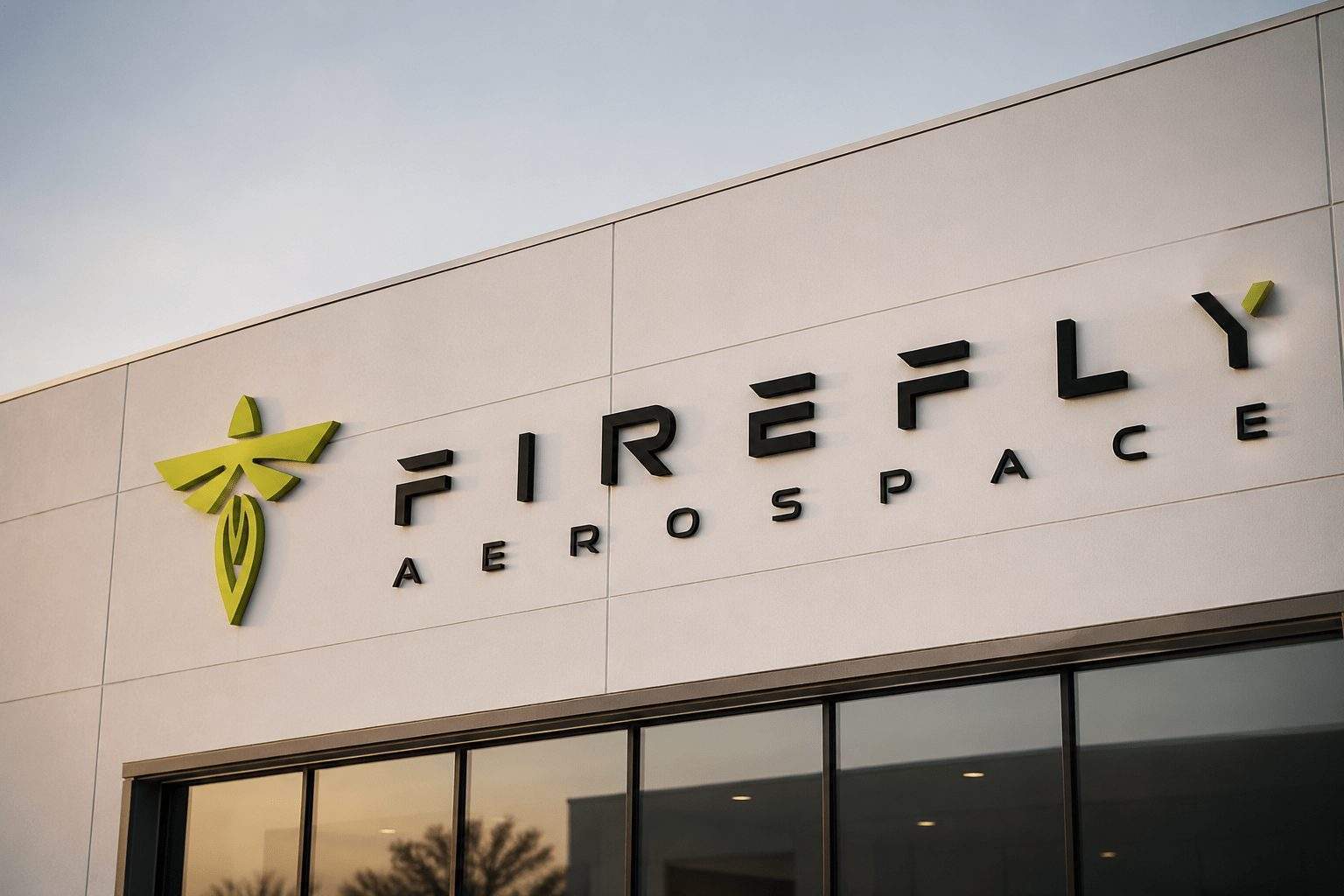

CEDAR PARK, Texas, May 8, 2026, 17:03 (CDT)
Shares of Firefly Aerospace Inc. surged over 22% Friday, sending the Texas-based space-and-defense name close to its $45 IPO mark, not even a year after landing on the Nasdaq. FLY posted at $39.68, a gain of 22.62%, according to late-session figures from Markets Insider.
This shift is getting attention, given that Firefly stands out as one of the rare publicly listed U.S. space companies with links to both lunar projects and national security. Investors are weighing more than just rockets here—Firefly offers launch services, develops lunar landers, and provides space software such as missile-defense data systems.
Firefly booked $80.9 million in first-quarter revenue, a 40% jump over the previous quarter, but still recorded a net loss of $96.7 million. The company left its 2026 revenue outlook unchanged at $420 million to $450 million. CEO Jason Kim pointed to “steady progress” in areas like Alpha Flight 7, Blue Ghost lunar achievements, and a U.S. Space Force demo during the period. Firefly Aerospace
Analyst sentiment shifted after the latest results. On May 7, J.P. Morgan’s Seth Seifman reiterated his Buy on Firefly, sticking with a $40 target. B. Riley jumped in a day before—starting coverage with a Buy and shooting for $60.
The defense segment is in focus. The U.S. Space Force disclosed it’s handing out 20 Other Transaction Authority agreements—meant to attract both established and newer players—across 12 companies, with a potential total value reaching $3.2 billion. SciTec, which is Firefly’s defense software arm, appears on the list along with SpaceX, Raytheon, Northrop Grumman, among others.
David Simenc, president of SciTec, says the deal gives the unit a path to plug its “AI-powered defense technologies” into Golden Dome, the U.S. missile-defense framework. According to Firefly, SciTec brings over 40 years in missile defense, space domain awareness, and national-security software projects. Firefly Aerospace
Morgan Stanley bumped its Firefly price target up to $37 from $33 this week, sticking with an Equal Weight call. Analysts noted that investors are starting to see Firefly as “more than a launch company.” The team pointed to NASA’s Artemis adjustment and some early progress on Golden Dome as potential positives, but cautioned that “technical risk endures.” markets.businessinsider.com
The rivalry remains tough. Rocket Lab posted $200.3 million in first-quarter revenue, with backlog topping $2.2 billion, and disclosed it landed a spot supporting Raytheon’s Space-Based Interceptor project. Firefly operates on a smaller scale, but investors are eyeing whether a blend of launches, spacecraft, and defense contracts will deliver more predictable revenue.
The rally’s done little to change the tough math. As of March 31, Firefly reported $551.6 million in cash and short-term investments in its SEC filing, but there’s still an accumulated deficit of $1.1 billion. The company flagged the risk: government budget holdups or a lengthy shutdown might hit orders, wipe out programs or stall payments. And that backlog—future revenue tied up in contracts—shrinks fast if those deals get cut or reworked.
Firefly’s stock is still trading under its $45 IPO mark from August 2025, the month it moved 19.3 million shares ahead of its Nasdaq debut as FLY. Friday’s rally gives management some breathing room with investors, though the road ahead gets murkier: launch pace, lunar targets, defense contracts, and burn rate all loom.