
NEW YORK, June 10, 2026, 11:48 (EDT)
• Ford was off 3.2% late Wednesday morning. The stock earlier hit a session high of $15.24.
• Novelis reported its Oswego, New York, hot mill is running again, which matters for Ford’s F-Series pickup, since it uses a lot of aluminum. Novelis
• Investors are now watching how fast the restart scales.
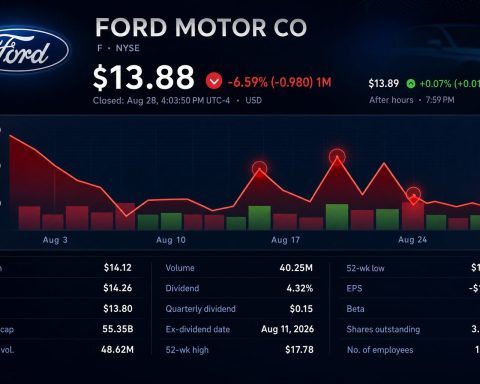
Ford Motor shares slipped on Wednesday. The stock popped at the open, but sellers took over fast. Ford was last at $14.47, down $0.48, or around 3.2%. It opened at $14.77, got as high as $15.24 earlier, but faded later. Even as the supplier snag for the F-150 is clearing, the stock keeps taking hits.
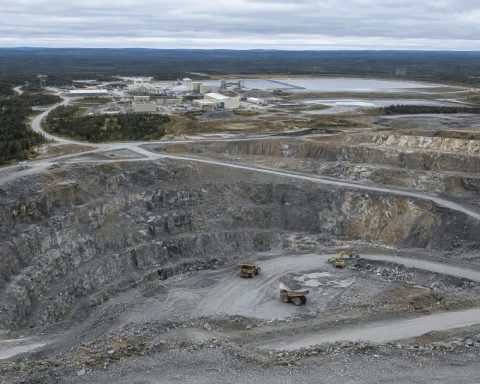
Novelis got its Oswego plant’s hot mill running again, the company said Wednesday, after fire damage kept it down for months. “Restarting the Oswego hot mill is an important step forward for our operations and, most importantly, for our customers,” President and CEO Steve Fisher said. Novelis
Market response signals the restart isn’t the full answer. Ford’s 2026 guidance bakes in recovery from the Novelis hiccup, so investors want to see proof that plant supply can come up quick enough to help F-Series output and bring down stopgap sourcing costs. Novelis said it’s working with customers to raise supply now with the hot mill running.
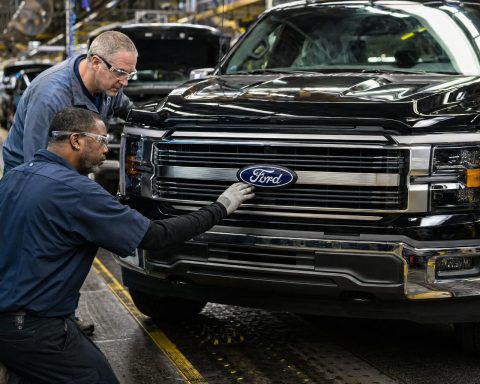
Ford counts on the Oswego plant more than other automakers since the F-Series line uses aluminum for its bodies. Reuters said the site is crucial for Ford’s F-150 pickups. Novelis also ships material to General Motors and Stellantis.
Novelis reported two fires at its Oswego facility on September 16 and November 20, 2025. No injuries were reported. Ford later said the supply issues hurt both its output and bottom line. Ford cut its 2025 profit outlook and warned of a potential $2 billion charge because of bottlenecks, Reuters said.
Ford pointed investors to the back half of the year in its first-quarter 10-Q. The automaker said it looks to “partially recover” lost output during the second half of 2026. Its forecast counts on a net $1 billion gain from the Novelis recovery, which factors in $1.5 billion to $2 billion in temporary expenses like tariffs. SEC
Ford kept its full-year profit outlook steady. The automaker still sees adjusted EBIT coming in between $8.5 billion and $10.5 billion. That’s earnings before interest and taxes. Ford also held its forecast for adjusted free cash flow at $5 billion to $6 billion.
Recent sales numbers show why there’s doubt. Ford’s U.S. vehicle sales dropped 13.6% in May from a year ago. F-Series sales slid 13.3% for the month and are down 15.1% year to date. At the end of May, Ford reported 183,900 F-Series units in U.S. gross stock.
It’s not just Ford feeling it. GM shares fell roughly 5.3%, while Stellantis’ U.S. shares dropped about 5.0% around the same stretch. That move made clear investors weren’t reading the Novelis restart as a straight lift for auto stocks.
Ford linked its aluminum supply issues to results in its first-quarter filing. Ford Blue took a hit from higher sourcing costs, tariffs connected to the disruption, and higher commodity prices, which wiped out a one-off tariff benefit. At Ford Pro, weaker Super Duty wholesales were partially due to the aluminum problem.
“Back online” may not mean a fast turnaround. Ford’s guidance leaves out impacts from a drawn-out Middle East conflict, a major U.S. slowdown, or future tariff swings, and it’s already factoring in commodity headwinds just over $2 billion, mostly from higher aluminum costs. A slower Oswego ramp, sticky aluminum prices, or continued weak demand after May could eat into the second-half rebound investors expect. SEC
Oswego’s restart is out there. The market has the headline, but the key test is if Ford’s F-Series inventories, production numbers and temporary costs reflect it. Real proof will be in Ford’s monthly sales and when the company posts its next earnings.
Related articles: NYSE:F