
London, May 22, 2026, 08:58 BST
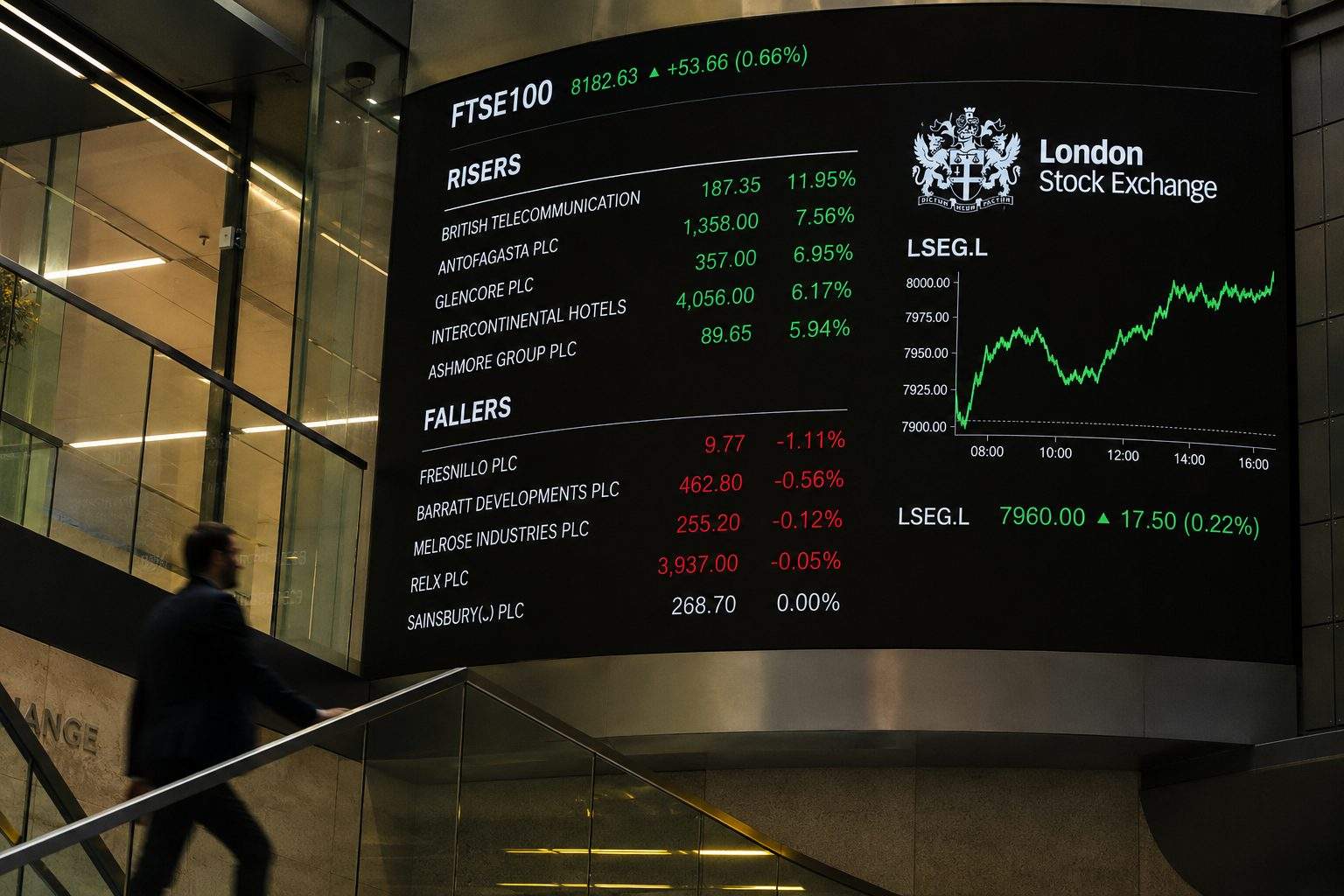
- FTSE 100 gains 0.37% just after the open in London. FTSE 250 up 0.52%.
- April retail sales dropped 1.3%, and public borrowing reached £24.3 billion.
- Europe got a lift from Middle East peace hopes, but the UK still faces growth and fiscal risks.
FTSE 100 opened higher on Friday, getting support from BT, Compass and 3i. Investors picked up UK stocks, betting on advances in U.S.-Iran talks, though new data pointed to softer demand in Britain.
London’s main blue-chip index put on 38.41 points, or 0.37%, hitting 10,481.88. The FTSE 250 traded up 119.27 points, or 0.52%, at 23,067.19. BT climbed 3.74%. Compass was up 2.60%, and 3i added 2.27%. On the downside, ConvaTec, BP and Barratt Redrow slipped.
FTSE 100 barely moves after data, peace-talks keep traders cautiousThe move comes just a day after the FTSE 100 finished almost unchanged, with traders weighing peace-talk news against weaker UK economic data. On Thursday, the FTSE 100 added 0.1% to close at 10,443.47. The FTSE 250 was up 0.5%.
Europe helped London get a stronger open. The STOXX 600 moved up 0.5% to 623.79. Germany’s DAX added 0.7%. Investors were looking at reports that U.S.-Iran talks had made progress, with gaps narrowing. Reuters reported key sticking points remain over Iran’s uranium levels and controls over the Strait of Hormuz, a main shipping route for energy.
The UK tape was not clean.
UK retail sales volumes dropped 1.3% in April from March, the biggest monthly fall in almost a year. Economists expected a 0.6% drop, according to a Reuters poll. Fuel volumes slipped after stockpiling in March. April sales were flat year-on-year. Samuel Edwards at Ebury said cost-of-living worries tied to the Iran conflict, higher mortgage rates and household budget pressure are “weighing heavily on consumer confidence.” Reuters
Public finances weighed on things again. The Office for National Statistics reported public sector borrowing at £24.3 billion for April, up £4.9 billion from last year and £3.4 billion over the Office for Budget Responsibility’s forecast. Debt interest hit £10.3 billion, the highest for April since records began without adjusting for inflation.
Gilts remain in the spotlight. Rising UK government bond yields push up government borrowing costs and can put pressure on equity valuations, especially for builders, retailers, and other stocks that are sensitive to rates.
Ruth Gregory at Capital Economics called the UK’s public finances “fragile.” Rob Wood, chief UK economist at Pantheon Macroeconomics, said “tax hikes to fund spending plans could undermine growth.” Reuters
UK business activity slipped in May, according to Thursday’s purchasing managers’ index. The S&P Global flash UK Composite PMI came in at 48.5, down from 52.6 in April, dipping below the 50 mark for the first time since April last year. Readings under 50 show contraction. Chris Williamson, chief business economist at S&P Global Market Intelligence, said it’s a “perfect storm” as politics and fallout from Middle East conflict weigh on firms. Companies in the survey reported “falling output, surging inflation, supply shortages and job cuts.” S&P Global
The split in the market stands out. Big overseas earners and a handful of defensives still have room to gain if global risk appetite holds, the pound stays weak and hopes for peace persist. Domestic-focused stocks face more pressure if consumers cut spending again.
Friday’s bounce could run out fast. If Iran talks break down, oil jumps, or gilt yields climb again, markets may give up gains. Investors may also react if weak UK data hits and they have to factor in slower growth along with tighter fiscal measures.
London is in the green for now. Gains are small and traders aren’t sure it will last.