
NEW YORK, May 7, 2026, 15:02 EDT
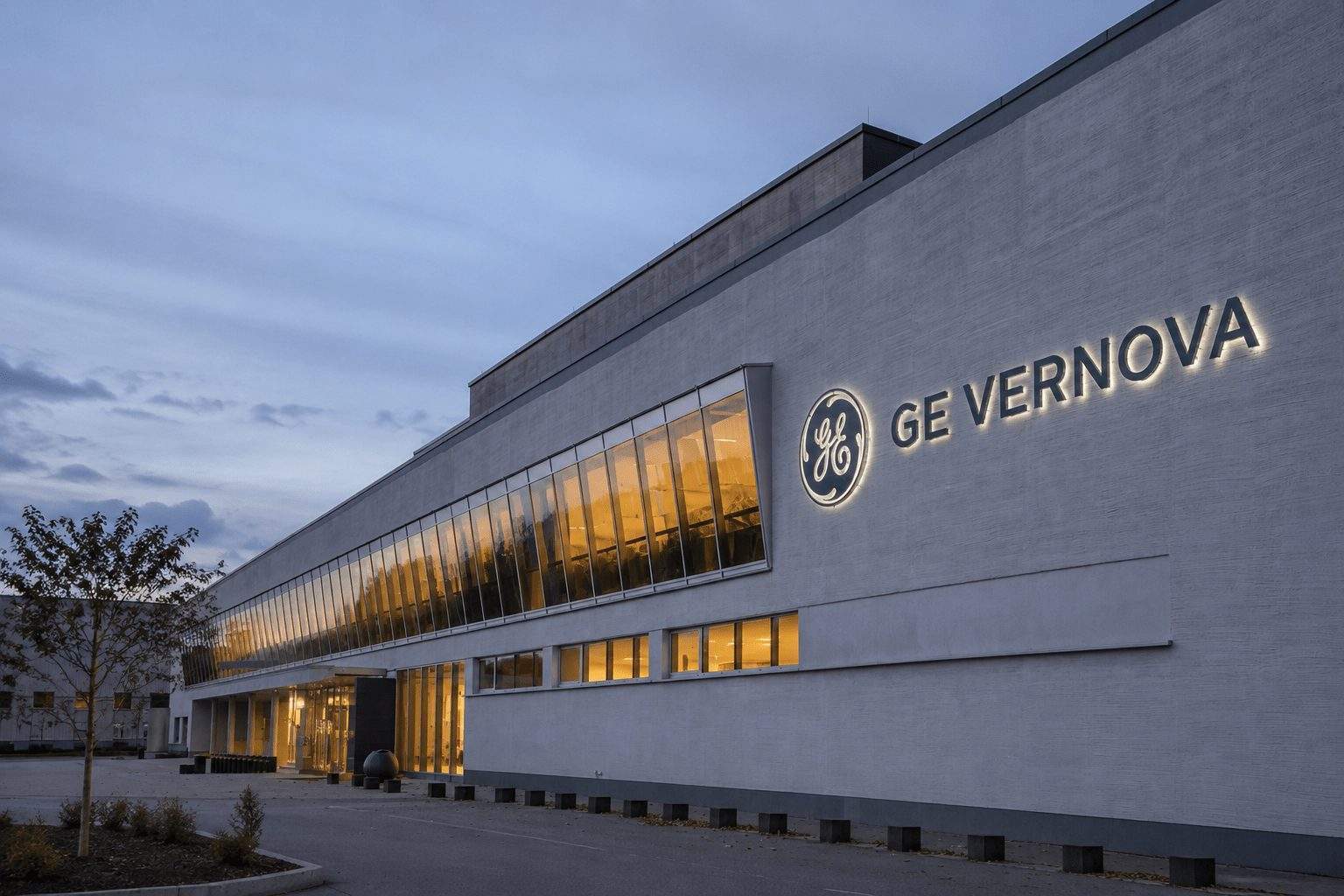
Shares of GE Vernova Inc. slipped in Thursday afternoon trading, pulling back from their recent surge as one of Wall Street’s standout AI-power names. The stock traded at $1,048, off $70.96 from Wednesday’s close. Earlier, it kicked off at $1,107.81 and hit $1,122.30 before turning lower, according to market data.
This shift carries weight: GE Vernova is trading way past the confines of its old industrial-equipment narrative. Shares have logged three consecutive gains through Wednesday, according to MarketWatch, finishing at $1,118.96. That’s still beneath the 52-week high set on April 23—$1,181.95.
A fresh catalyst: a Texas power proposal tapped into the surge from artificial intelligence. On May 5, Blue Energy and GE Vernova announced plans to develop a 2.5-gigawatt project combining nuclear and natural gas, deploying GE Vernova Hitachi Nuclear Energy’s BWRX-300 small modular reactor—a compact, repeatable design—together with GE Vernova’s gas turbines.
AI’s hunger for electricity is running into hard limits. According to Reuters, the biggest U.S. data center operations dedicated to AI are pulling upwards of 1 gigawatt each—power for as many as 850,000 homes. But with turbine supply tight, grid upgrades dragging, and red tape slowing new connections, expansion is getting squeezed.
The companies are pitching the project as a way to get moving quickly: gas up front, nuclear to follow. Eric Gray, GE Vernova’s Power chief, suggested that combining HA gas turbines with the BWRX-300 should speed up “time to power.” According to World Nuclear News, the firms have inked a slot reservation agreement to secure manufacturing and delivery slots for two 7HA.02 gas turbines set for 2029. World Nuclear News
GE Vernova turbines are expected to start sending roughly 1 gigawatt to the site by 2030, with Blue Energy aiming to boost that to 1.5 gigawatts from BWRX-300 nuclear reactors if they’re running by 2032. The company intends to supply electricity to a data-center campus in the area, Investing.com reported.
First-quarter figures from GE Vernova turned some heads: orders jumped to $18.3 billion, a 71% organic increase, with gas-power backlog and slot reservations now at 100 gigawatts. The electrification unit logged $2.4 billion in data-center equipment orders—already topping last year’s total.
GE Vernova bumped up its 2026 revenue and margin targets in April, saying stronger demand from data centers and grid infrastructure was the driver. The company is now looking for 2026 revenue between $44.5 billion and $45.5 billion, and it’s aiming for an adjusted EBITDA margin—earnings before interest, taxes, depreciation and amortization—of 12% to 14%.
Competitors are riding a similar wave. In April, Siemens Energy bumped up its 2026 forecast after a surge in data-center demand drove new orders. Over the last 12 months, Siemens Energy, Mitsubishi, and GE Vernova have each rolled out plans to ramp up gas-turbine production, Reuters Events reported.
The Texas project, though, isn’t close to producing power. Before anything happens, it needs a final investment decision—scheduled for 2027. There’s also the matter of a construction permit from the U.S. Nuclear Regulatory Commission, not to mention turbine deliveries, groundwork, and reactor building that all have to line up. In its latest quarterly filing, GE Vernova pointed to plenty of hurdles: supply chain snarls, factory limitations, rising costs, and the mountain of required approvals and permits.
Investors are left juggling two awkwardly paired realities. Order books fill up—demand is solid. But actually delivering on those orders? That’s a slower, messier, and much tougher trade to make.