
NEW YORK, April 29, 2026, 13:02 (EDT)
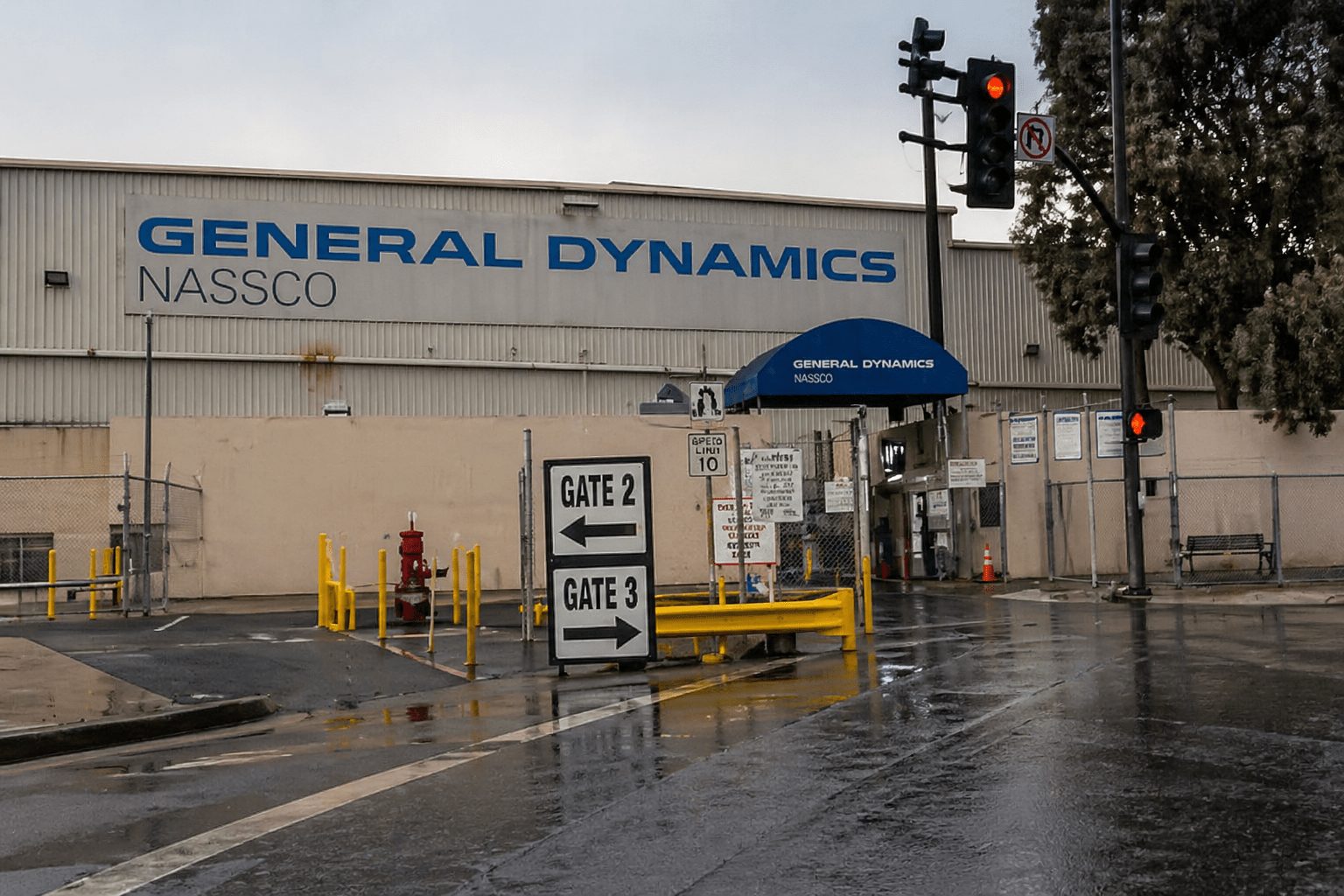
Shares of General Dynamics Corporation surged 10.9% to $347.72 in New York afternoon action after the company reported stronger-than-expected quarterly profit and revenue, prompting it to lift its 2026 earnings guidance. The defense contractor now projects full-year EPS between $16.45 and $16.55, up from the previous outlook of $16.10 to $16.20.
Timing’s key here. Defense-focused investors want more than big order backlogs—they want to see those translate into actual production, real cash, and fatter margins, not just long-range plans. General Dynamics is right in the spotlight: its Electric Boat division cranks out Virginia- and Columbia-class subs. Meanwhile, Reuters noted the Pentagon’s fiscal 2027 budget request puts $65 billion toward shipbuilding.
The move was notable in a defense sector showing mixed results. According to Barron’s, Lockheed Martin and Northrop Grumman both saw declines after their reports, so the response to General Dynamics stood out—investors took its quarter as clearer than those of its rivals from Reston, Virginia.
General Dynamics turned in first-quarter operating earnings of $1.4 billion, translating to $4.10 per diluted share, as revenue climbed to $13.5 billion. That’s a 10.3% gain on the top line compared with the same period last year. Both operating profit and diluted EPS increased 12%, according to the company.
The company submitted its 8-K to the U.S. Securities and Exchange Commission on Wednesday, detailing results for the quarter ended April 5. The earnings release was included as an exhibit in the filing.
Chief Executive Phebe Novakovic described the quarter as “a very good start,” pointing to “excellent cash conversion” — evidence the company was not simply logging sales but actually turning those deals into cash. General Dynamics reported $3.7 billion in cash and equivalents at quarter’s end. General Dynamics
Orders came in at $26.6 billion. The company’s book-to-bill was 2-to-1, so orders landed at roughly double the quarter’s revenue. Backlog climbed to $130.8 billion, reflecting work on the books but not yet delivered. Including options and other potential contracts, estimated contract value hit $188.4 billion.
The biggest push came from Marine Systems, where revenue jumped 21% to $4.34 billion, as Virginia- and Columbia-class sub programs picked up steam. Aerospace booked an 8% gain to $3.28 billion, landing a 15% operating margin. Combat Systems and Technologies followed—up 5% and 4%, respectively—according to company presentation materials.
President Danny Deep called the quarter “very powerful” on the call, noting Gulfstream handed over 38 jets—the most the company has ever delivered in a first quarter. Aerospace operating earnings hit $493 million, boosted by higher deliveries, increased services revenue, and improved margins. Investing.com
Cash flow numbers gave the stock a further boost. Operating cash flow landed at $2.2 billion, with free cash flow coming in just under $2 billion after capital expenses. Chief Financial Officer Kim Kuryea noted that business units outperformed their own internal cash-flow targets. However, capital spending looks set to climb over the year as General Dynamics pours more into its shipyards.
Risks remain. Deep noted that late in the quarter, aerospace order activity took a hit from the Middle East conflict. If tensions continue, General Dynamics may face a “small impact” related to Gulfstream G280 supply and labor issues. He also pointed out that single-source suppliers are still tripping up the Marine Systems supply chain, which needs steadier momentum. Reuters
Buybacks are still touchy. Deep pointed out that, in this political climate, repurchases haven’t picked up steam. The company handed out about $405 million in dividends for the quarter and spent close to $200 million on stock buybacks, mostly to offset dilution.
This wasn’t only about Gulfstream, Deep emphasized. The upgraded guidance captured momentum across Aerospace and Marine Systems, plus a lift from Technologies. A better back half remains on the table, contingent on stable production and supply chains. The market liked what it heard: a trifecta of stronger earnings, brisker order flow, and cash beating expectations.