
NEW YORK, August 25, 2026, 07:14 EDT — U.S. equity premarket trading saw heightened activity.
- Kit Harington is set to take over the role of Gilderoy Lockhart from Nicholas Hoult in the second season of HBO’s Harry Potter series.
- The first season debuts on Christmas Day, with production on season two beginning this fall.
- Warner Bros. Discovery’s streaming division generated over $3 billion in revenue for the second quarter, alongside $512 million in adjusted EBITDA.
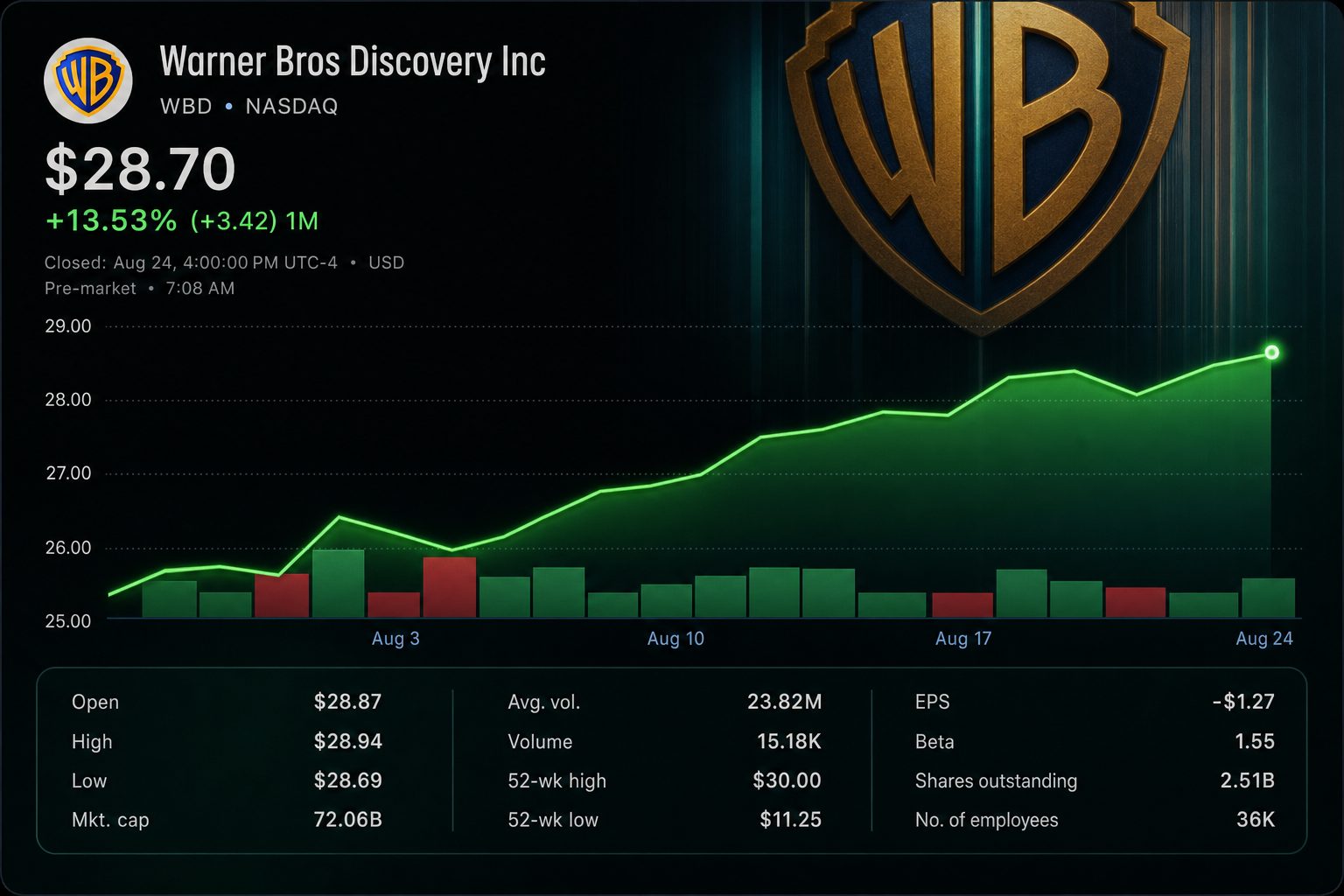
- WBD was last at $28.78 ahead of the open, putting the stock within 2% of the most recent consensus analyst target.
Warner Bros. Discovery NASDAQ:WBD has addressed a key casting vacancy in its major upcoming streaming series. Kit Harington is set to portray Gilderoy Lockhart, stepping in after Nicholas Hoult exited due to scheduling issues. Filming for the second season is scheduled to start this fall.
The change is significant as Harry Potter is planned as a two-season project, rather than a single-night event. This lessens one execution risk ahead of the first season’s debut on HBO and HBO Max on December 25.
Harington provided the voice of Lockhart in Audible’s latest full-cast production. “It was a really simple yes, because I love the character,” he told Variety. This ongoing involvement could reduce the amount of preparation needed for a key role in the sequel.
The financial evaluation gets underway sooner. Warner Bros. Discovery stated that Harry Potter marketing expenses will be concentrated at the start of the fourth quarter. Executives anticipate these costs will drive quarterly margin fluctuations.
| Streaming measure | Q2 2026 | Investor read-through |
|---|---|---|
| Revenue | Above $3.0 billion | First time exceeding this level |
| Adjusted EBITDA | $512 million | An increase of 63% excluding FX impacts |
| Adjusted EBITDA margin | Close to 17% | Short of long-term target above 20% |
| Ad-supported subscriber share | Roughly 40% | Grew 11% from a year earlier |
This results in a straightforward investor scorecard. Harry Potter needs to attract more subscribers, maintain engagement, and increase advertising returns. Merchandise and experiences provide an additional revenue stream.
Management anticipates that the series will drive higher demand for Harry Potter-related consumer goods and attractions. The franchise currently brings in roughly $5 billion in yearly revenue through both proprietary and third-party channels.
Much of the immediate upside is already reflected in the market price. WBD traded at $28.78 as of 07:14 EDT, rising 0.28% in premarket action. The company’s market capitalization reached $72.1 billion, only 4% shy of its 52-week high at the previous close.
| Analyst | Firm | Rating | Target | Date |
|---|---|---|---|---|
| Joseph Bonner | Argus Research | Buy | $31.00 | Aug. 17 |
| Laurent Yoon | Bernstein | Hold | $27.75 | Aug. 14 |
| Sean Diffley | Morgan Stanley | Hold | $29.00 | Aug. 10 |
| Doug Creutz | TD Cowen | Hold | $26.00 | Aug. 7 |
Analysts expect only modest independent gains. Of the 10 present ratings, eight are holds. The Lockhart recast maintains the timeline, though it does not remove the risk to the deal.
On Monday, California’s attorney general halted settlement discussions regarding Paramount Skydance’s planned takeover. Shares of WBD advanced over 1% in the session, suggesting investors still prioritize the transaction’s value.
Warner Bros. Discovery posted second-quarter revenue of $8.7 billion, a 12% decrease ex-FX. Streaming gains helped counter declines at the studio and linear networks. Free cash flow totaled $572 million, with net debt close to $30 billion.
Risks: Maintaining casting continuity does not assure ongoing audience interest. Delays in production, diminishing enthusiasm for the franchise, an expensive debut, or legal challenges related to mergers could outweigh potential gains from the recasting.
The following evidence is set to appear next. Filming for season two begins this fall, while season one is scheduled to debut at Christmas. Afterward, management needs to demonstrate that audience interest leads to profitable retention.
Related articles: NASDAQ:WBD