
NEW YORK, May 7, 2026, 11:06 (EDT)
- Investors poured $6.6 billion into global physically backed gold ETFs in April, snapping a streak of outflows from March. Total assets climbed to $615 billion, according to the World Gold Council.
- GLD hovered close to $437 Thursday as spot gold climbed for a third straight day, driven by optimism over possible U.S.-Iran peace.
- Now, the conversation has moved away from gold as just an inflation hedge—it’s become a question of diversification, fund flows, and crowding risk.
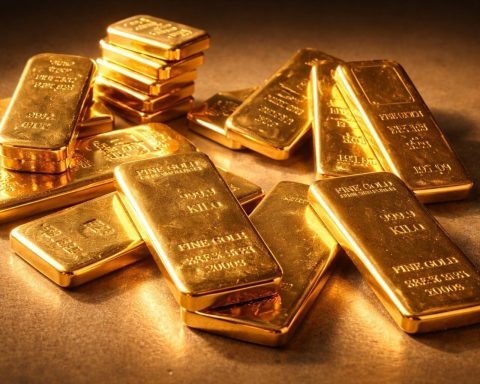
Physically backed gold ETFs worldwide, which hold actual bullion and trade similarly to stocks, drew investor flows again in April. SPDR Gold Shares (GLD) found itself under scrutiny following a sharp rally and a swift drop in bullion prices. According to the World Gold Council, these funds attracted $6.6 billion in new money last month, as gold prices rebound on renewed optimism for a possible U.S.-Iran peace agreement.
The trade is being tugged in two directions right now. Gold’s getting a boost from softer oil prices and a weaker dollar, yet those same signs of easing inflation pressure highlight the puzzle: why are investors still shelling out for an asset with no yield? As of 9:08 a.m. EDT, spot gold climbed 1.1% to $4,740.42 an ounce; U.S. gold futures added 1.2%, reaching $4,749.20, according to Reuters.
GLD, the biggest U.S. gold ETF, last traded at $436.79 after touching a session peak of $436.92. State Street reported $156.3 billion in GLD assets under management as of May 6, and a 0.40% gross expense ratio. Given its scale, shifts in fund flows are closely watched across the bullion market.
April’s rebound stretched well beyond the U.S. According to the World Gold Council, global ETF assets ticked up 1% to $615 billion, with total holdings reaching 4,137 tonnes. Europe pulled in $3.7 billion, Asia brought in $1.8 billion, and North America saw $1 billion in new flows. AUM—assets under management—refers to the total value overseen by a fund or group.
The bullish argument is ambitious. Seeking Alpha’s Zoltan Ban, in a May 5 piece, put a buy rating on GLD and floated a $12,000-per-ounce target for gold by decade’s end. He pointed to central bank accumulation, fiscal shortfalls, echoes of the post-COVID surge, and a drawn-out Iran crisis. Ban noted a personal long position in GLD.
In the short run, some desks aren’t capping prices here. Bob Haberkorn, senior market strategist at RJO Futures, told Reuters he sees gold making a run at “$5,000/oz” if the ceasefire sticks and the Strait of Hormuz reopens. TD Securities, in its note, pointed to $5,200 as a possible target once conflict eases and oil-driven inflation cools off. Reuters
Pushback has grown more intense since earlier in the rally. Rob Isbitts, a Barchart columnist, told investors banking on gold ETFs as an inflation hedge to “check your math.” He says the real value in GLD is as “a diversifier,” not a pure inflation play. Isbitts called out GLD’s quick jump from about $300 to $500 over five months, then its slide back toward $400, noting a soft patch in the percentage price oscillator—a technical momentum signal. Barchart.com
Newser’s market-analysis page took a look at GLD through the lens of post-rally crowding and risk-reward, rather than just price direction. The piece examined how the debate has shifted now that gold’s two-year rally has lost momentum, adding to a string of investor-focused commentary that sidesteps the usual gold-up-or-down question to ask who’s already positioned in the trade.
Competition is in play here. BlackRock’s iShares Gold Trust (IAU) charges a 0.25% sponsor fee, with net assets standing at $72.9 billion as of May 6. State Street’s SPDR Gold MiniShares Trust (GLDM) comes in cheaper, with a 0.10% gross expense ratio and $31.7 billion in assets. abrdn’s Physical Gold Shares ETF (SGOL) posts a 0.17% net expense ratio.
There’s a chance the macro picture could flip again. According to Reuters, Iran was still going over a U.S. proposal that leaves nuclear-program issues unresolved. Oil markets might move if the Strait of Hormuz faces any disruption. “Not completely out of the woods,” said Peter Grant, vice president and senior metals strategist at Zaner Metals—he expects the market to keep reacting to news from the Middle East. Reuters
Investors are now eyeing the May 8 U.S. employment report for clues on where the Federal Reserve might steer interest rates next. Over in China, the central bank extended its gold buying spree to 18 consecutive months in April, a move that keeps official-sector demand in focus. Meanwhile, ETF holders are left weighing if the quick gains in GLD are already behind them.
So far, the latest fund-flow numbers back up the idea that gold demand is holding steady. What’s less clear: is GLD still a bargain hedge against turmoil, or has it just turned into a crowded momentum play with a safety label?
Related articles: Gold