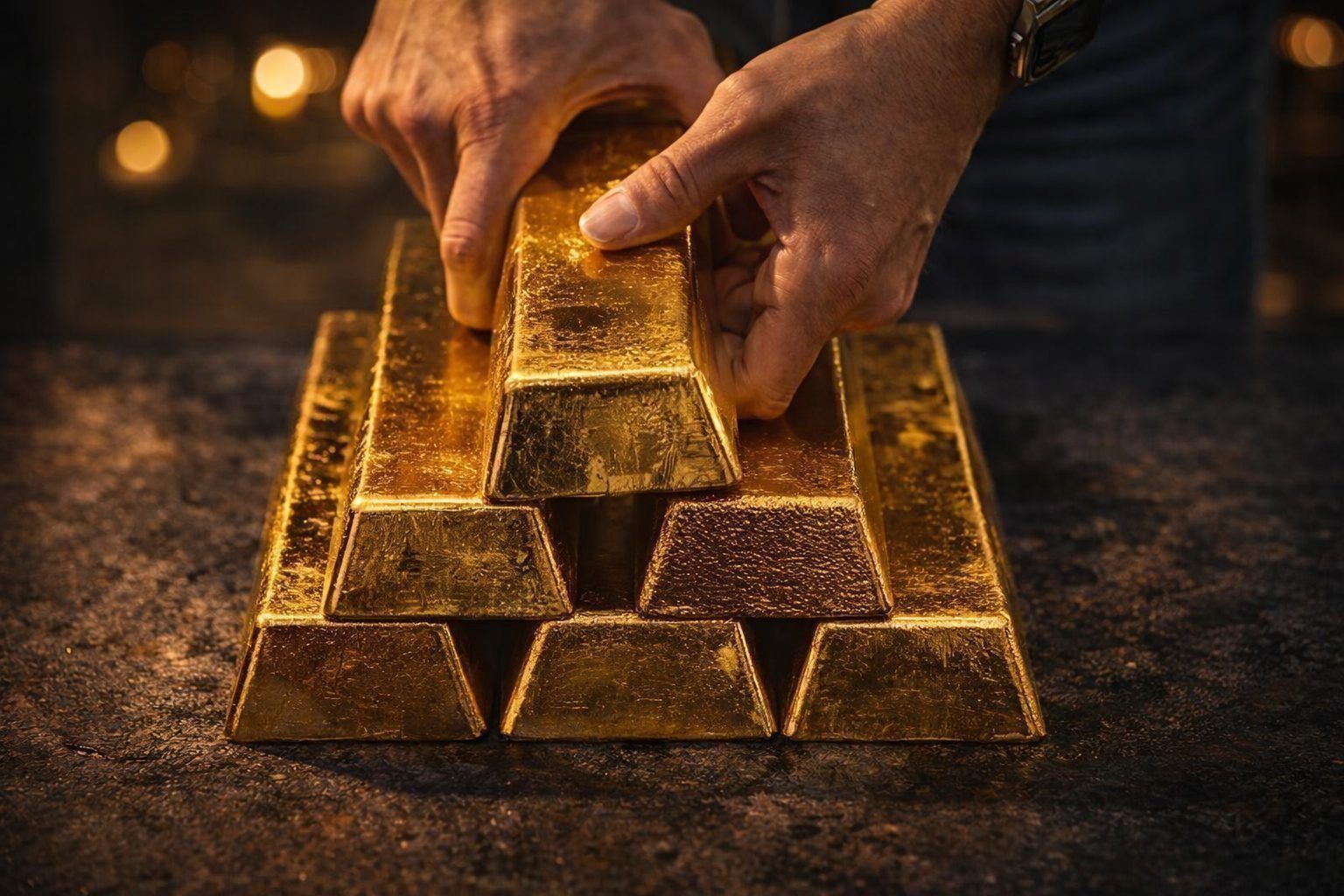
Gold prices steadied near a seven-week peak on Dec. 12, 2025 as the U.S. dollar softened after the Fed’s divided rate cut, while silver surged to a new all-time high above $64.
Gold and silver are ending the week with renewed momentum, as traders and investors recalibrate expectations for U.S. interest rates after a divided Federal Reserve delivered a quarter-point cut and signaled caution about what comes next. On Friday, December 12, 2025, gold hovered near multi-week highs—supported by a softer dollar—while silver pushed to a fresh record above $64 an ounce before easing back, extending what has become one of the most dramatic commodity rallies of the year. Reuters+1
The price action reflects a powerful mix of forces: lower policy rates, a market still pricing in more easing than the Fed’s own projections suggest, and—especially for silver—tight supply dynamics colliding with industrial demand that continues to surprise to the upside. Reuters+2Reuters+2
What happened today: gold steady-to-higher, silver sets a new all-time high
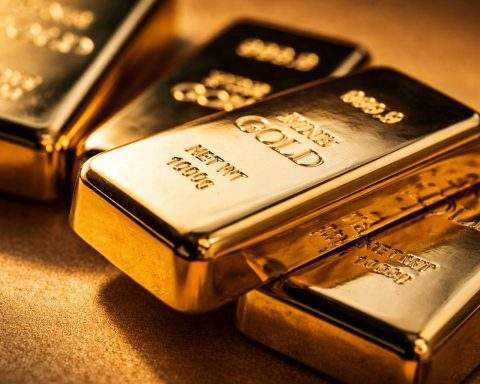
By late morning in the U.S., spot gold was trading above $4,300 per ounce, up on the day and tracking a solid weekly advance, as the dollar stayed near recent lows following the Fed’s move. Reuters
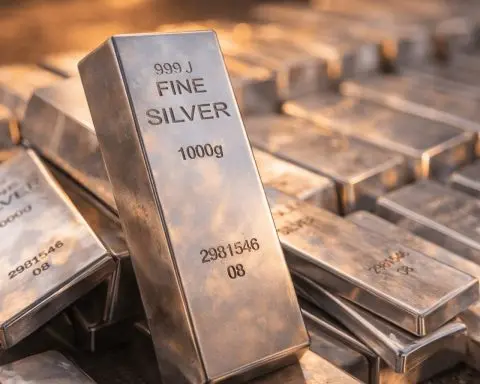
Silver, meanwhile, stole the spotlight again: it surged to a new record high of $64.64/oz on Friday before pulling back, underscoring both the strength—and the volatility—of the rally. Reuters
Other precious metals joined the move. Reuters reported platinum climbing to a 14-year peak, with palladium also firmer on the week—another sign that the bid has broadened beyond gold alone. Reuters
Earlier in the global trading day, Reuters also described gold “clinging” to a seven-week high as investors weighed the Fed’s trajectory, while silver remained close to record territory—an indication that strength persisted across time zones as markets moved from Asia into Europe and the U.S. Reuters
The main catalyst: a split Fed cut—and a message that wasn’t as dovish as markets hoped
The Fed’s latest cut brought the benchmark policy rate down to 3.50%–3.75%. But the bigger story wasn’t simply the cut—it was the depth of disagreement inside the central bank and what that implies for 2026. Reuters
According to Reuters, the decision drew three dissents. Two policymakers preferred leaving rates unchanged, while another argued for a larger reduction—an unusual split that highlights how uncertain the path ahead has become. Reuters
The Fed also adjusted language in its statement in a way Reuters noted has historically been used to signal a pause, even as markets remain inclined to bet that easing will continue. Reuters
That tension—between what the Fed is projecting and what traders are pricing—has mattered directly for gold and silver this week:
- The Fed’s projections point to a slower pace of cuts.
- Markets continue to price in more easing than the central bank’s median forecast. Reuters+1
This divergence helps explain why gold can rise even when the message is “cautious”: as long as investors believe rates are still headed lower overall, the opportunity cost of holding non-yielding bullion tends to fall.
Why the U.S. dollar matters so much for gold
Gold is priced in dollars globally, so currency moves can quickly amplify—or dampen—bullion swings. This week, a weaker dollar has been an important tailwind.
Reuters linked the current support for gold to a softer U.S. dollar following the Fed decision, making dollar-priced gold cheaper for non-U.S. buyers. Reuters+1
That’s the same underlying dynamic highlighted in the Wall Street Journal’s framing, which pointed to dollar weakness as a key support factor as gold remained on track for weekly gains. Wall Street Journal
Silver’s rally is different: this is not just a “safe-haven” story
Gold often responds most directly to real rates, the dollar, and macro uncertainty. Silver can do that too—but it has an extra engine: industrial demand.
On Dec. 12, Reuters described silver’s surge as being driven by:
- tightening inventories
- sustained industrial demand
- and its inclusion on the U.S. critical minerals list Reuters
That last point is especially notable because it connects silver to policy and strategic supply considerations—not merely investment flows.
Silver is now officially on the U.S. “critical minerals” list
The U.S. Geological Survey announced in November that the final 2025 critical minerals list added 10 new minerals, including silver. USGS
That designation doesn’t automatically change supply overnight, but it signals heightened strategic attention—potentially influencing stockpiling behavior, recycling efforts, substitution research, and longer-term supply chain policy.
The “silver is the new gold” narrative is going mainstream
The Financial Times captured just how far the narrative has spread: silver’s surge has been so sharp that Germany postponed issuing certain collector coins, because the metal value rose above face value—an anecdote that reflects the real-world impact of the price move. Financial Times+1
The FT also flagged a mix of industrial pull (including demand tied to advanced manufacturing) and speculative behavior, warning that silver’s history includes periods of extreme volatility. Financial Times
A reality check from Asia: record prices are cooling physical demand
Even as global prices rise, the physical market can push back—especially when consumers face sticker shock.
A separate Reuters report on Asian physical gold trade found demand weakened in key hubs this week:
- In India, discounts widened as local prices hit records, with traders reporting weaker wedding-season footfall and buyer resistance at elevated levels. Reuters
- In China, Reuters described demand as muted amid volatility and high spot prices, with bullion trading at discounts in some cases and premiums in others, reflecting a mixed market. Reuters
Reuters also pointed to a policy factor weighing on Chinese retail demand: a VAT adjustment tied to certain gold purchases through Shanghai exchanges that increased costs for jewelers. Reuters
This matters because strong investment flows can lift futures and spot prices quickly, but sustained rallies often need either:
- steady physical buying, or
- persistent tightness in supply, or
- continuing macro tailwinds (like a weakening dollar and falling yields)
Right now, gold appears to be leaning more on the macro tailwind, while silver has both macro support and industrial/supply fundamentals in its corner.
Miners, funds, and “risk-on” markets are reacting too
The rally isn’t isolated to bullion screens.
On Dec. 12, Reuters reported that UK stocks rose with precious metal miners leading gains, as investors responded to higher gold and silver prices and expectations for further easing. Reuters
Meanwhile, global fund flows suggest investors have been reallocating: Reuters noted that commodity funds focused on gold and precious metals drew inflows, while equities also attracted money after the Fed cut. Reuters
In short: the precious-metals move is now feeding directly into equities (miners) and asset allocation (flows), not just commodities trading.
The data that could decide the next leg: jobs, inflation, and the “cuts vs. pause” debate
Two near-term catalysts are dominating trader attention:
1) U.S. labor market signals
Reuters reported that weekly jobless claims posted a sharp rise—though economists cautioned it may reflect seasonal volatility rather than a clear downturn. Reuters
Still, even “noisy” labor data can matter when the Fed is explicitly saying it wants to assess incoming information before making further adjustments. Reuters
2) The next major U.S. jobs report
Reuters flagged the upcoming U.S. non-farm payrolls report (Dec. 16) as the next major checkpoint for markets trying to gauge the true pace of easing in 2026. Reuters+1
If inflation stays sticky or growth re-accelerates, the Fed’s internal division could widen further—and that uncertainty can itself support hedging demand for precious metals. Conversely, if the dollar rebounds and yields rise, bullion could face renewed pressure.
Why this matters now: a rare moment where gold and silver are both “right”
It’s not common for gold and silver to rally together for the same reason—yet that’s what December 2025 looks like:
- Gold is benefiting from the classic drivers: lower rates, a softer dollar, and macro uncertainty. Reuters+1
- Silver is benefiting from those same macro drivers plus industry-linked demand and tightness that looks increasingly structural. Reuters+2USGS+2
That combination helps explain why silver has been able to push into record territory even as some analysts warn the move may have become “excessive” in the short term—language Reuters attributed to a market note while still acknowledging supportive long-term fundamentals. Reuters
What to watch next week
Here are the key developments likely to set the tone for bullion into mid-December:
- Dec. 16: U.S. non-farm payrolls — a potential swing factor for rate expectations and the dollar. Reuters+1
- Fed communication — investors will parse whether the “pause” signaling hardens or softens, especially given the split inside the committee. Reuters
- Physical demand in Asia — especially whether buyers return if prices consolidate after record highs. Reuters
- Silver supply narrative — inventories, industrial offtake, and any policy follow-through linked to the U.S. critical minerals listing. USGS+1