Gold is heading into the US Federal Reserve’s December policy decision near record territory, capping a historic year for precious metals while oil prices wobble on oversupply fears and the dollar holds steady. Together, the moves paint a picture of markets that are optimistic about lower interest rates—but increasingly nervous about bubbles and global growth.
Gold Price Today: Holding Firm Above $4,200 an Ounce
On Tuesday, December 9, spot gold traded around $4,215 an ounce by late morning in New York, up roughly 0.6%, while US gold futures for February delivery were near $4,245.Reuters
Earlier in the day, prices had briefly eased, with futures slipping about 0.1% to $4,214.70 and spot gold down 0.5% around $4,186.93 as traders fine‑tuned positions ahead of the Fed’s announcement.abokifx.com
Despite those intraday swings, the big picture is clear:
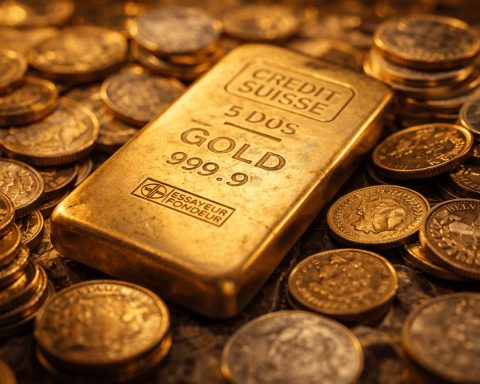
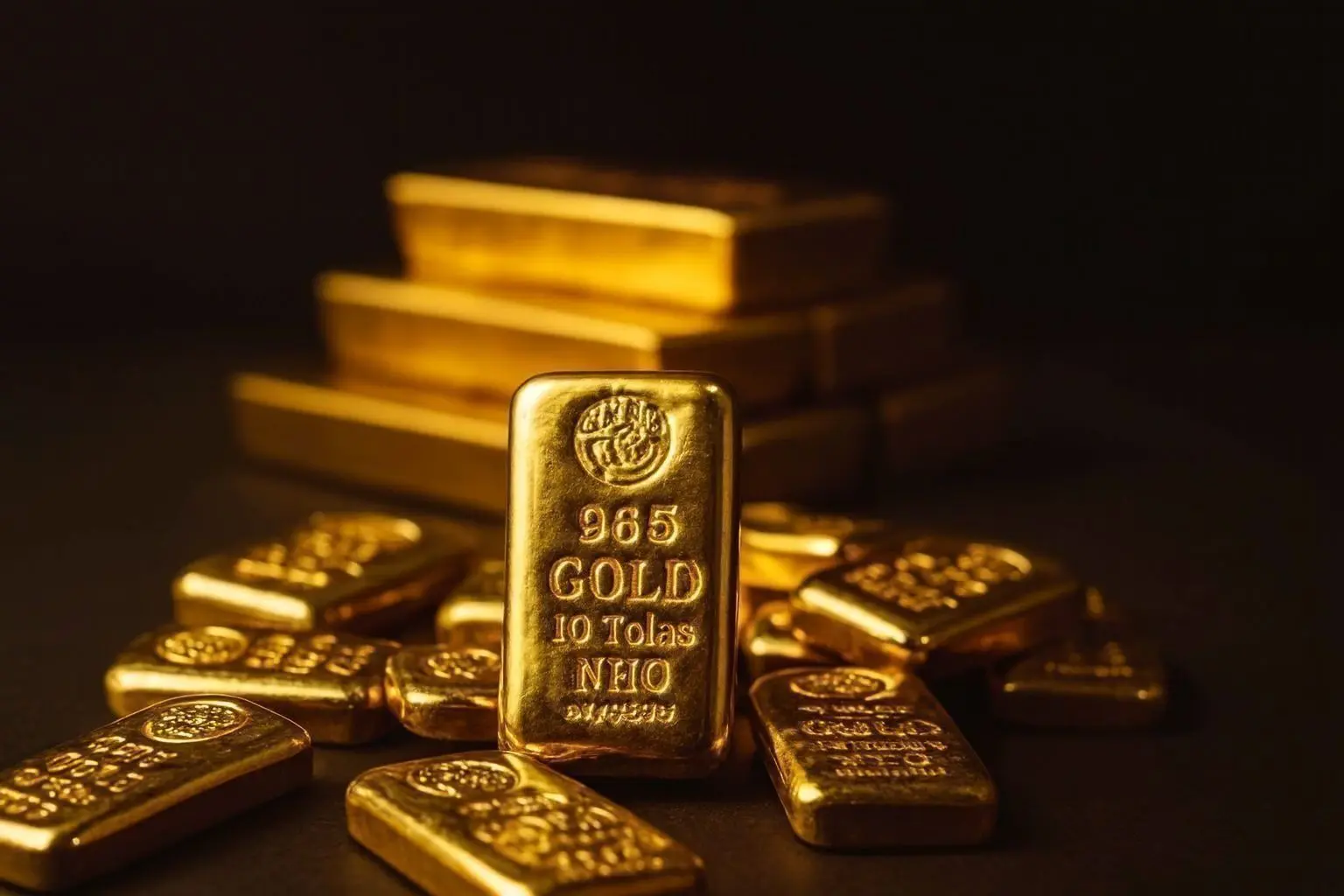
- Gold is up about 60% in 2025 , on track for its best year since 1979.abokifx.com+ 1
- The metal has broken more than 50 record highs this year.abokifx.com
- Prices peaked above $4,380 an ounce in late October before consolidating just below that level.abokifx.com
In other words, even a “soft” day for gold now happens at levels that would have been unthinkable just a couple of years ago.
Fed Meeting: Markets Brace for a “Hawkish Cut”
The main event for traders is the Fed’s two‑day meeting on December 9–10 , where policymakers are widely expected to deliver a quarter‑point interest rate cut —their third in this easing cycle.
According to market pricing cited by Yahoo Finance, investors now assign roughly an 89% probability that the Fed will lower its benchmark rate to a 3.50%–3.75% target range this week.abokifx.com
However, what matters most for gold is not this single move, but what comes next:
- Analysts describe the likely decision as a “hawkish cut” —a reduction in borrowing costs accompanied by guidance that keeps expectations for further easing in check.abokifx.com+ 1
- Swap markets are now leaning toward two additional cuts by the end of 2026 , down from three just a week ago, signaling a slower and more cautious path.abokifx.com
Higher policy rates, or even just the threat of fewer cuts, are typically a headwind for non-yielding assets like gold. But so far, demand has been strong enough to offset the drag from elevated bond yields.
Silver Steals the Spotlight: Record Above $60 an Ounce
If gold is having a stellar year, silver is staging a full‑blown breakout.
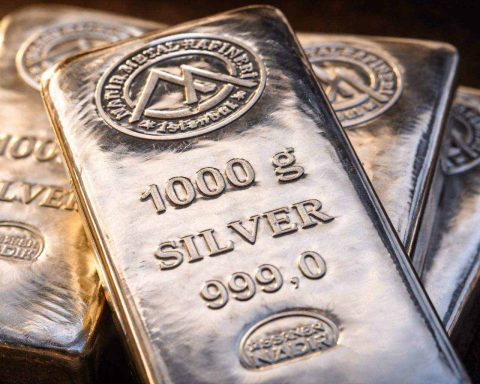
On December 9, spot silver surged more than 4% to an all‑time high near $60.52 an ounce , briefly pushing through the symbolic $60 level for the first time.Reuters
Several forces are converging behind the move:
- Tight physical supply and dwindling global inventories.Reuters
- The metal’s growing role in solar panels, electric vehicles, charging infrastructure and data centers , all of which are expected to expand rapidly through the end of this decade.Reuters+ 1
- Silver’s recent inclusion on the US critical minerals list , which has boosted its strategic profile.Reuters
Analysts note that the explosive rally in silver is helping pull gold higher as well, adding momentum to an already powerful uptrend. Some market strategists cited by Reuters see scope for silver to test even higher levels in early 2026 if industrial demand stays strong.Reuters
A Historic Year for Gold – and What Comes Next in 2026
Beyond the day‑to‑day moves, 2025 is shaping up as a once‑in‑a‑generation year for gold.
An analysis from Euronews, drawing on World Gold Council data, highlights the main drivers behind the metal’s more‑than‑60% surge this year:abokifx.com
- Sustained central‑bank buying , keeping official sector demand well above pre‑pandemic levels.
- Persistent geopolitical tensions and trade uncertainty that drive safe‑haven flows.
- Lower interest rates and a weaker US dollar , which reduces the opportunity cost of holding gold.
- Strong participation from investors and momentum traders via exchange-traded funds (ETFs) and futures.
The World Gold Council’s baseline scenario for 2026 is actually quite conservative: it sees gold trading in a relatively narrow range, roughly –5% to +5% , assuming steady global growth, modest US rate cuts and a broadly stable dollar.abokifx.com
But the outlook is far from settled. Alternative scenarios sketched by the Council suggest:
- A “shallow slip” in global growth with extra Fed cuts could boost gold 5%–15% .
- A deeper “doom loop” downturn might send prices 15%–30% higher , as investors rush into safe‑haven assets amid aggressive monetary easing.abokifx.com
In short, gold’s record‑breaking year may not be the end of the story—especially if economic risks intensify.
BIS Warns of a Gold–Stocks “Double Bubble”
One of the most striking warnings ahead of the Fed decision comes from the Bank for International Settlements (BIS) , often dubbed the “central bank for central banks.”
In its year-end report, the BIS notes that gold and major equity indices have been rising together in an unusually powerful way — a co-movement it describes as “explosive behavior” not seen in at least 50 years.Reuters
Key points from the BIS assessment:
- Gold is up about 60% in 2025 and more than 150% since 2022 , while stock markets—especially tech and AI names—also sit near record highs.Reuters
- The BIS worries about what happens if both assets correct at the same time , leaving investors with fewer safe-haven options.Reuters
- Retail investors and ETF buyers are heavily involved; gold ETFs have frequently traded at premiums to their underlying net asset value, a sign of strong demand and possible speculative excess.Reuters
- The institution also flags “growing fragility” in a risk‑on environment shaped by uncertain AI‑driven valuations and steep drawdowns in cryptocurrencies.Reuters
Overlay that with a US dollar that is on track for its biggest annual drop since 2007 , and the BIS warning reads less like a footnote and more like a flashing risk signal.Reuters
Oil Holds Big Decline as Supply Glut Comes Into Focus
While precious metals flirt with records, oil prices tell a different story .
Brent crude is trading just above $62 a barrel after tumbling roughly 2% on Monday , its biggest daily drop in about three weeks.FastBull+ 1
According to a Bloomberg report, traders are increasingly focused on signs of a growing global surplus :FastBull
- The International Energy Agency (IEA) has flagged the potential for a record surplus in 2026.
- The volume of oil at sea is rising , suggesting that barrels will eventually move onshore and swell commercial inventories.
- Prices for refined fuels such as gasoline and diesel have softened, removing one of the pillars that had previously supported crude.
One commodities strategist quoted in the report likened the current situation to a “huge blob” of oil at sea that will eventually show up in storage tanks, putting further downward pressure on prices. US sanctions on Russian oil companies, however, are helping prevent a deeper crash in Brent for now.FastBull
The upshot: energy markets are grappling with too much supply just as global growth expectations wobble , a combination that tends to weigh on inflation expectations—and by extension, long-term interest rate assumptions.
Dollar Steady as FX Traders Watch Fed, RBA and Japan
In the currency market, the US dollar is broadly steady ahead of Wednesday’s decision, reflecting a cautious balance between those betting on a dovish Fed pivot and those expecting only limited easing.
A Reuters summary notes that:abokifx.com
- Investor sentiment remains fragile after a major earthquake in Japan.
- US Treasuries have stabilized following a three‑day sell‑off, helping calm broader markets.
- The yen has firmed after a well‑received 5‑year Japanese government bond auction.
- The Australian dollar has climbed , supported by a relatively hawkish tone from the Reserve Bank of Australia, which continues to stress its determination to bring inflation under control.
For gold, a flat or weaker dollar is generally supportive, because it makes dollar-priced bullion cheaper for non-US buyers. But if the Fed leans more hawkish than expected, the greenback could bounce—testing how much of gold’s historic rally is rooted in currency weakness versus structural demand.
Why 2025 Turned Into a “Perfect Storm” for Gold
Pulling the threads together, several themes explain why December 9 finds gold and silver at such elevated levels while oil and the dollar diverge:
- Rate Cuts Without Conviction
The Fed has already begun easing, and markets expect more, but policymakers are keen to avoid appearing too dovish in the face of still‑elevated inflation. This “hawkish cut” framework keeps real yields from collapsing but still supports gold relative to bonds and cash.abokifx.com+ 1 - Geopolitics and Trade Tensions
From ongoing conflicts to renewed tariff threats, geopolitical uncertainty has remained high in 2025, keeping safe‑haven demand for gold elevated even as equities rally.abokifx.com+ 1 - Central‑Bank and ETF Demand
Central banks have continued to diversify reserves into gold , and ETF inflows signal strong interest from institutional and retail investors alike. In some cases, ETF prices have traded at sustained premiums—an indicator of how intense buying pressure has become.Reuters+ 1 - Industrial Supercycle in Silver
The energy transition, the boom in electric vehicles and the explosion in AI‑driven data centers have all boosted demand for silver, helping it break decisively to new records and dragging gold higher via cross‑market flows.Reuters+ 1 - Softening Oil and the Inflation Debate
Falling oil prices, driven by surplus fears, complicate the inflation outlook. If cheaper energy cools headline inflation too quickly, central banks might feel comfortable cutting faster—bullish for gold. But if they see it as temporary and stay cautious, that could slow the metal’s advance.FastBull+ 1
What Investors Will Watch After the Fed Decision
Once the Fed announces its decision on Wednesday, markets tied to gold, silver, oil and the dollar are likely to focus on a few key signals:
- How many cuts does the Fed’s own “dot plot” imply for 2026?
More projected cuts could validate bullish gold forecasts; fewer may trigger a consolidation. - Does Chair Jerome Powell lean into “hawkish cut” messaging?
Strong emphasis on data‑dependence and inflation risks could lift real yields and temper enthusiasm for precious metals in the short term. - Do oil and bond markets confirm the story?
A further slide in oil or renewed volatility in Treasuries could reinforce fears of economic fragility—the very environment in which gold tends to shine. - How do central banks respond to BIS warnings?
If policymakers and reserve managers take the BIS “double bubble” risk seriously, they can adjust their portfolios, influencing gold demand and broader risk appetite.Reuters
For now, though, December 9, 2025, will be remembered as the day gold sat comfortably above $4,200, silver traded above $60, and markets waited—nervously but optimistically—for the Fed to show its hand in what has already become a historic year for precious metals.