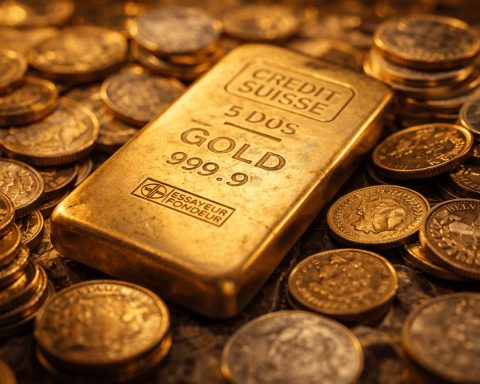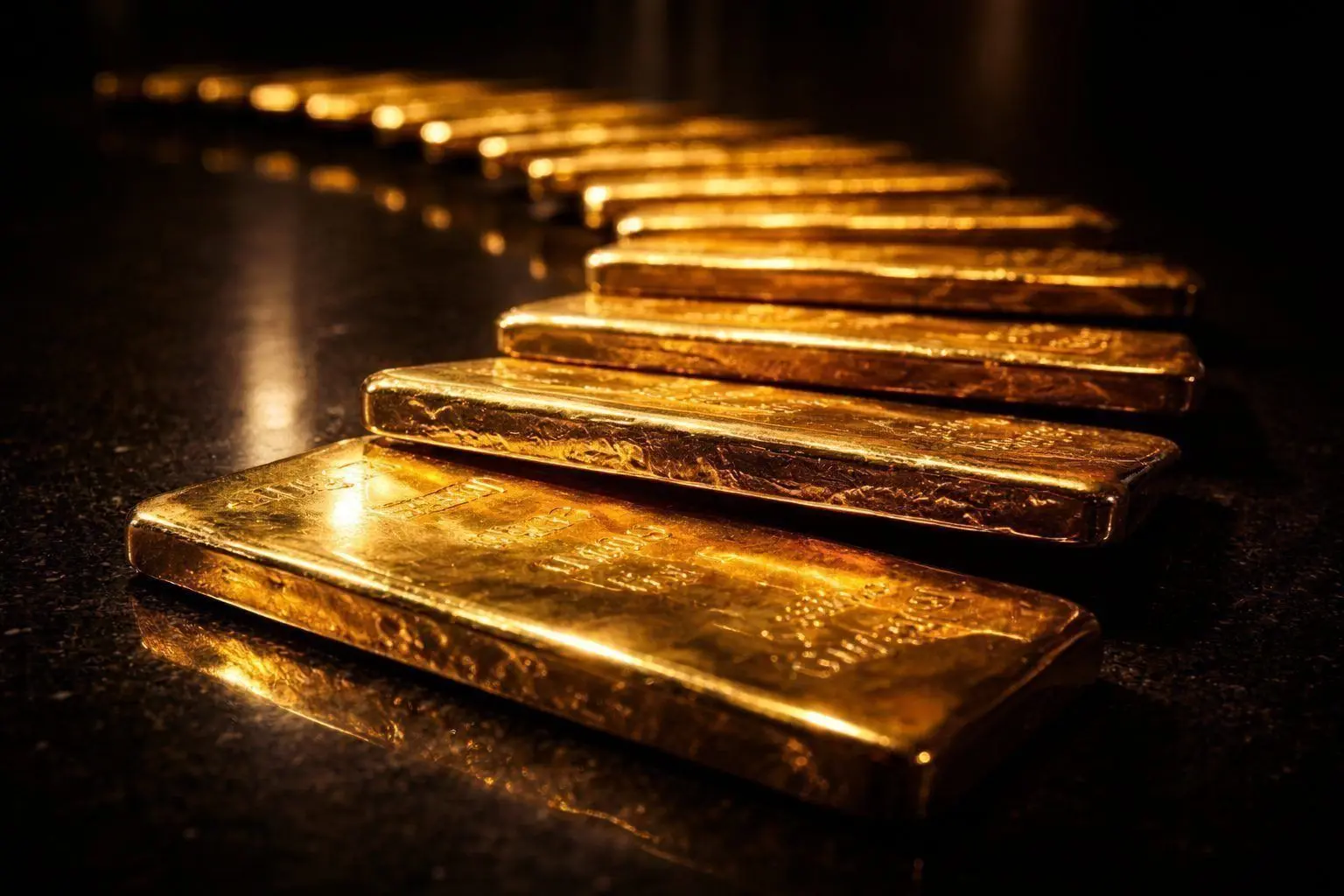
Gold is ending 2025 where it spent much of the year: near record territory, with investors debating whether the next move is a breakout—or a breath. As of Sunday, December 21, 2025, live spot pricing put gold around $4,352/oz, keeping the metal within striking distance of its 2025 record near $4,381/oz and reinforcing the narrative that bullion has shifted from a “rate-cut trade” into a structural portfolio asset for central banks and investors alike. JM Bullion+2Reuters+2
What makes today’s setup especially interesting is the collision of three powerful themes: fresh signals that the Federal Reserve could keep rates steady for months, year-end liquidity conditions that can amplify swings, and a growing consensus among major banks that 2026 could still bring gold closer to $4,800–$5,000 even if the pace of gains slows from 2025’s historic surge. Reuters+2Reuters+2
Gold price today: where XAU/USD stands on December 21, 2025
Live spot quotes on Sunday showed gold at $4,352.63/oz (12:08 PM ET), up modestly on the day. JM Bullion
On major pricing feeds tracking XAU/USD, the current exchange rate was around 4,338.55, with an indicated daily range roughly between 4,309 and 4,356—a reminder that different feeds (spot quotes, broker composites, OTC pricing windows) can vary slightly, especially around weekends and thin liquidity. Investing.com
For context, gold’s 2025 run has been extraordinary: the World Gold Council notes the metal notched 50+ all-time highs this year and delivered 60%+ returns, driven by a mix of geopolitical risk, USD weakness, and momentum. World Gold Council
The headline risk today: a Fed “hold steady for months” message hits the tape
A key macro headline on Dec. 21 came via Reuters: Cleveland Fed President Beth Hammack said she sees no need to change U.S. interest rates for months, with the current benchmark range at 3.5% to 3.75%, suggesting policy could stay on hold until at least spring while officials assess inflation dynamics—including the downstream effects of tariffs moving through supply chains. Reuters
Why it matters for the gold price:
Gold tends to dislike “higher-for-longer” surprises because firmer rate expectations can lift real yields and support the dollar—both classic headwinds for non-yielding bullion. But the 2025 playbook has been more complicated: strong demand from central banks and diversification-focused investors has repeatedly cushioned pullbacks, even when rates didn’t fall as fast as markets hoped. Reuters+1
Forecast roundup as of Dec. 21: where major banks see gold in 2026
The most striking feature of late-December research is how many mainstream institutions now treat $4,500+ gold as plausible—even if they warn the rally may cool.
Bank and institutional targets making headlines
- Goldman Sachs:$4,900/oz by December 2026 in its base case, citing “structurally high” central-bank demand and cyclical support from Fed cuts, with upside risk if private investor diversification broadens. Reuters+1
- Morgan Stanley (Reuters summary): expects slower gains but still sees $4,800/oz by Q4 2026, supported by anticipated rate cuts, a weaker dollar, and demand factors including China and central banks. Reuters
- J.P. Morgan (via Reuters reporting): expects prices averaging above $4,600 in Q2 2026 and above $5,000 in Q4 2026; Reuters also reports J.P. Morgan estimates about 350 tonnes per quarter of central-bank + investment demand is needed to keep prices flat, with a forecast around 585 tonnes per quarter in 2026. Reuters
- Metals Focus (Reuters): sees gold at $5,000 by end-2026. Reuters
- Deutsche Bank: lifted its 2026 forecast to $4,450/oz, projecting a $3,950–$4,950 range and arguing ETF flows could help hold a ~$3,900 support floor; it also kept a $5,150 forecast for 2027. Reuters
- Macquarie (Reuters): sees average prices around $4,225 in 2026, slightly below then-current spot levels at the time of the report. Reuters
- State Street Global Advisors (SSGA): frames a bull case of $4,500–$5,000 and says it sees a 30% probability of gold hitting $5,000/oz, with scenarios involving steady official/China demand and sustained ETF flows. SSGA
The “underowned gold” argument
One widely shared late-December thesis: even after the rally, gold may still be under-allocated in key markets. Business Insider, citing Goldman’s analysis, reported gold ETFs were only ~0.17% of private U.S. financial portfolios, and Goldman estimated that even small increases in allocation could have an outsized price effect in a comparatively small market. markets.businessinsider.com
Why gold surged in 2025—and why strategists say the cycle may not be over
Reuters’ late-year roundup captured the scale of the move: gold posted its biggest jump since the 1979 oil crisis, with prices doubling in the last two years and reaching a record around $4,381/oz in October. Reuters+1
Strategists highlighted several forces that turned a “normal” macro rally into something more structural:
1) Central banks as a price anchor
Reuters described central-bank reserve diversification away from dollar assets as a key foundation for 2026, with official buyers stepping in when positioning looks stretched and prices dip. Reuters
2) ETF and investor demand broadened beyond the usual crowd
Gold’s 2025 story is no longer just “rates and recession.” Reuters pointed to new market participants (including corporate/crypto-linked buyers) and a broader investor pool. Reuters+1
3) Demand hit record levels during the year
ING, citing World Gold Council figures, reported global gold demand reached 1,313 tonnes in Q3 2025, described as the strongest quarterly total on record, driven by investment demand (ETFs, bars, coins) and central-bank buying. ING Think
4) The “uncertainty premium” expanded
Analysts cited concerns ranging from geopolitics to policy disputes and questions about Fed independence as additional support pillars for bullion going into 2026. Reuters+1
A new warning in the background: is gold trading like a risk asset?
Not everyone is comfortable with how gold behaved in 2025.
Reuters reported that the Bank for International Settlements (BIS) raised concerns about a rare co-movement of gold and equities that it says hasn’t been seen in at least half a century, suggesting “growing fragility” in a risk-on environment and questioning what happens if both stocks and gold correct together. Reuters also noted BIS commentary that gold began behaving “much more like a speculative asset,” and flagged unusual signals such as gold ETF pricing trading at a premium versus NAV (per the BIS discussion reported by Reuters). Reuters+1
For gold investors, this matters because it challenges the simplest “safe haven always offsets equities” assumption—especially in a world where portfolio rebalancing can force selling across asset classes during sharp drawdowns.
Policy and supply-side developments to watch
Gold’s price is driven mainly by macro and demand—but policy and supply headlines can still shape sentiment, especially when they reinforce the “gold as sovereignty” narrative.
Italy: “the people’s gold” debate
Reuters reported that an Italian parliamentary committee approved an amendment declaring that the central bank’s gold reserves belong to “the people,” drawing criticism from the ECB over potential implications for central bank independence. Italy’s reported stockpile is 2,452 metric tons, valued around $300 billion in the Reuters report. Reuters
Even if largely symbolic, the story underscores how politically salient gold reserves have become in an era of fiscal strain and de-dollarisation debates.
Zimbabwe: adjusting royalties as gold prices soar
On the supply side, Reuters reported Zimbabwe reversed plans to double gold royalties to 10%, keeping 5% royalties for gold between $1,200 and $5,000/oz, and applying 10% only above $5,000/oz. Reuters also noted Zimbabwe’s gold production hit 42 metric tons in the first 11 months of 2025, a record. Reuters
Near-term outlook: thin liquidity, key U.S. data, and a “breakout vs pullback” market
With Christmas week beginning, many desks are lightly staffed, and liquidity can thin quickly—conditions that often amplify short-term moves in FX, rates, and metals.
Holiday-week volatility risk is real
India-based market coverage on Dec. 21 highlighted a common theme: year-end low volumes can mean quieter trading—or sudden swings if a surprise data print hits a thin book. Times of India reported analysts watching U.S. data such as GDP, housing statistics, and consumer confidence, while anticipating reduced participation around the holidays. The Times of India
A separate Dec. 21 report carried by Rediff (PTI/market commentary) similarly emphasized the risk of consolidation/correction amid low participation, while pointing to the same cluster of U.S. macro releases as near-term catalysts. Rediff
Technical levels traders are watching (no charts—just the numbers)
Technical commentary published on Dec. 21 illustrates how tight the market’s focus has become around the highs:
- FXEmpire’s daily metals coverage described gold as sitting just under the all-time high near $4,381, with traders split between chasing a breakout and buying dips; it also referenced nearby support levels as the market “debates” direction. FXEmpire
- DailyForex’s weekly outlook noted gold has been trying to “catch up” with other precious metals, pointing to a move beyond the $4,270 area and suggesting the market is watching for a decisive push above the record zone. DailyForex
The key takeaway: when a market grinds near record highs late in the year, the first big move can be exaggerated—either a breakout that forces under-allocated investors to chase, or a quick pullback driven by profit-taking and thin liquidity.
What happens next for gold in 2026?
Putting the day’s headlines and the latest institutional forecasts together, the 2026 gold narrative is shaping up around three questions:
- Does the Fed cut enough—or pause long enough—to keep real yields supportive for gold? Hammack’s “hold steady for months” stance adds tension to a market that has largely priced in easier policy over time. Reuters
- Do central banks keep buying at a pace that offsets softer ETF demand if retail flows cool? That’s central to the bullish bank cases, and a key assumption in forecasts clustered between $4,450 and $5,000. Reuters+2Reuters+2
- Does gold remain a portfolio “cornerstone” even if risk assets wobble—or does the BIS-style “double bubble” risk lead to a broader de-risking? Reuters
For now, price action says the bull market is not “over”—it’s being renegotiated. Gold is no longer just reacting to the next CPI print; it’s being priced as a strategic hedge against a wider set of risks: geopolitics, reserve diversification, fiscal concerns, and shifting confidence in fiat stability. World Gold Council+2Reuters+2