NEW YORK, January 3, 2026, 10:19 ET
- Public schedules show the Green Bank Telescope set aside early Saturday time to probe 3I/ATLAS’ chemistry at high radio frequencies.
- Earlier radio searches aimed at spotting “technosignatures” — signals that might indicate technology — reported no detections.
- Space agencies say the comet is natural, poses no threat, and remains observable from Earth with the right equipment into spring.
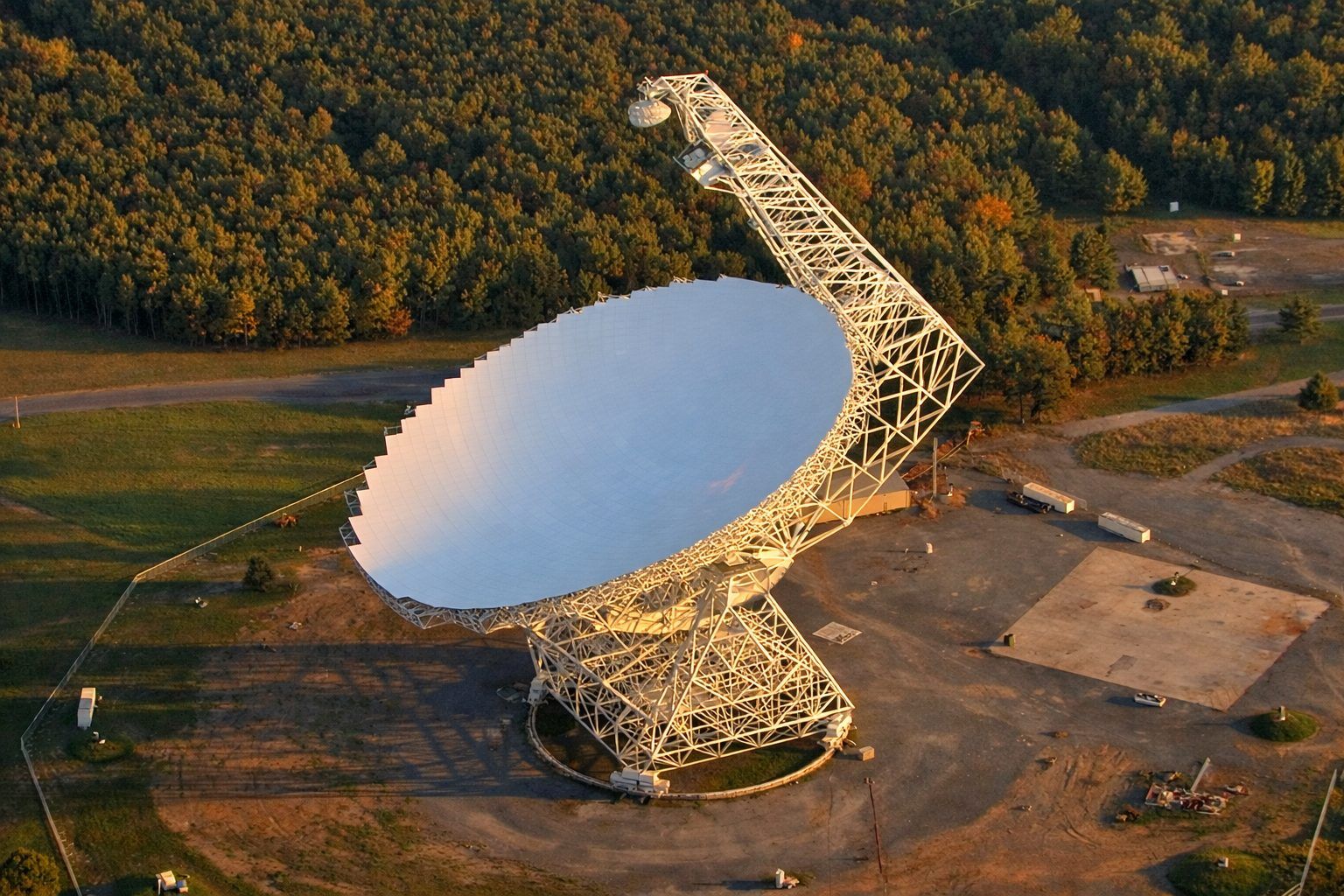
The Green Bank Telescope in West Virginia scheduled a six-hour “chemical survey” of interstellar comet 3I/ATLAS early on Saturday, according to the facility’s public observing schedule. The slot ran from 01:30 to 07:00 ET and used a high-frequency receiver band commonly used to hunt for molecular fingerprints.
The timing matters because 3I/ATLAS — only the third known object confirmed to enter the solar system from interstellar space — is now moving away and steadily fading. NASA says the comet remains observable from the ground in the pre-dawn sky until spring 2026, narrowing the window for high-quality measurements.
A “chemical survey” is a sweep across radio frequencies that can reveal which gases are present by their distinctive spectral lines, letting researchers infer what ices and dust are driving the comet’s activity.
Radio work has drawn attention partly because of online speculation that the object might be artificial — claims that have not been supported by mainstream observations. Scientists have used targeted searches for “technosignatures,” a term for signals such as unusually narrow radio transmissions that might be produced by technology.
In a preprint posted to the arXiv server, researchers with the Breakthrough Listen program reported that a Green Bank Telescope scan of 3I/ATLAS on Dec. 18 found no candidate signals, down to roughly the 100 milliwatt level.
Breakthrough Listen and its collaborators have also used other facilities to monitor 3I/ATLAS and look for artificial emission, including optical follow-up and radio observations, without reporting any confirmed technosignatures.
South Africa’s MeerKAT radio telescope detected hydroxyl — a sign of water being broken apart by sunlight in a comet’s expanding cloud of gas — and reported no narrowband signals consistent with a technological origin, the South African Radio Astronomy Observatory said. “We’re happy that we are contributing, alongside colleagues around the world, to a fuller understanding of this remarkable natural phenomenon,” SARAO chief scientist Fernando Camilo said.
3I/ATLAS made its closest approach to Earth on Dec. 19 at about 1.7 astronomical units, or roughly the distance between Earth and the Sun multiplied by 1.7, the SETI Institute said.
NASA has said the comet poses no danger to Earth and was discovered on July 1, 2025 by the NASA-funded ATLAS survey telescope in Chile, part of the agency’s planetary defense network.
Spacecraft observations have helped build a multi-wavelength picture of the visitor, including data from missions not designed for comet hunting. ESA said its Jupiter-bound JUICE spacecraft observed 3I/ATLAS while protecting its instruments, with additional data expected later as it downlinks information.
NASA says the comet will later pass Jupiter on its outbound path, giving researchers another chance — from afar — to watch how its activity changes as sunlight weakens.
Only two other interstellar objects have been confirmed in the solar system: 1I/‘Oumuamua in 2017 and 2I/Borisov in 2019, making each new visitor a rare test for models of how planetary systems form and eject material.
For astronomers, the payoff from the latest observing push is less about headlines and more about chemistry: which molecules dominate the coma, how the outgassing evolves, and how closely an interstellar comet resembles those born around the Sun.